80,000 in the stadium, millions on stream – Toni Llobet on his Cameo lighting design for La Velada del Año VI
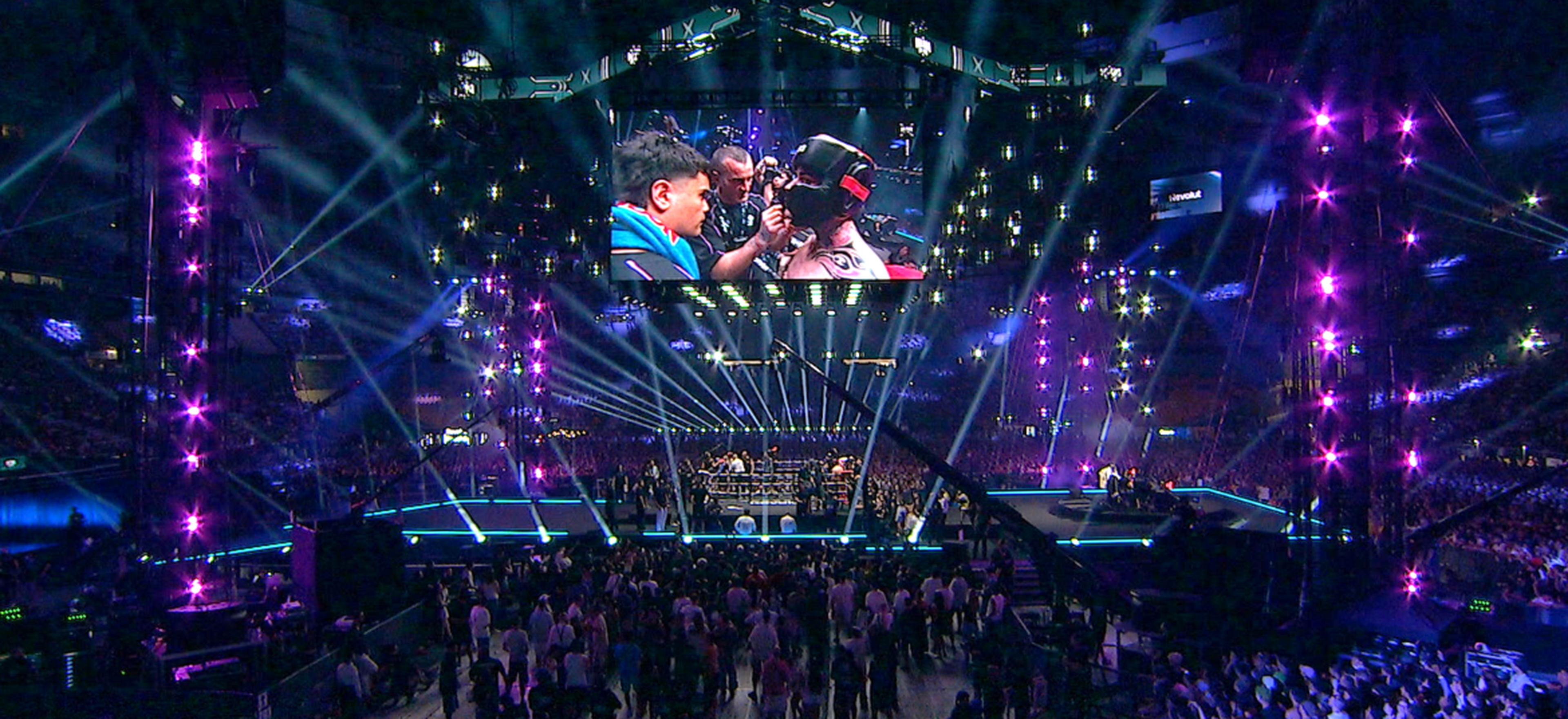
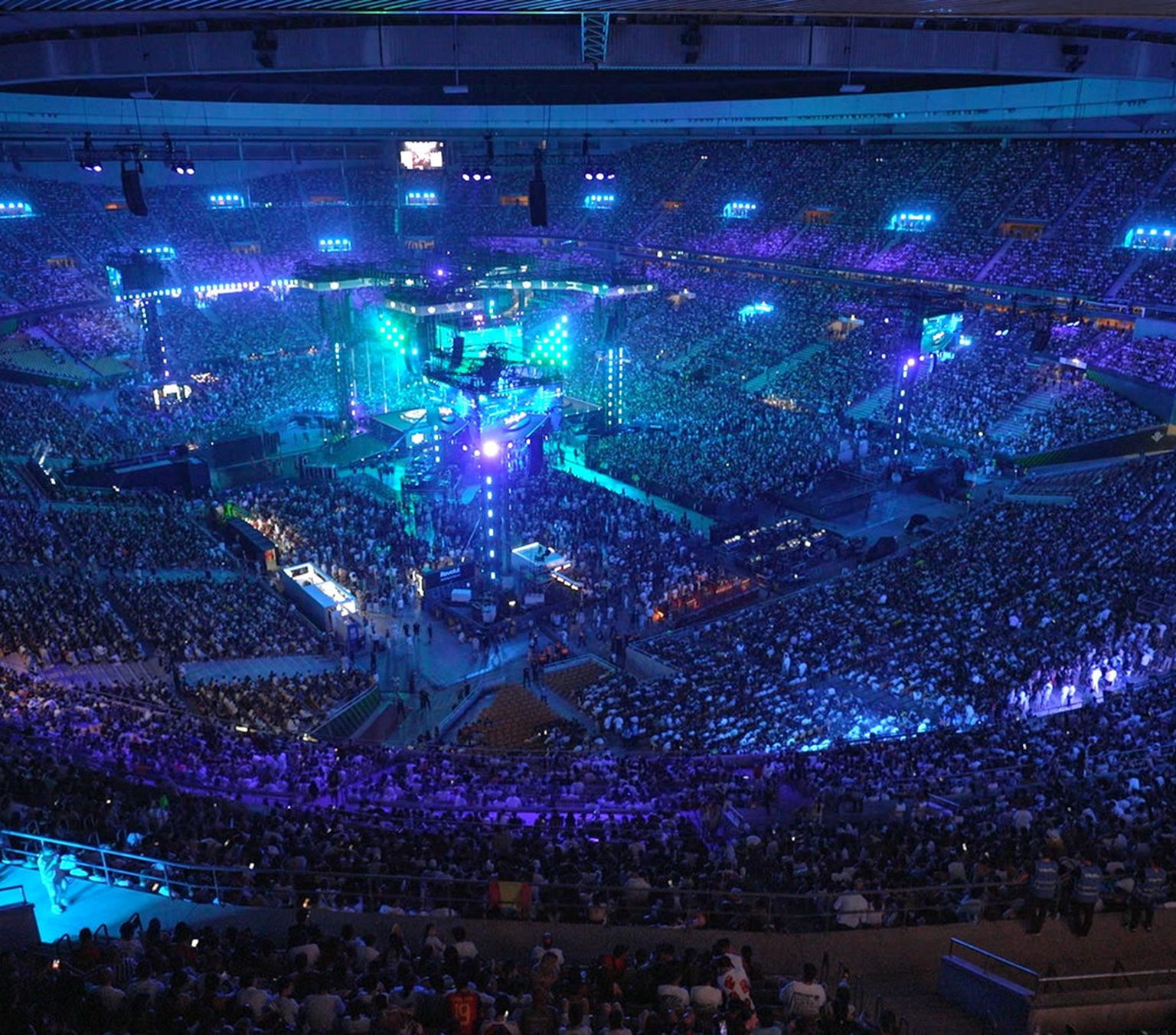
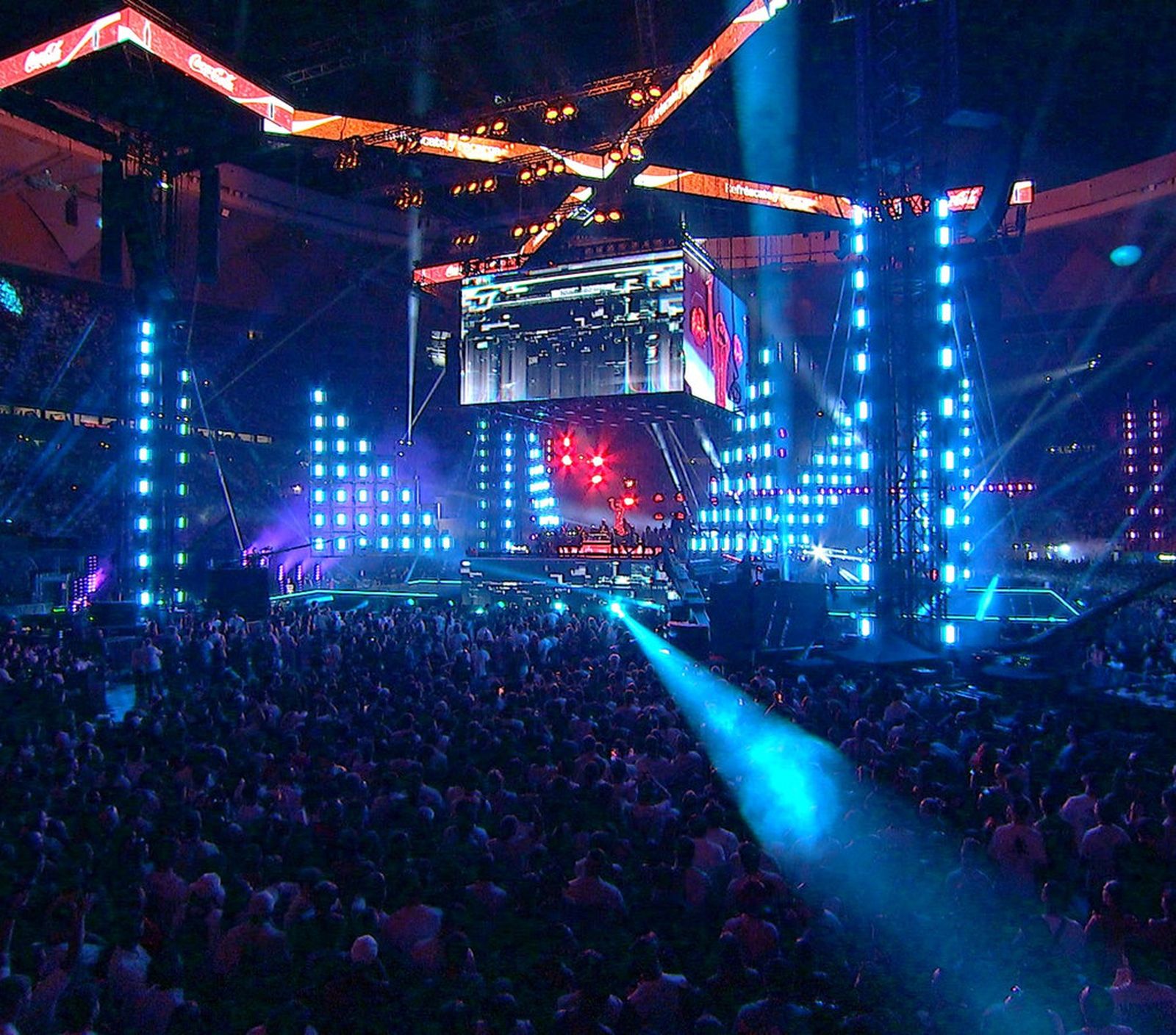
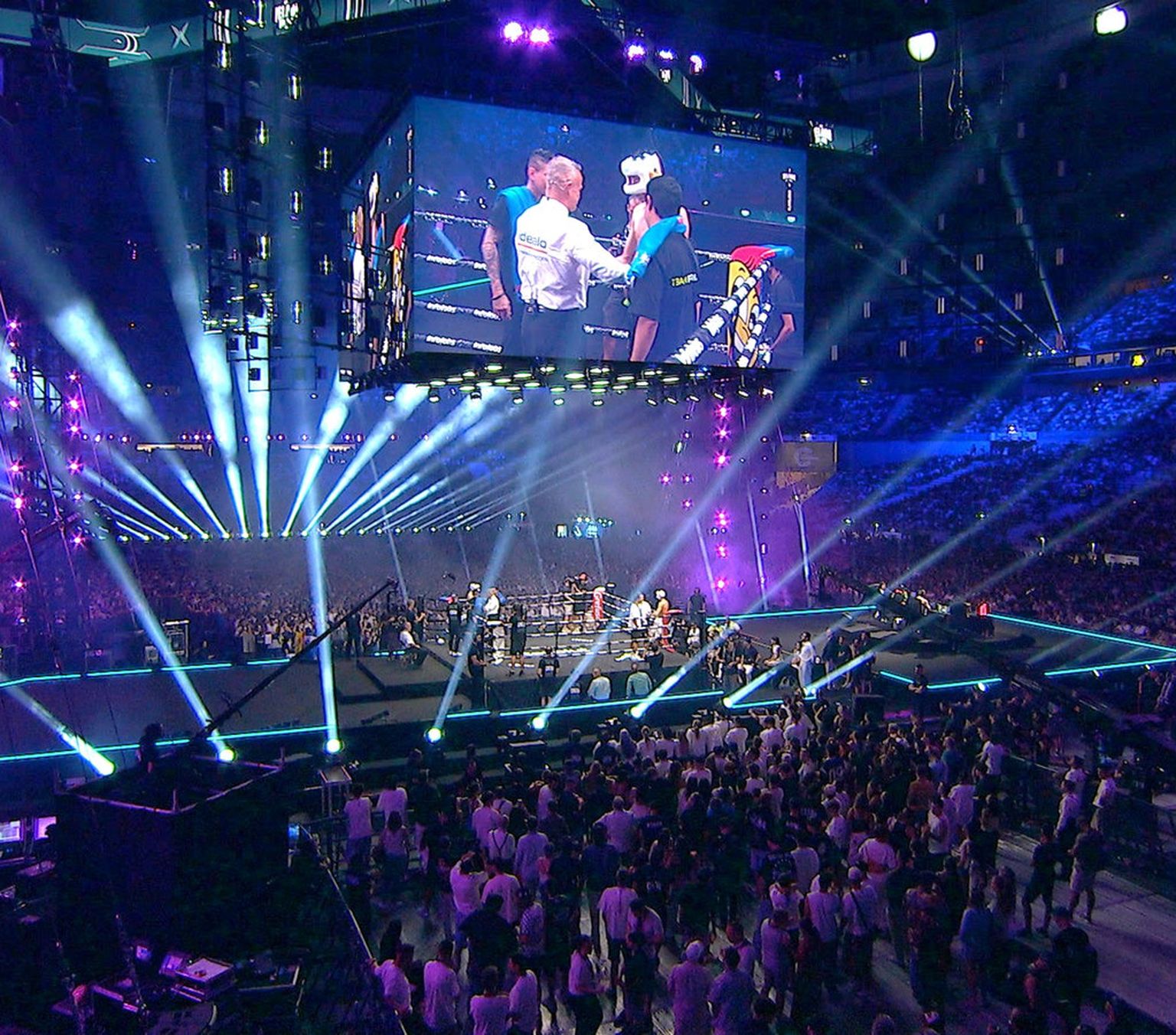
La Velada del Año is more than a boxing event. Created by Spanish star streamer Ibai Llanos, the crossover format combines celebrity fights, live music, classic show production and livestream culture, making it one of the biggest live events in the Spanish-speaking world. The sixth edition took place in summer 2026 at the Estadio de La Cartuja in Seville – in front of around 80,000 people on site and millions more watching live on Twitch, YouTube and TikTok. For the lighting design, this meant that every scene had to work both inside the stadium and on camera – across an eight-and-a-half-hour live show. Responsible for the lighting design and the visual language of the production was Toni Llobet, founder of the Nunawi studio. After speaking with Toni last year about the pre-event at the Teatre Victoria in Barcelona, we now talked to him about the main show, the interplay between camera and light, and the use of Cameo fixtures across the different areas of the stadium.
Toni, could you briefly introduce yourself: who are you and what defines your work as a lighting designer?
Toni Llobet: I’m Toni Llobet, a director of photography and lighting designer based in Barcelona, where I run my own studio, Nunawi. What really defines how I work is sitting on both sides at once – camera and light. I think as a cinematographer even when I’m designing lighting for a live audience, so the camera is always part of the equation. What I love most is making art through technology: taking something technical and turning it into an image that tells a story.
What brought you into lighting design?
Toni Llobet: It started with music. I was playing in bands as a teenager, and I got curious about the lighting — I started experimenting with DMX and figuring out on my own how those systems worked. Later I studied cinematography, so I was learning to light for camera and to light for a live audience at the same time. And the most fun really started when I began mixing the two disciplines — bringing a cinematographer's eye to live lighting, and thinking about the live moment and the image on screen as one and the same thing. That's the thread that's followed me ever since.
What are the most exciting projects you’ve been involved in?
Toni Llobet: La Velada del Año is definitely the one that has pushed me the most. I've designed its lighting for several editions now, and it's grown into a full stadium production for tens of thousands of people live and millions online. I've also really enjoyed architectural work like the façade shows at Casa Batlló, and more recently the lighting design for Cameo's own showroom here in Barcelona — completely different disciplines, but all coming from the same place: using light to tell a story and move people emotionally.
What was your role on La Velada del Año VI?
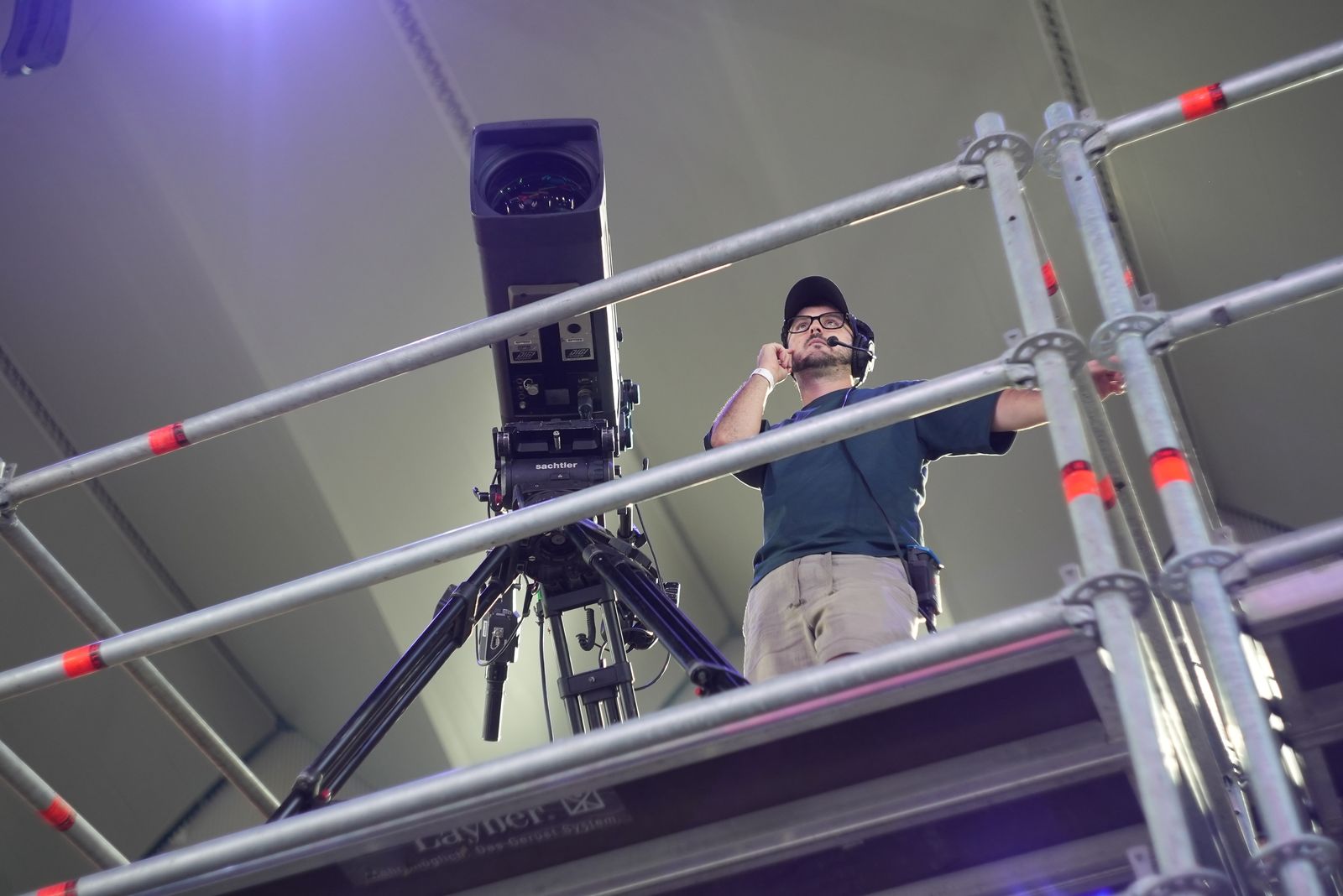
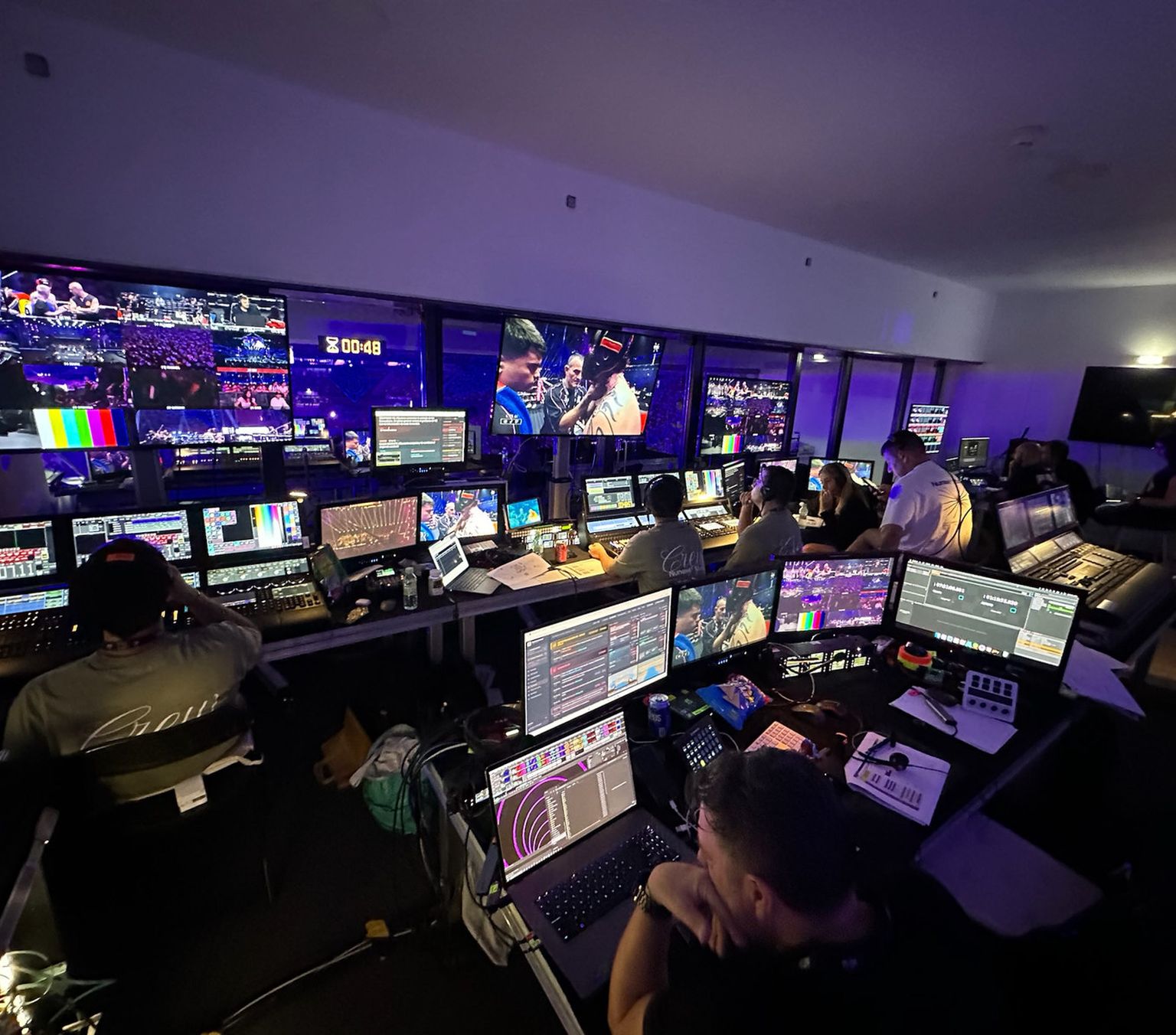
Toni Llobet: On La Velada del Año VI I was the lighting director and designer. That means I’m responsible for the whole lighting concept – from the very first idea of how the show should look and feel, through the fixture selection and positioning, to how it all reads both in the stadium and on camera.
A big part of my role also happens before the show, in conversation with the broadcast team: discussing camera positions, heights and lenses, and working through it all in 3D previsualization software so the lighting is designed around the shots from the start. I lead the lighting team and hold the overall creative direction, while the Nunawi programmers handle most of the console work. My job is to keep the vision consistent across the entire eight-and-a-half-hour show and make sure every look – boxing, live performances, boxer entrances – belongs to the same visual language.

La Velada del Año is a stadium production, a broadcast event and a live show all at once. How do you approach a project like this?
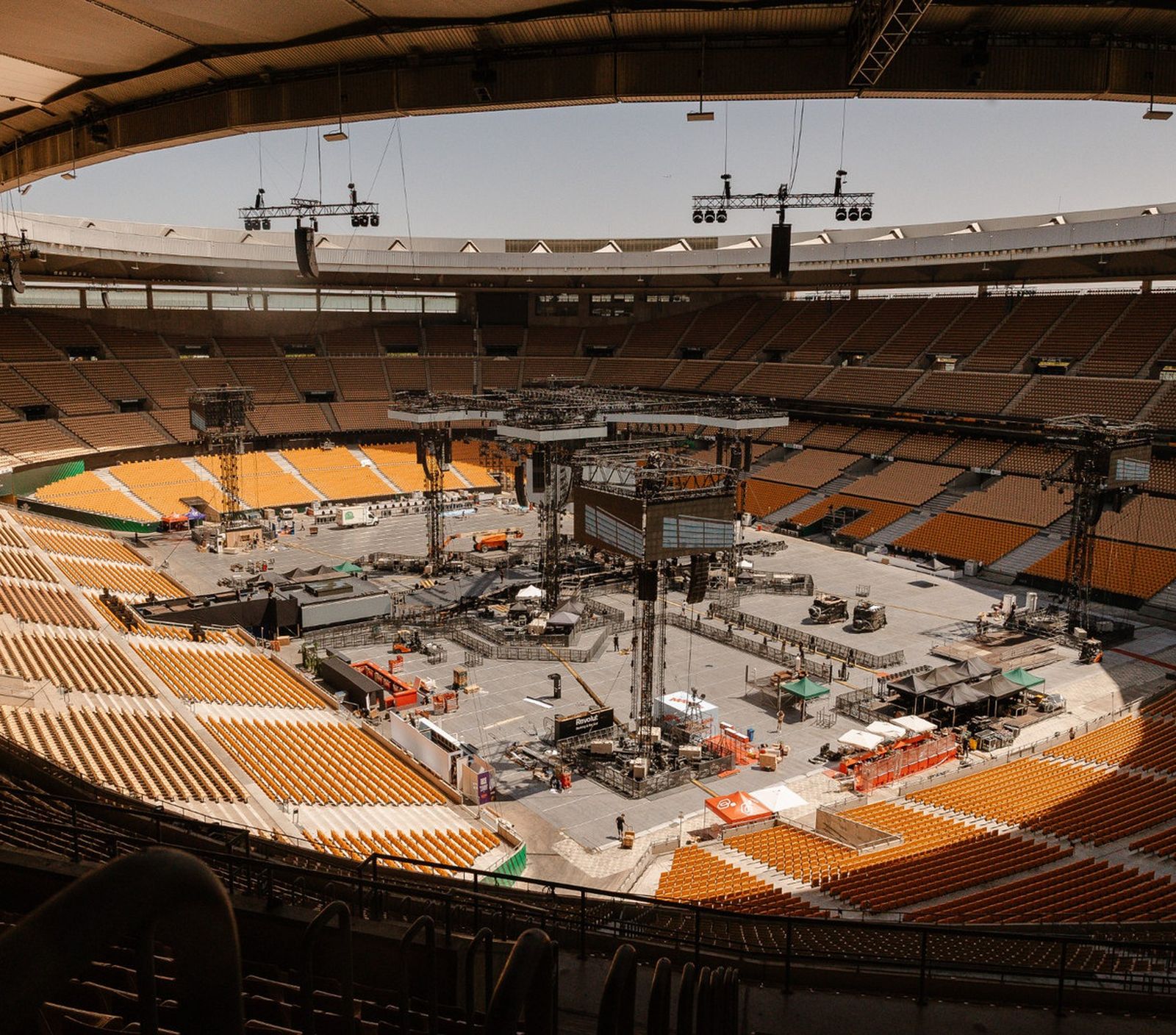
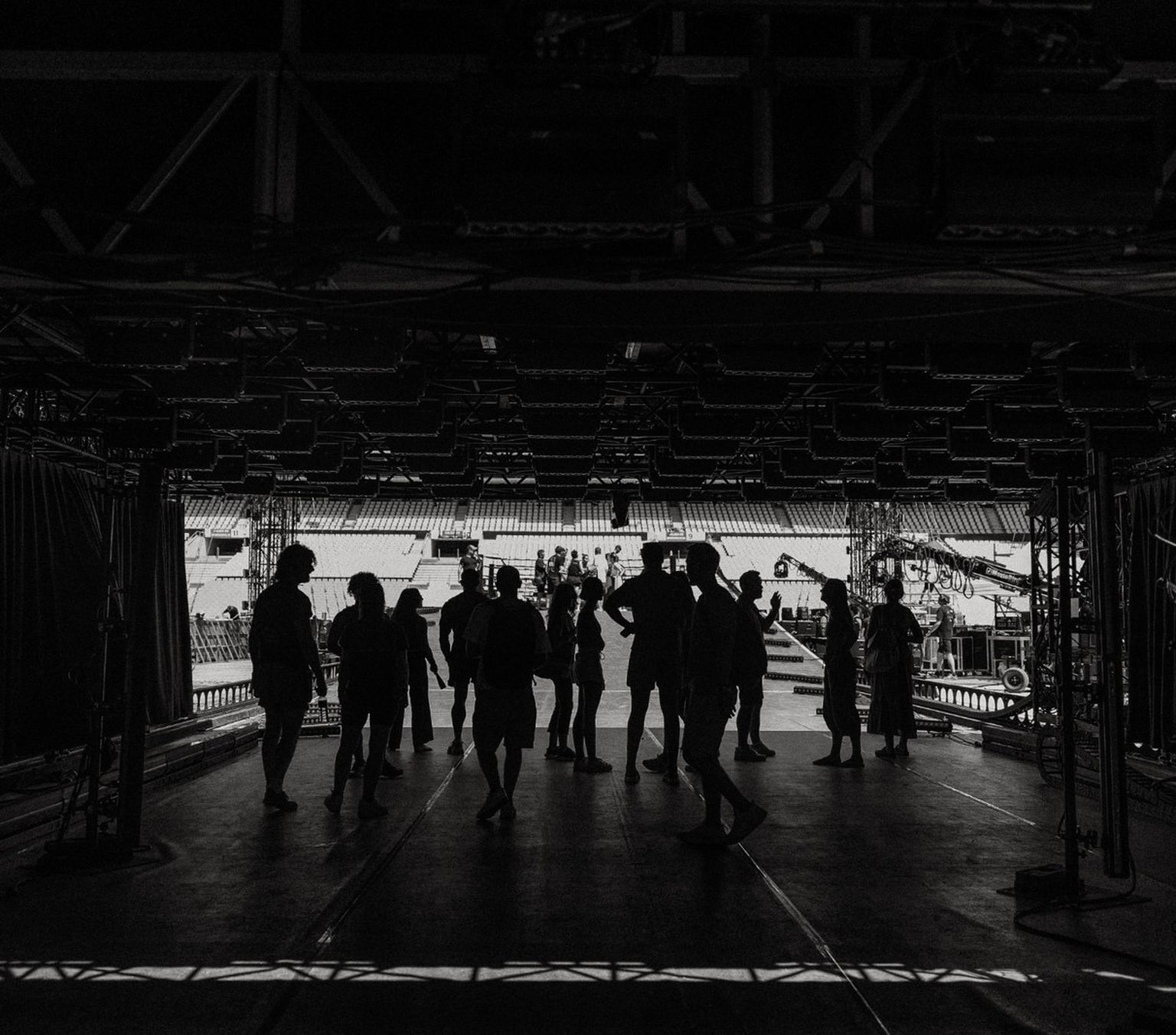
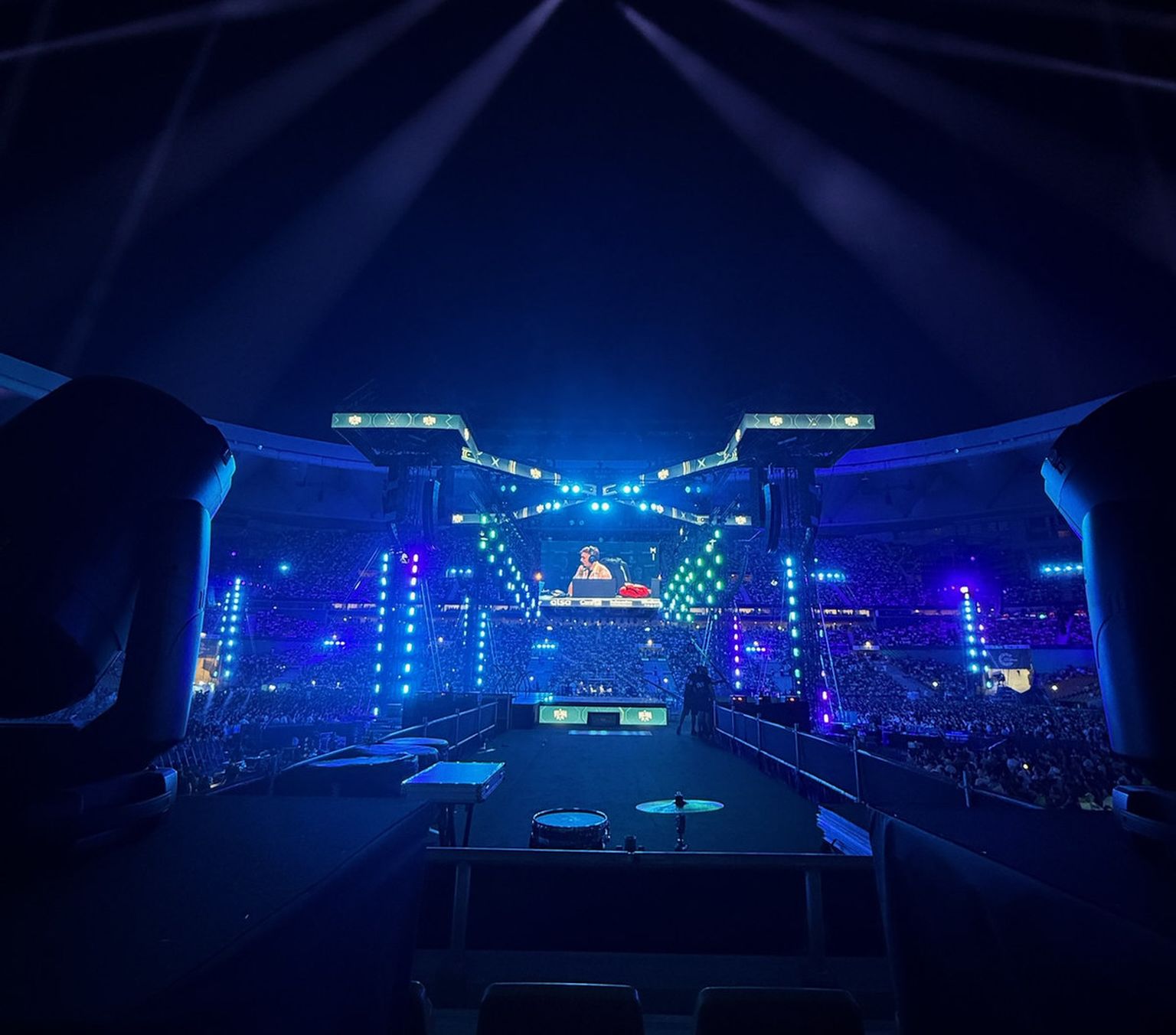
Toni Llobet: Basically, I build on top of the stage design that Brau Produccions hand me. From there I start constructing the whole lighting design around it, always taking into account where the cameras are and what their angles are, so I can take care of every background, build layers of interest and find the spaces to create eye candy – because it’s all about eye candy. A big part of this happens in the 3D visualizer, months before the show. I spend hours in there moving things around and testing, virtually walking through every single point of the stadium to make sure every angle gets that wow effect from the stands. It’s the only way to really check that it works from everywhere, not just from one privileged position.
“I light the crowd, and it becomes almost like a moving pixel map, shifting and creating interesting backgrounds behind whatever the camera is framing.”
Toni Llobet, Lighting Director and Designer
How important is the audience in the stadium for the camera image?
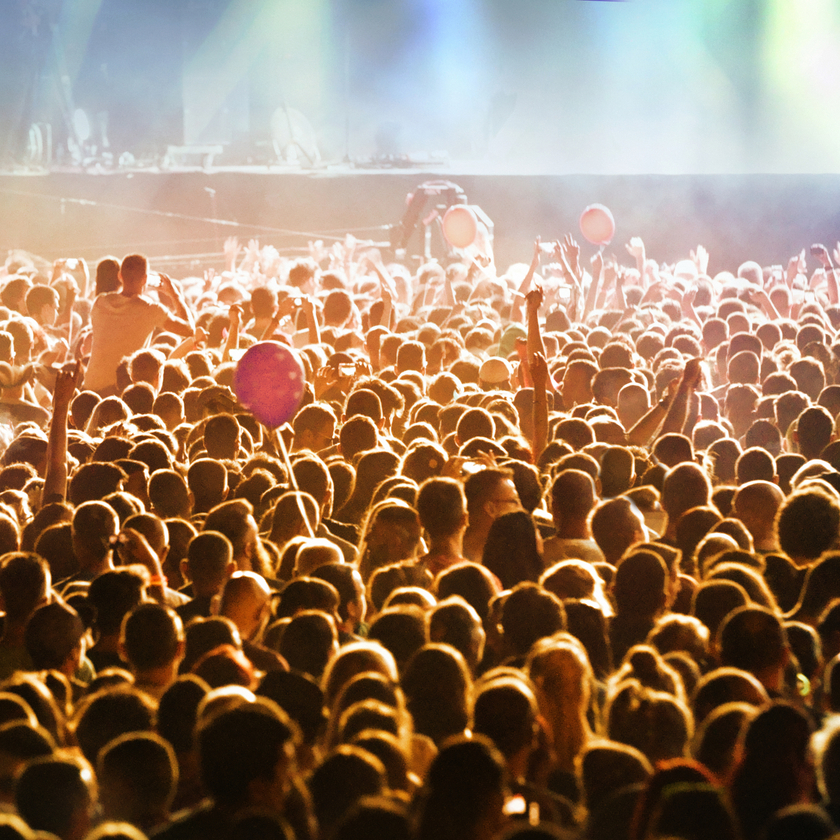
Toni Llobet: The two audiences actually feed each other. The crowd in the stadium becomes a dynamic background for the streaming audience – it works as a camera background. I light the public, and the crowd becomes almost like a moving pixel map, shifting and creating interesting backgrounds behind whatever the camera is framing. So lighting those 80,000 people isn’t only for them in the room; it’s also what gives the shot depth and life for the millions watching online.
What broadcast requirements influenced the lighting design?
Toni Llobet: There were a couple of clear requirements, and these are things I talk through with the head of CCU – the camera control unit. One was a minimum light level on the characters’ skin so faces always read properly on camera. The other was avoiding black holes and long blackouts. On a stream a blackout can feel eternal: five seconds of black in a stadium is almost like a minute of black on TV. And it’s not a one-time conversation. The show starts a little before sunset, so as we go from daylight into night the whole balance changes, and the CCU and I are constantly fine-tuning to keep everything consistent as the light drops.
Were there looks that worked well inside the stadium but did not translate in the same way on camera?
Toni Llobet: Yes, it happens, and one clear case is haze. In the stadium it’s great to have a lot of haze because it marks out all the beams and traces beautifully. But on camera that same haze makes us lose contrast – it lowers the exposure, because it acts like a diffusion veil over the key light. So it’s a constant balance between having enough haze for the live look and not killing the image on screen.
Another thing we solved this year compared to last year is beam movement. Before, we used to program spectacular movements – sky beam effects and so on – and trigger them on timecode at specific musical moments. The problem was that sometimes there’d be this huge beam movement across the whole stadium, but at that exact narrative moment the stream needed a close-up of the host – so on the broadcast you never actually saw the effect. This year we made the movement itself manual. The way it works is that the sequence fires the whole look on timecode – all the colors, the intensities, everything – but the movement of that look sits on a separate manual executor. So the look lands automatically with the music, and then I decide by hand the exact moment the beams actually move – right when the broadcast cuts to the skycam or a wider camera, so the effect reads on screen.
“In a stadium like this, it’s all about building depth – layer after layer of light from the floor all the way to the back of the stands. Each Cameo fixture covers one of those layers.”
Toni Llobet, Lighting Director and Designer
Which Cameo fixtures were used, and what role did they play in the design?
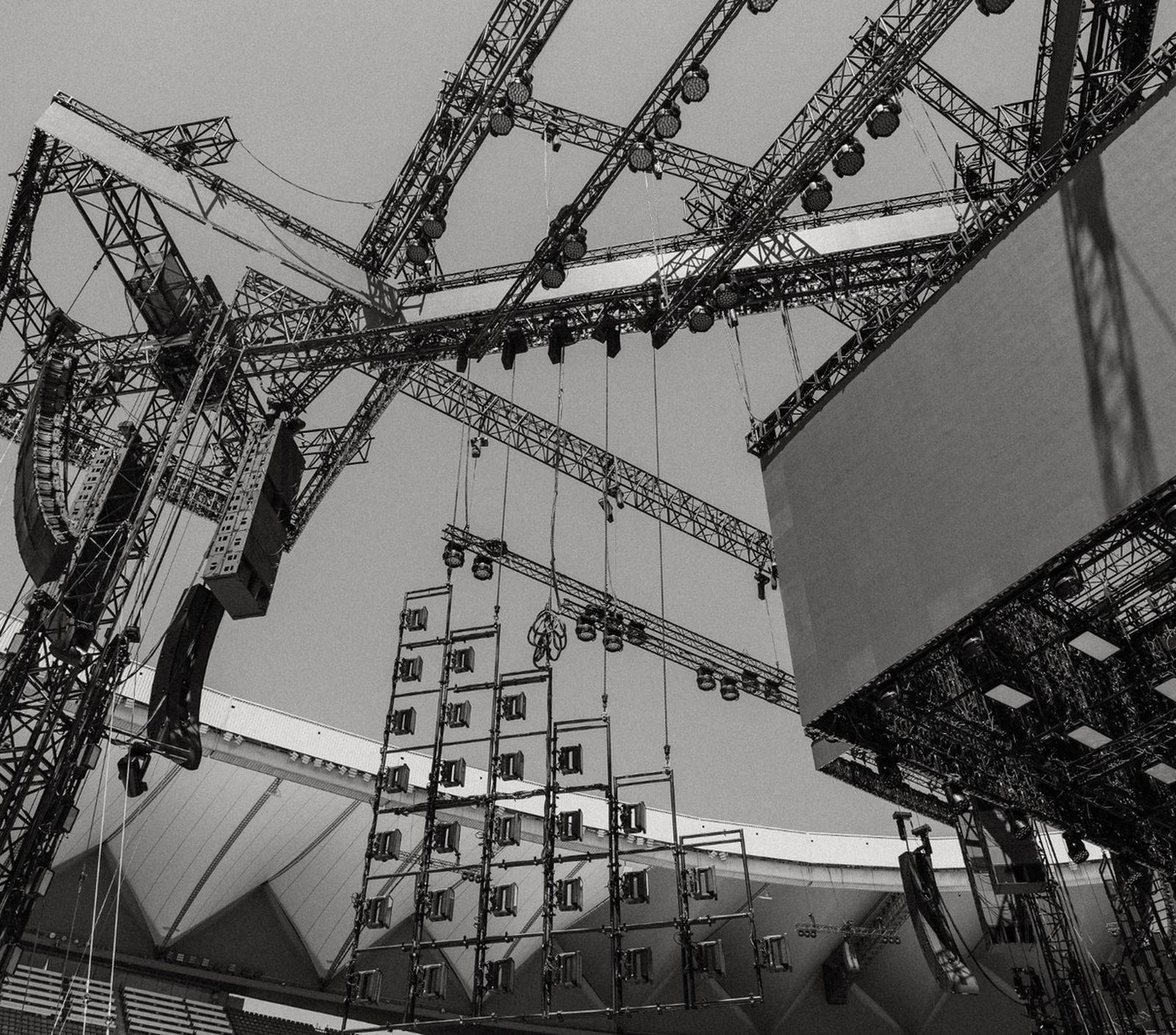
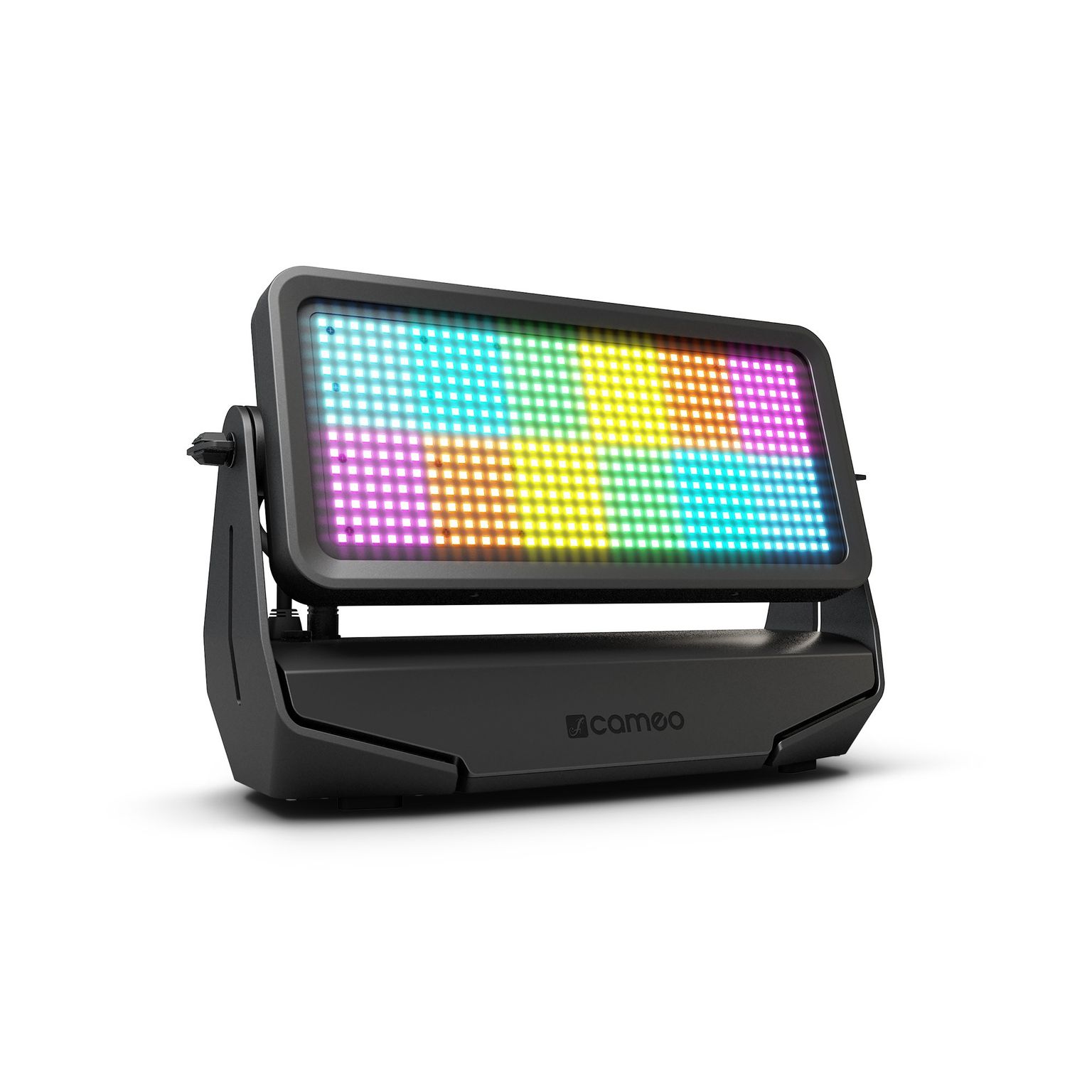
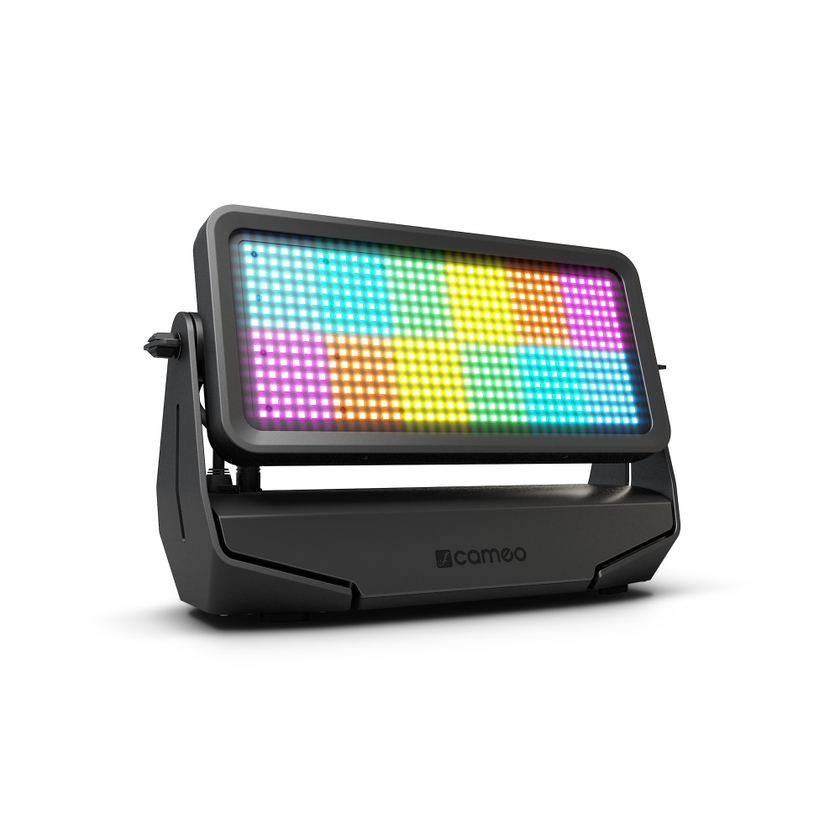
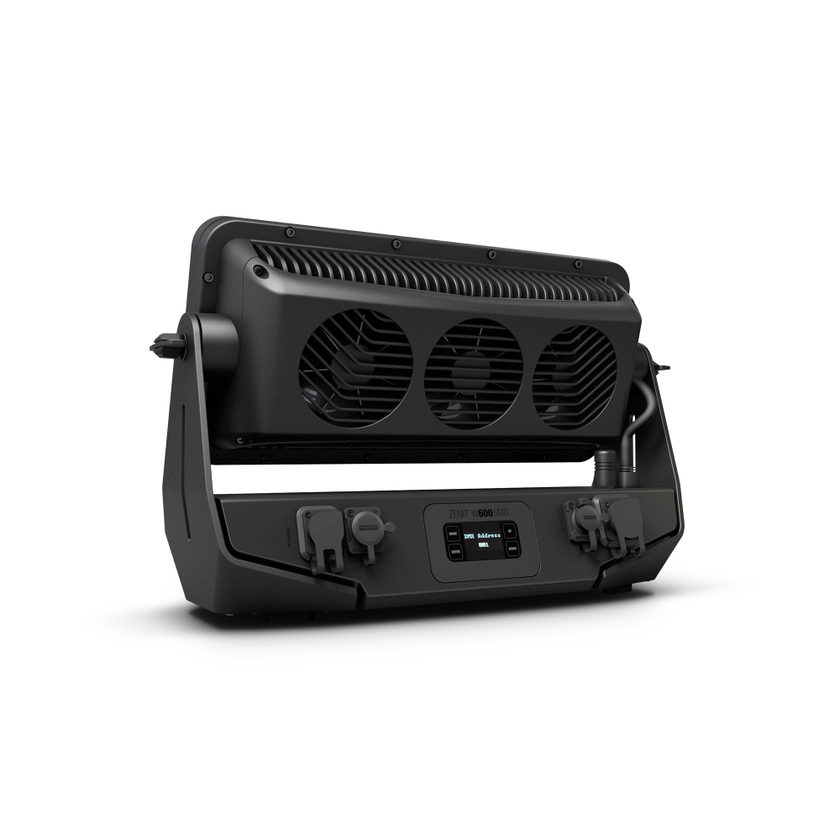
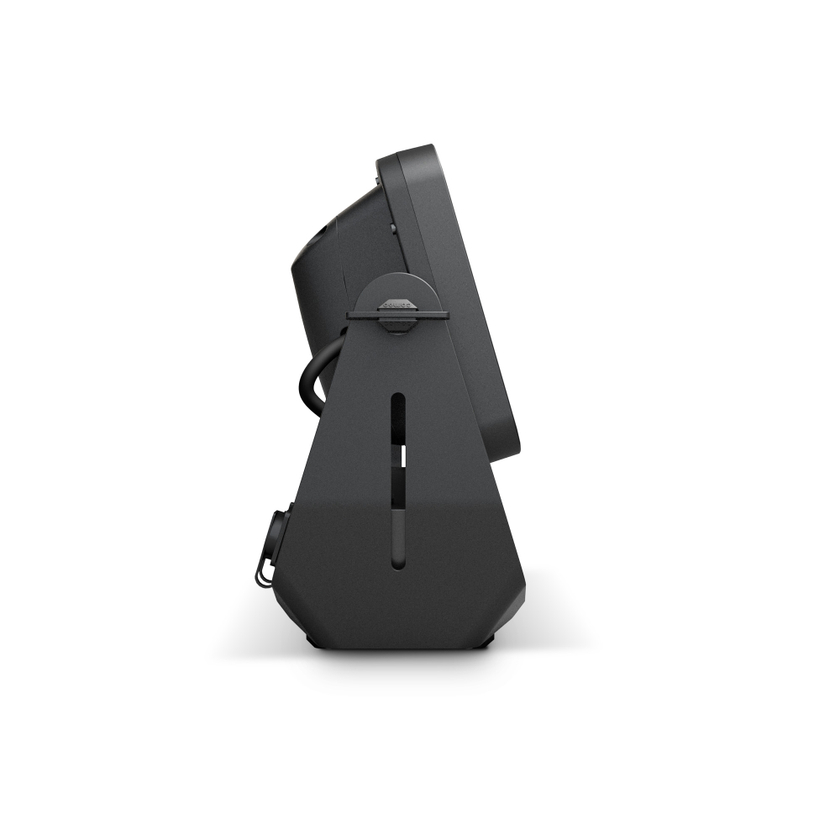
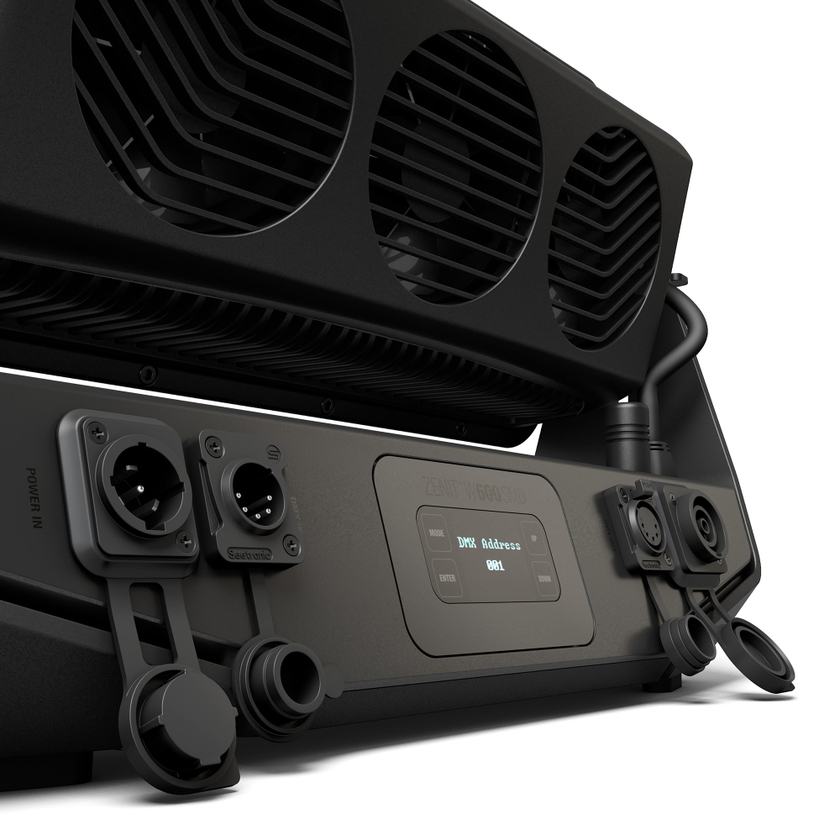
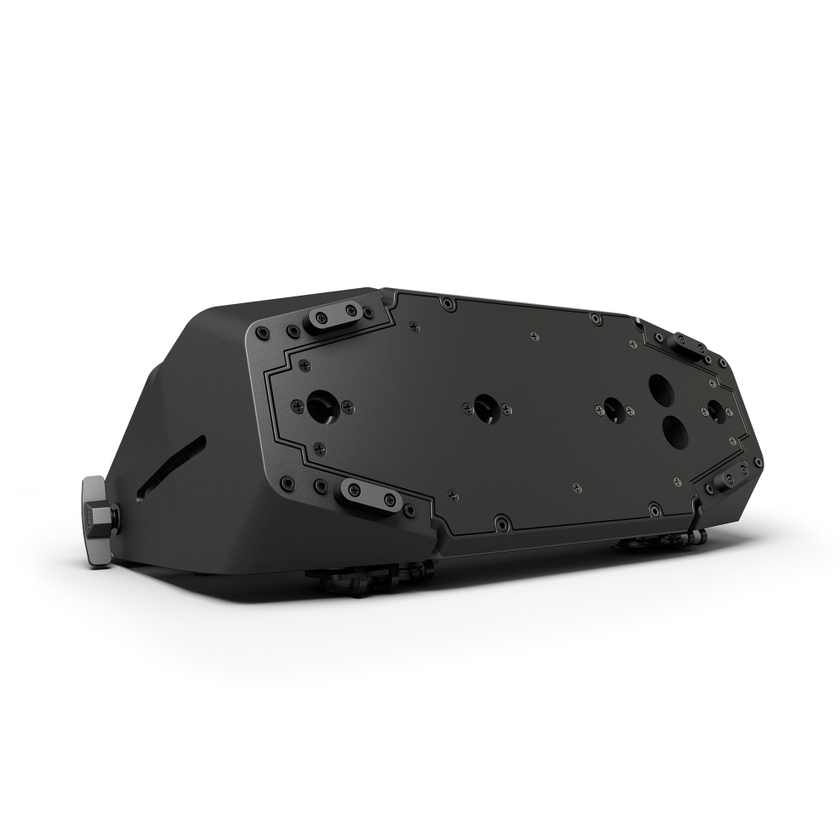
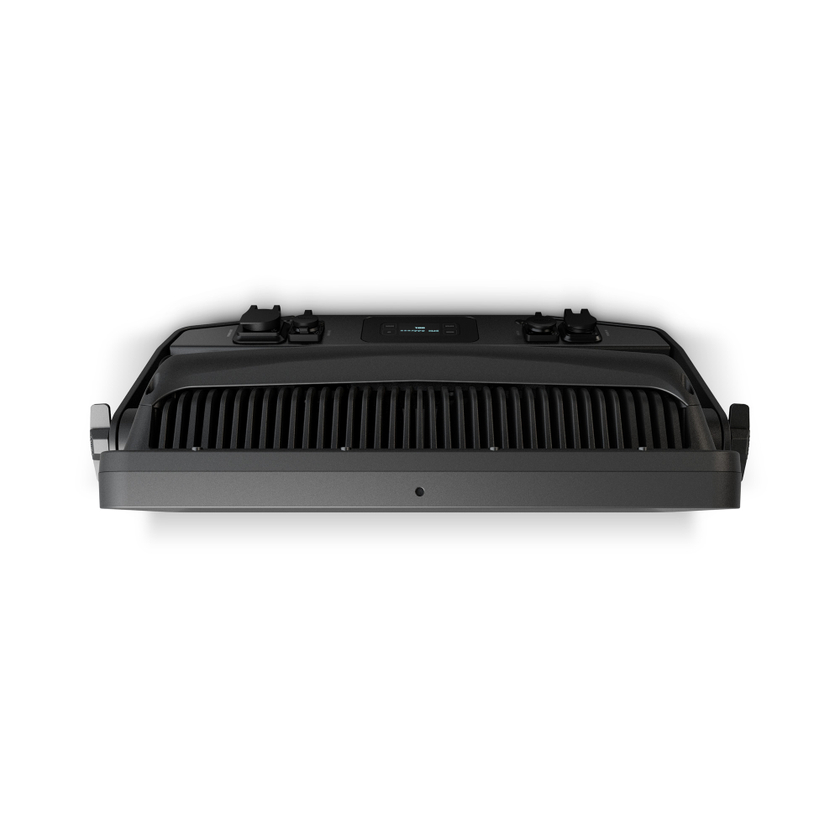
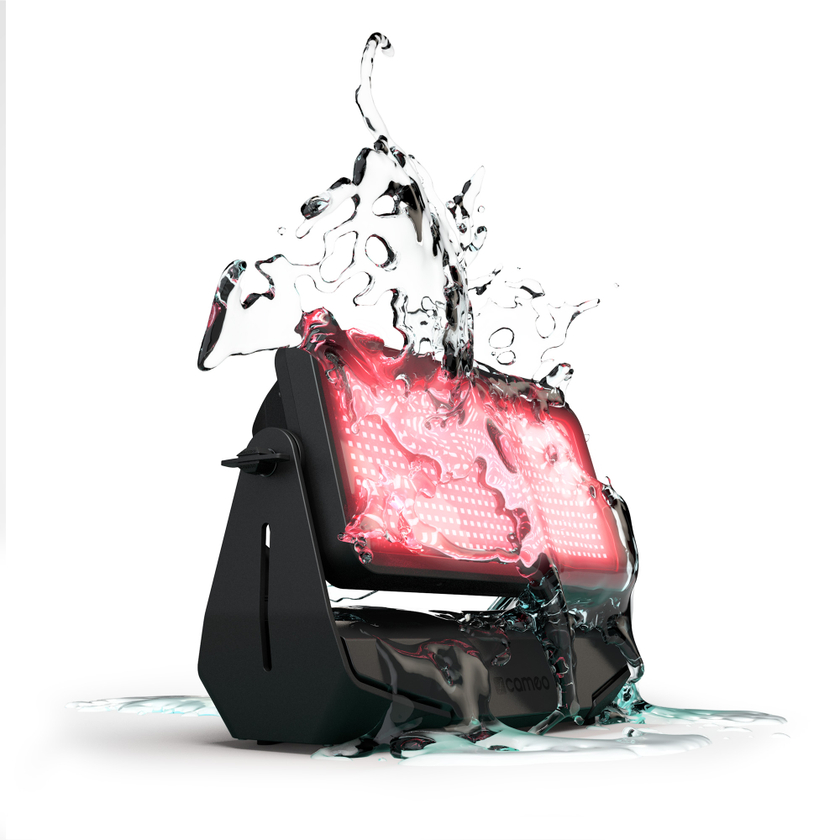
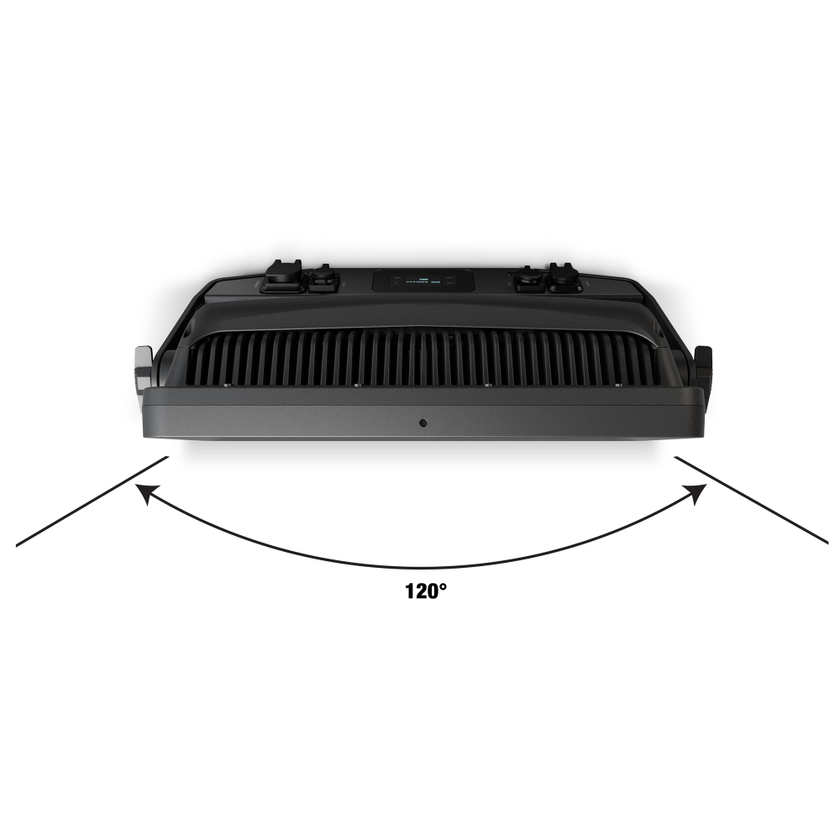
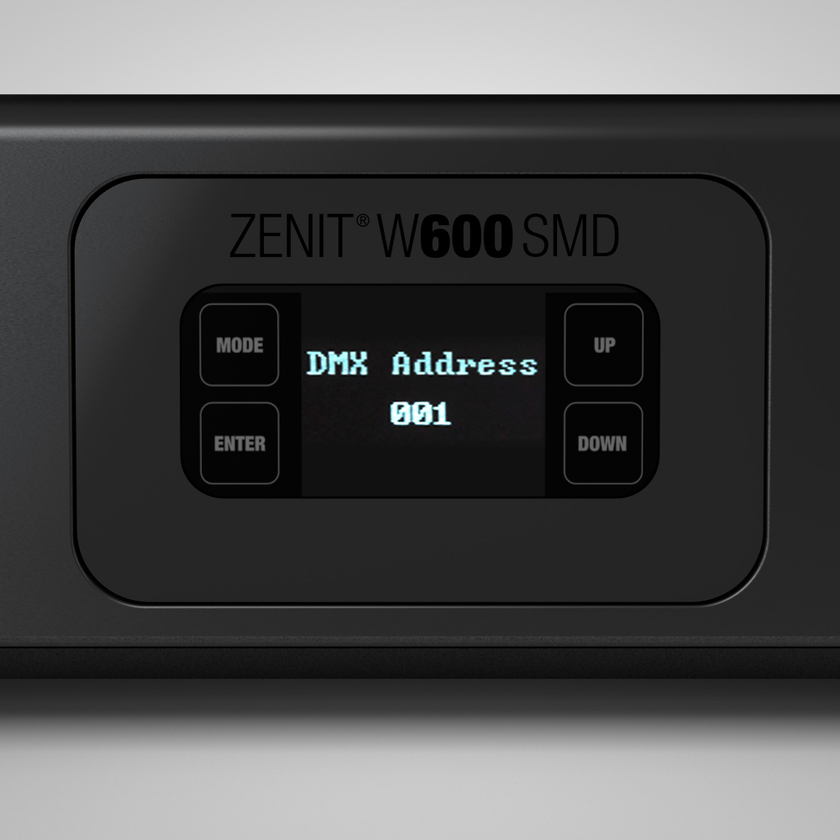
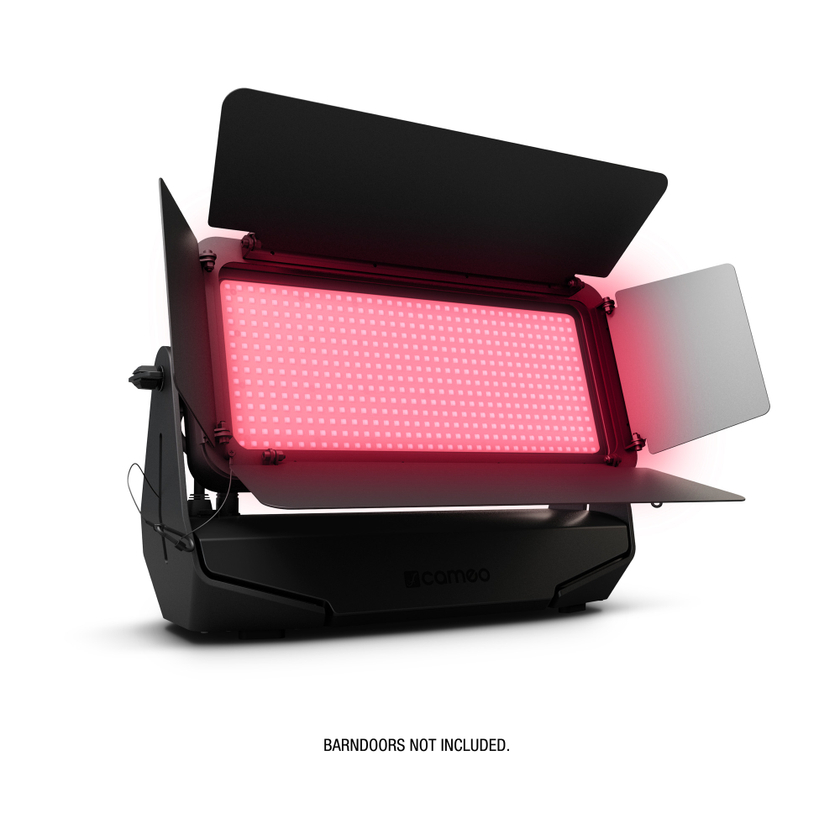
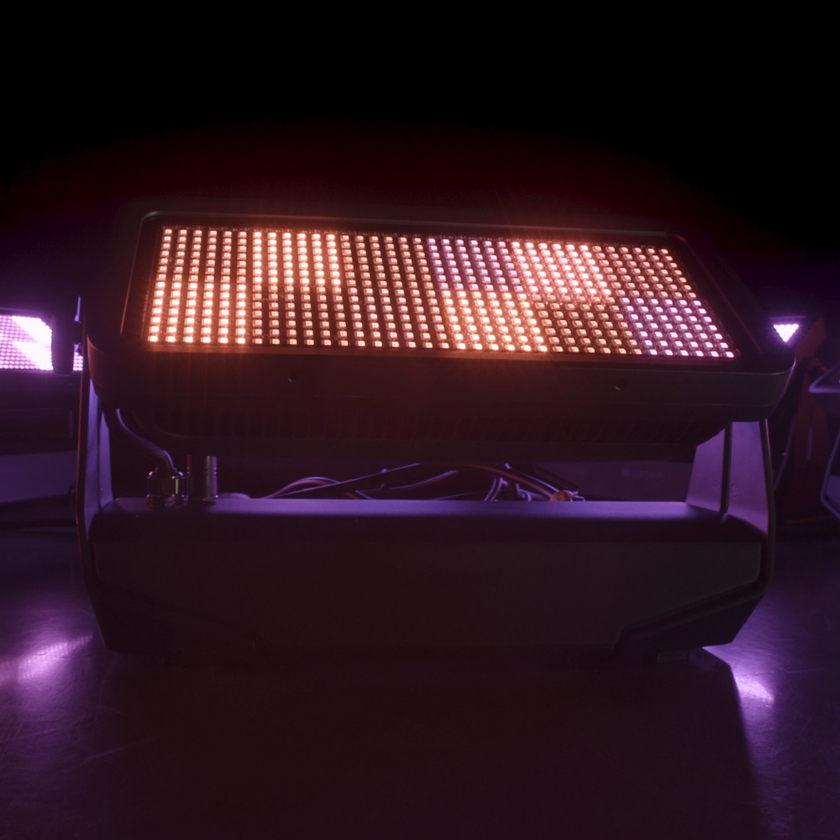
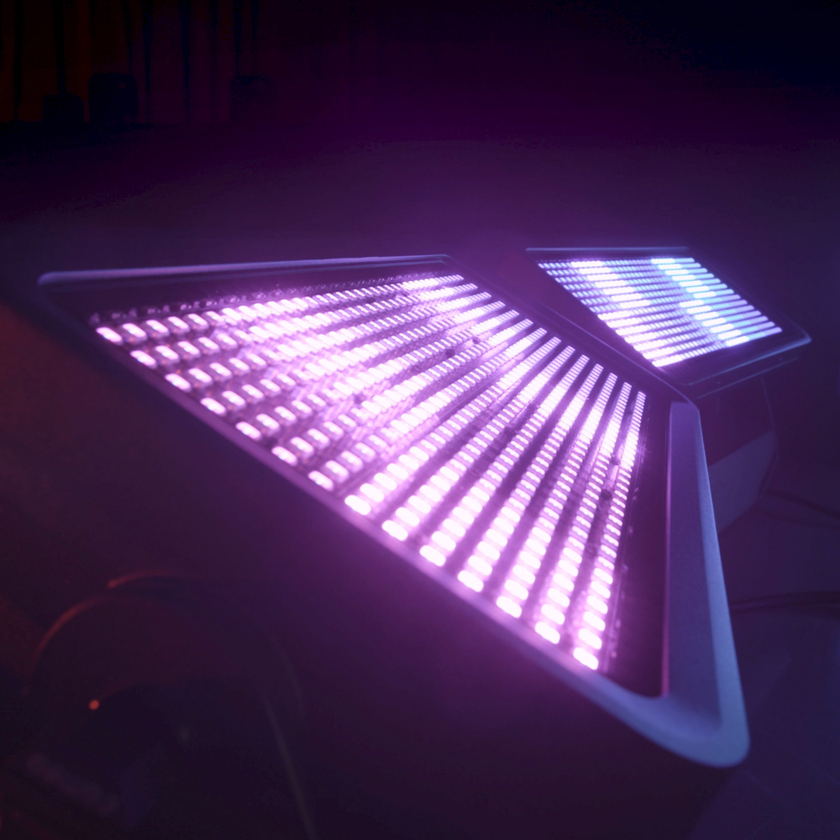
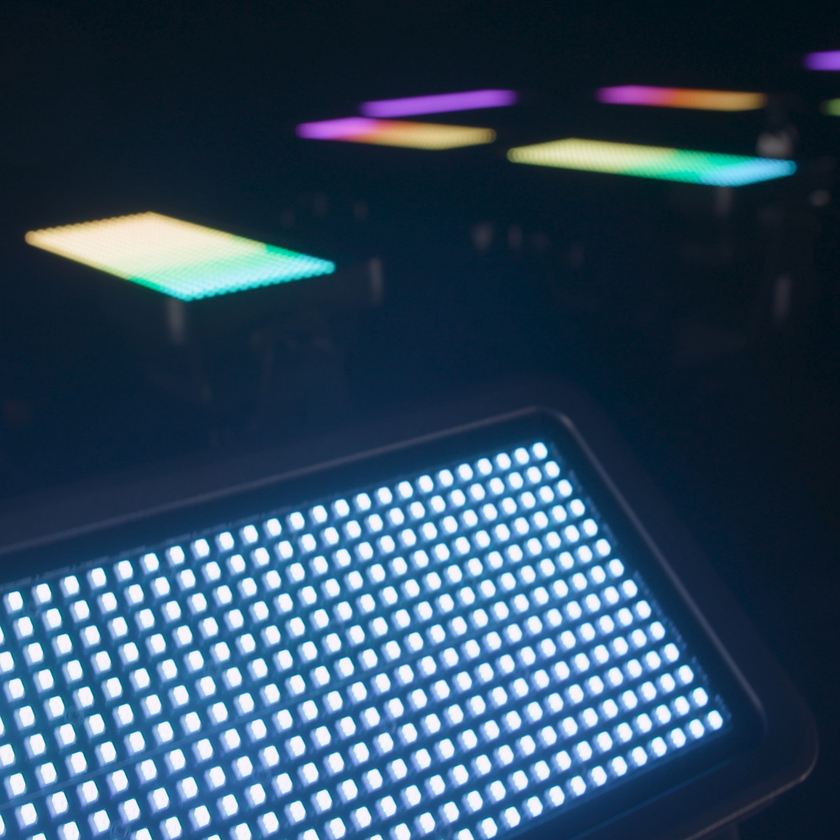
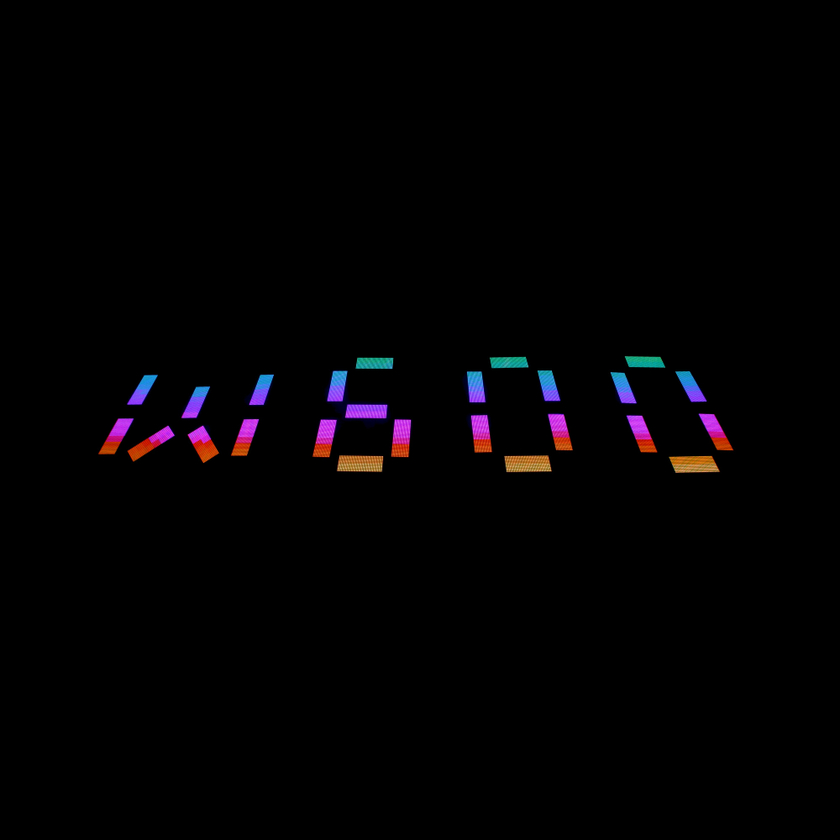
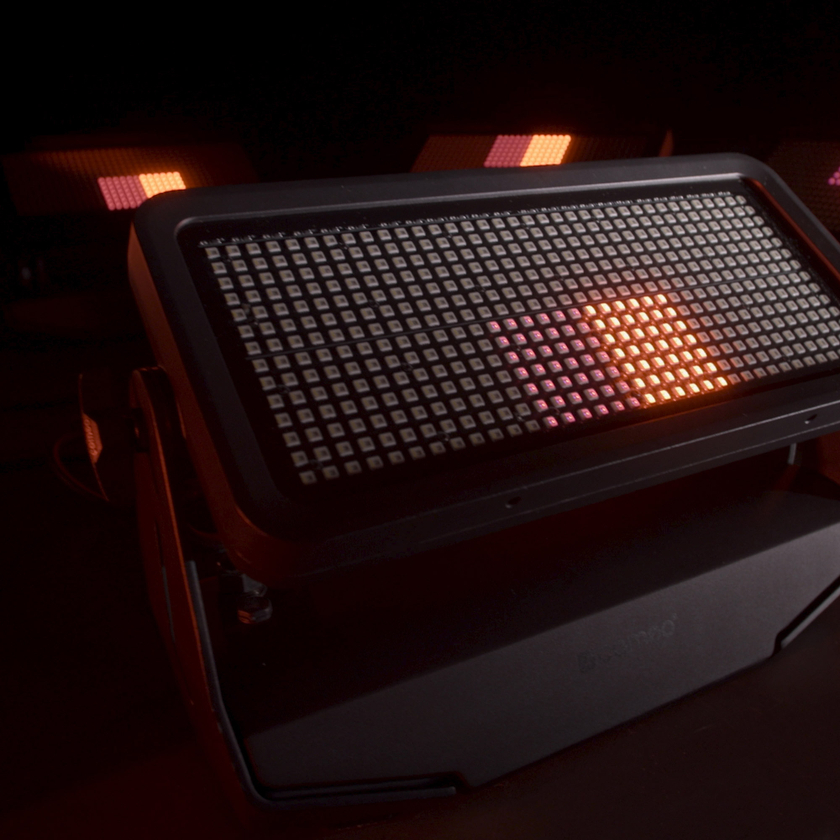
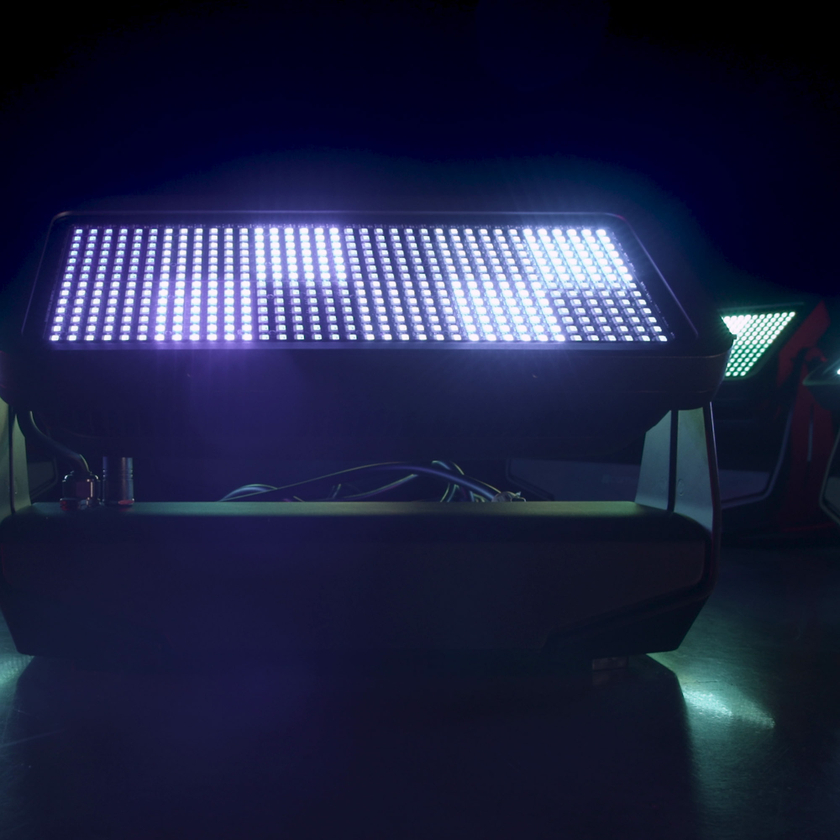
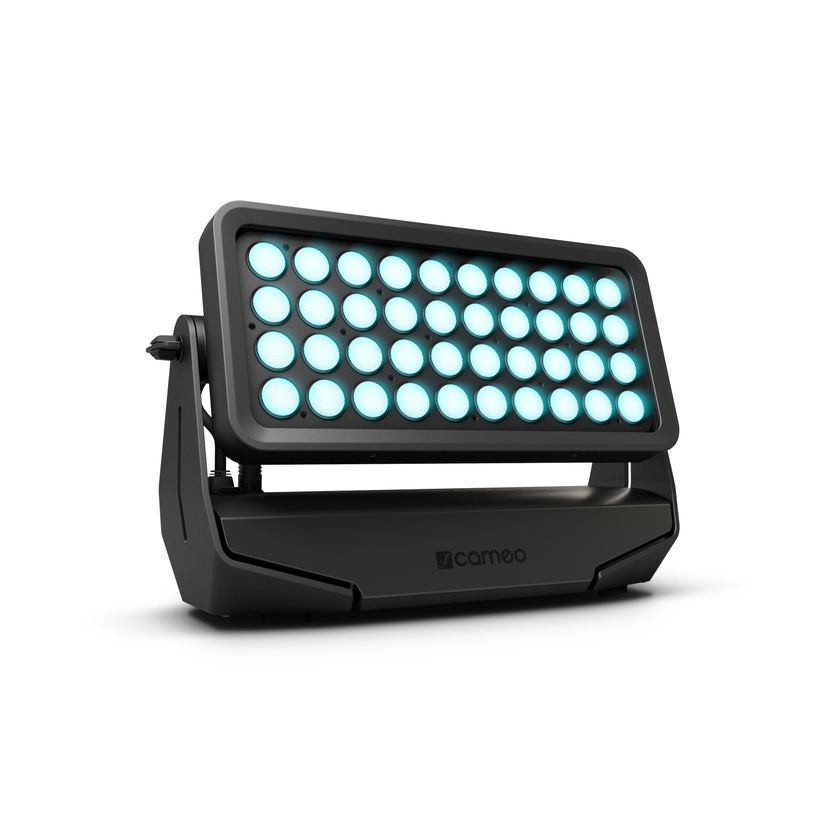
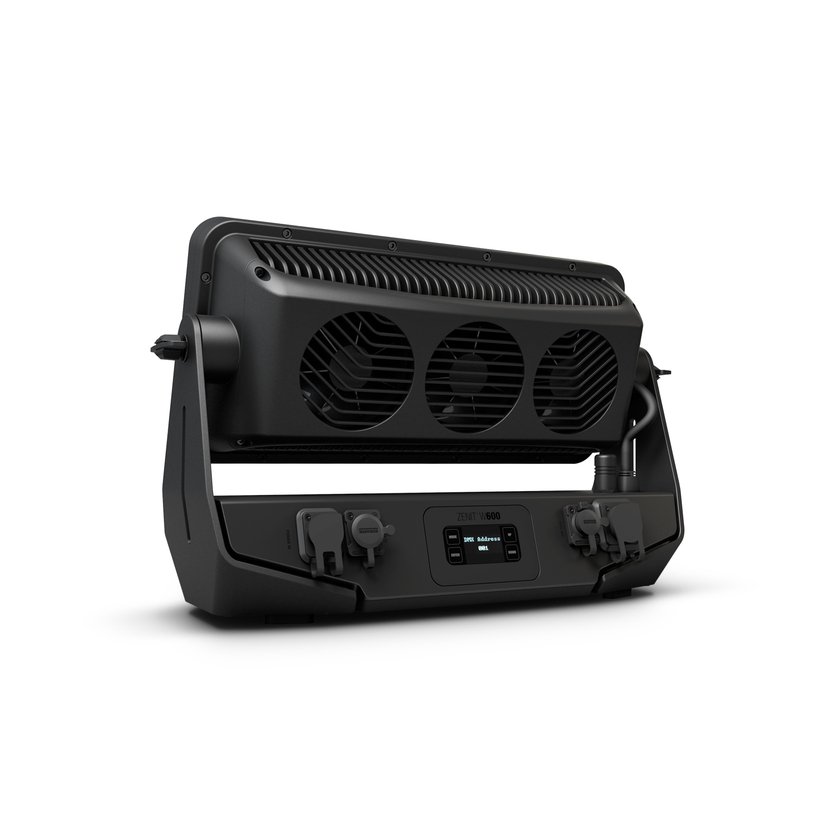
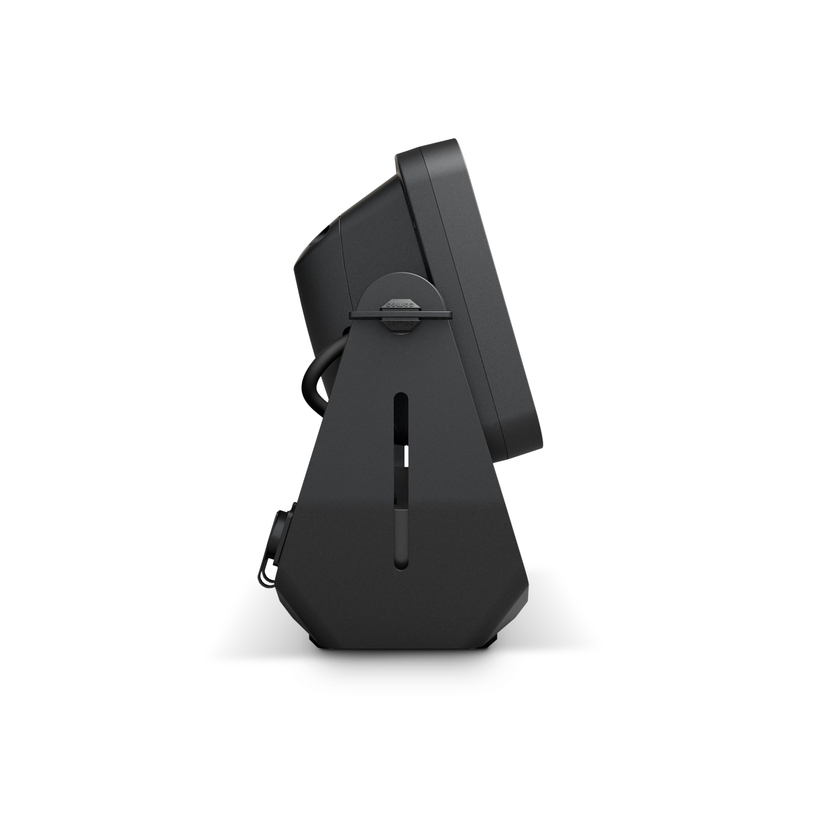
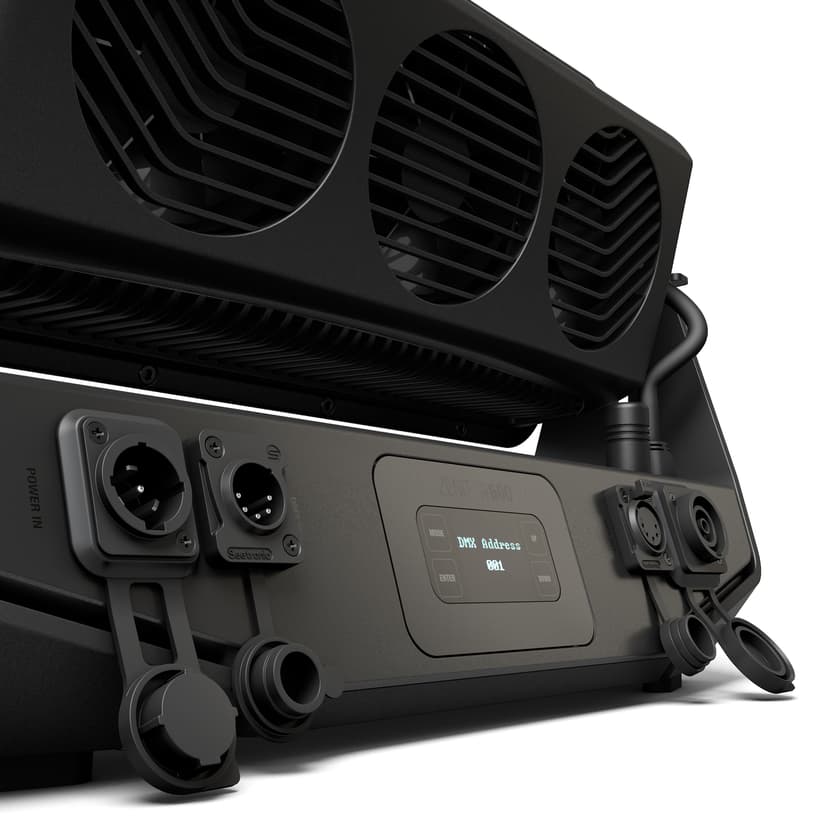
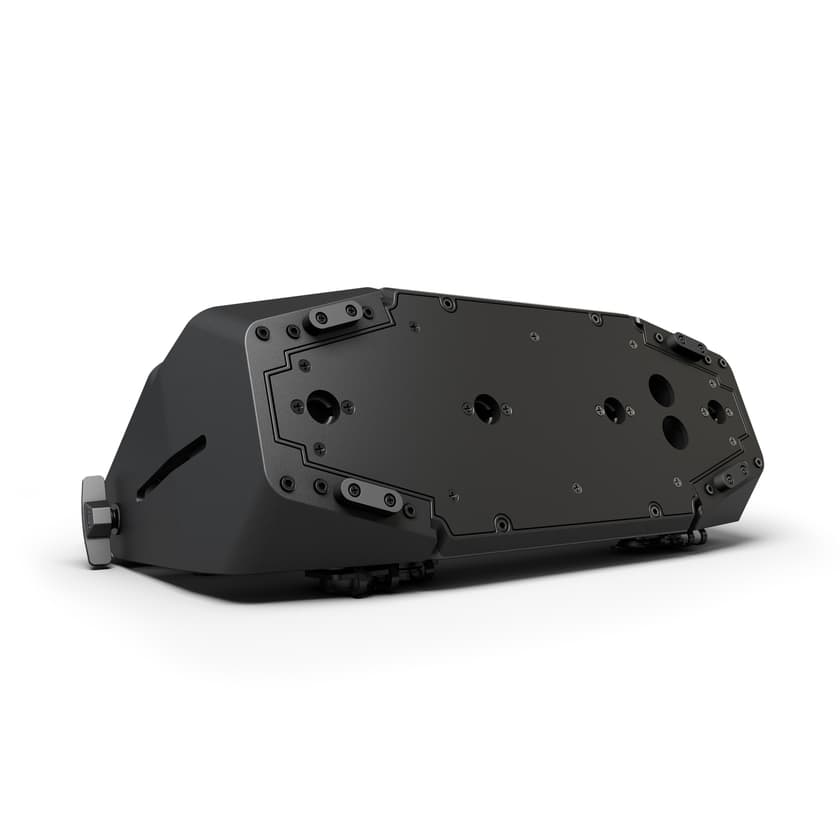
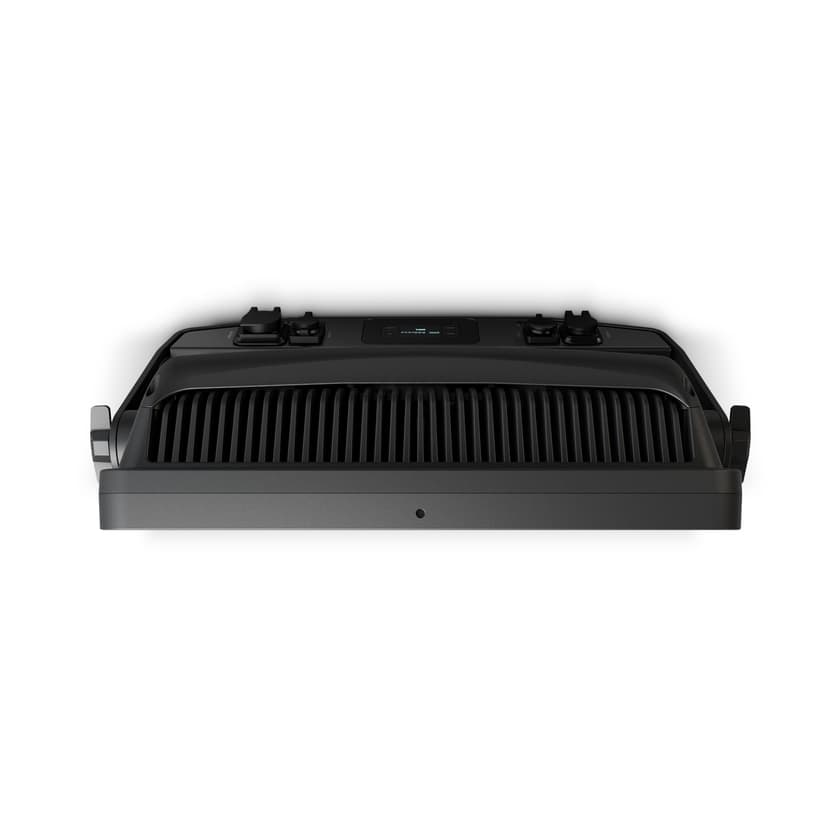
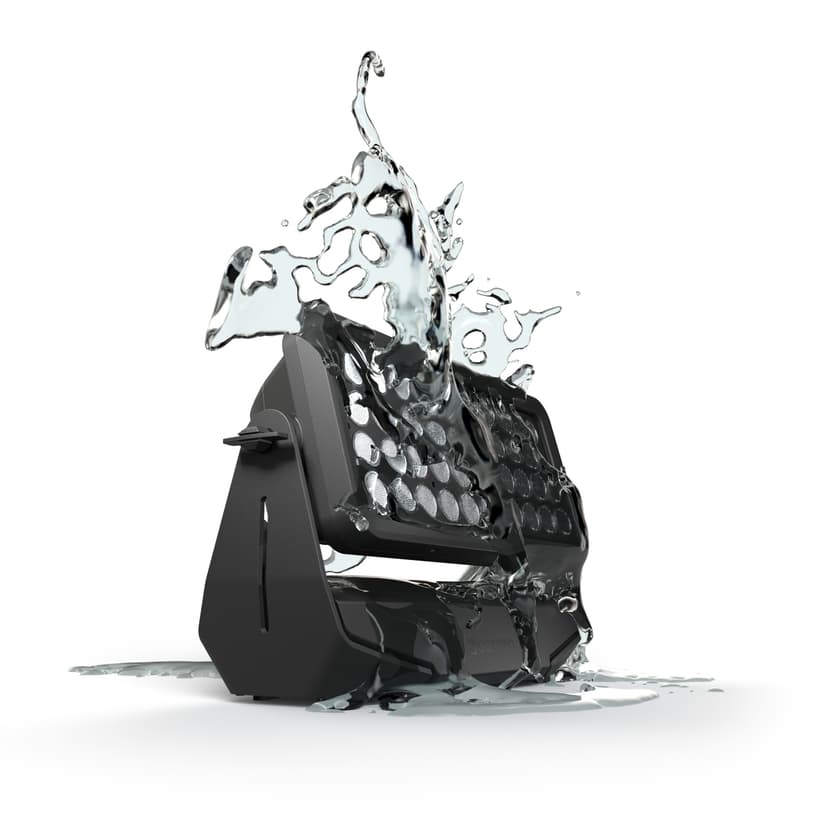
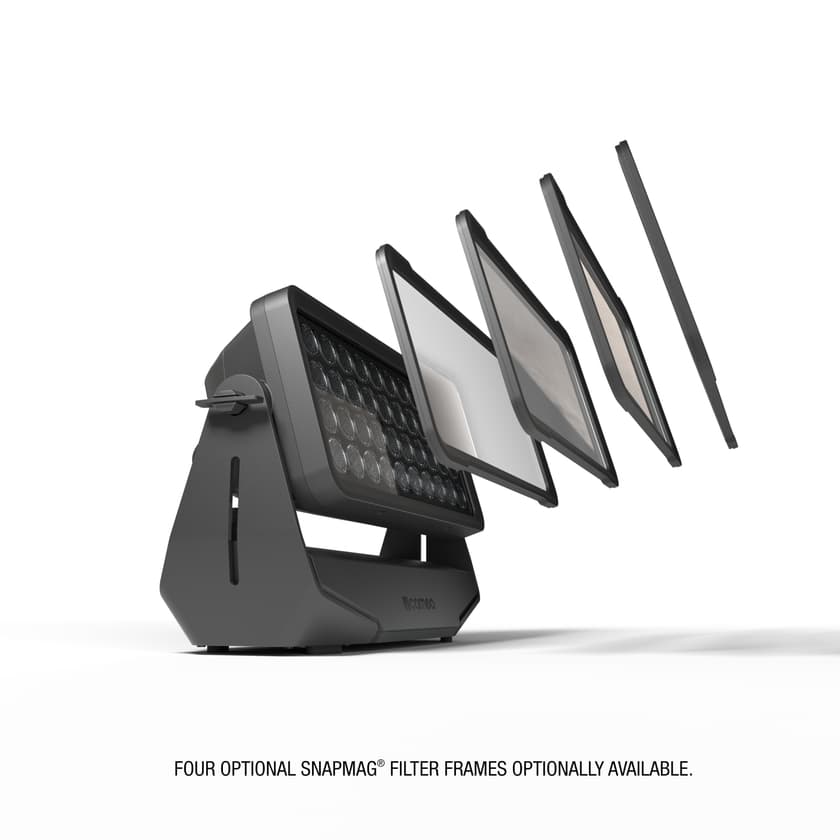
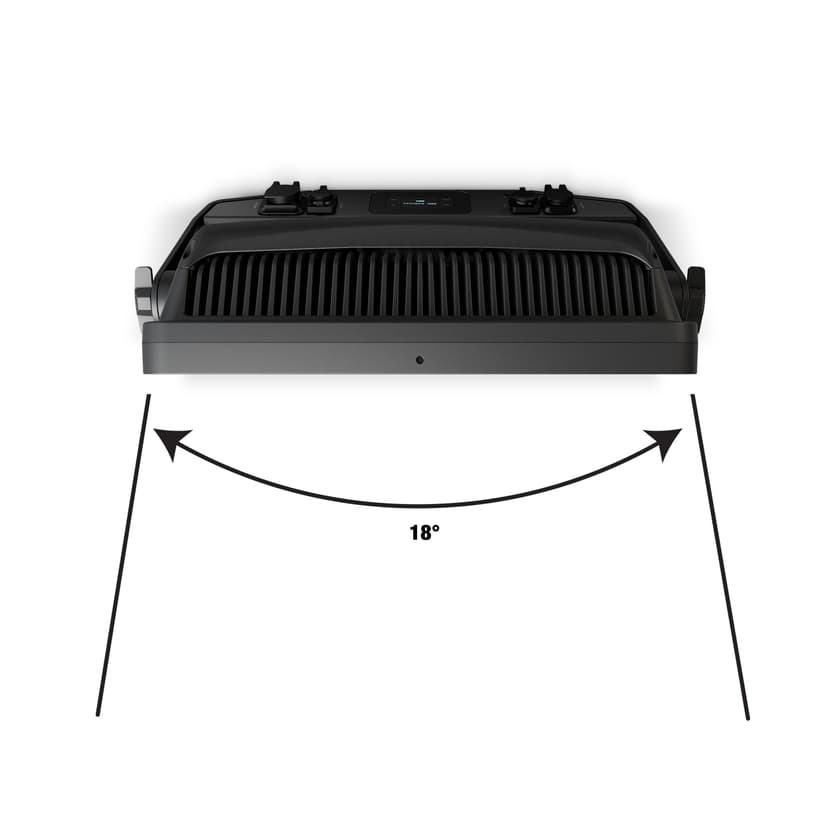
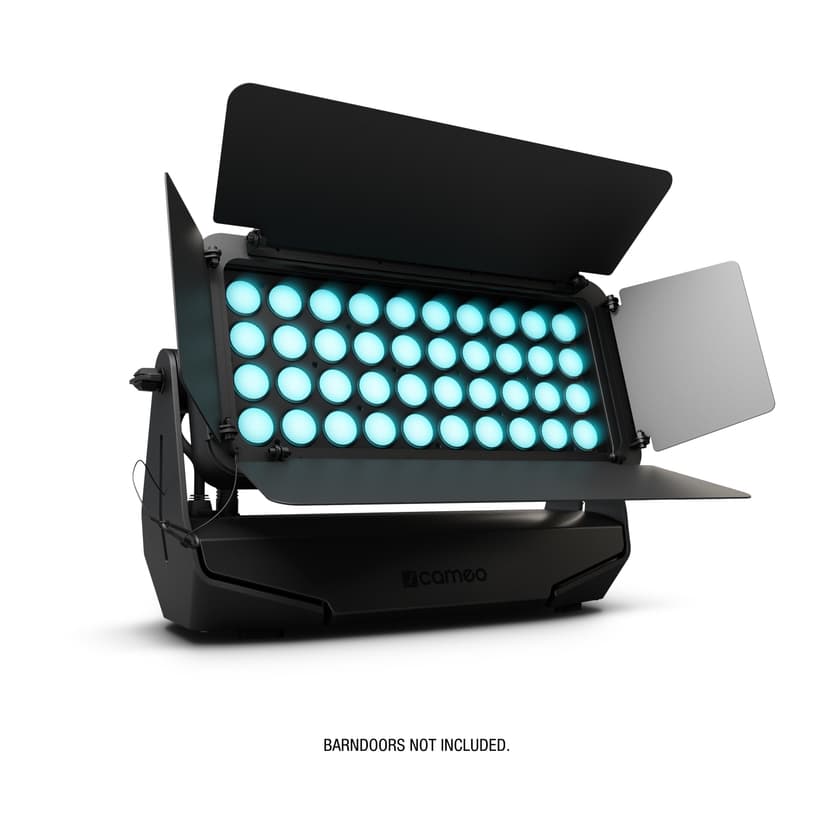
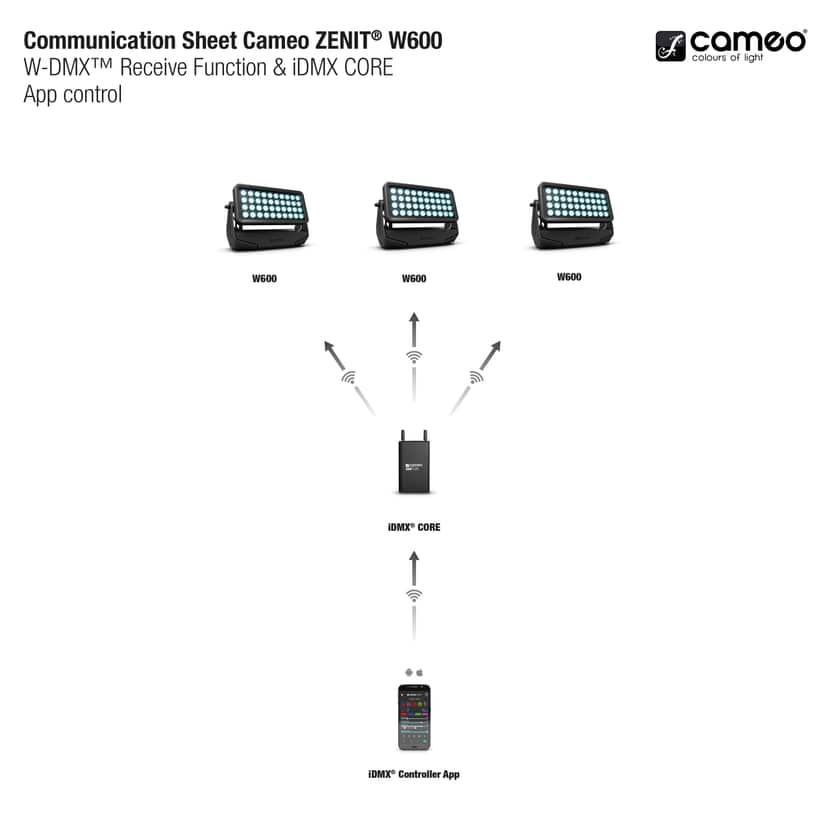
Toni Llobet: For me a stadium like this is all about building depth – layer after layer of light from the floor all the way to the back of the stands. Each Cameo fixture covers one of those layers, and which model goes where really comes down to how far it sits from the audience and the cameras – that distance determines whether its pixel detail will actually read on screen. The 152 Cameo ZENIT W600 SMD dressed the main groundsupport towers, and I always like to work this kind of fixture vertically. Mounted that way they gave me layers of depth and, crucially, two things at once: a general wash across the whole floor, and eye candy for the cameras. Because the fixture is pixelated, I can work it very organically – running an effect across the pixels, or using just half of it so it reads almost like a small LED bar, or a square of LED, depending on whether I cut the fixture horizontally or vertically. That flexibility is huge on a show like this.
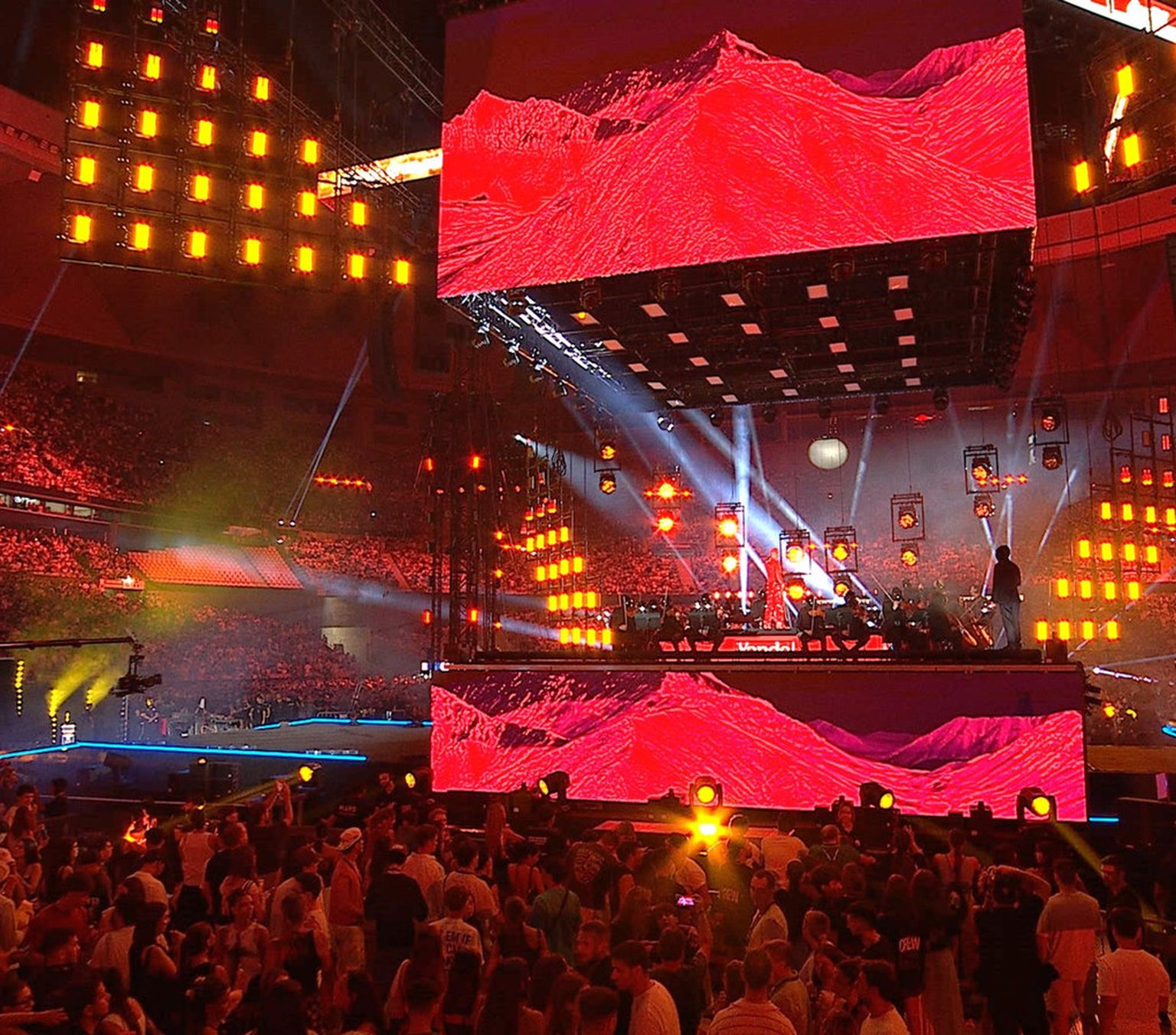
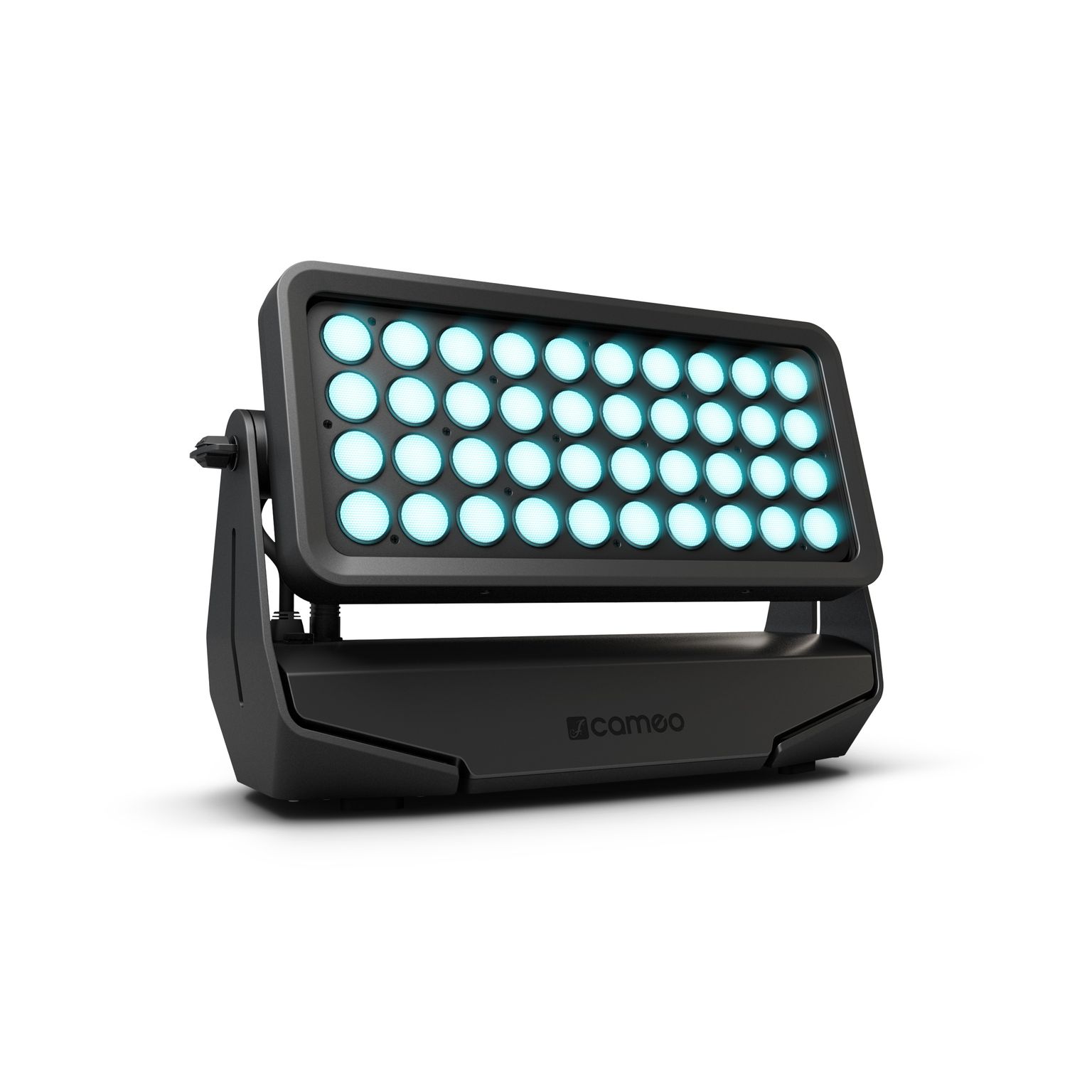
The 88 Cameo ZENIT W600 were distributed across the vomitories – the entrances where the public accesses the stands, all around the stadium. I didn’t need the SMD version here, because these fixtures sit very far from both the audience and the cameras; the pixels simply wouldn’t read at that distance, so there was no point. These fixtures formed the very last layer in the background – light coming straight from the stands, almost as if it were the camera flashes of the people in the crowd, a kind of paparazzi mode. It gives the background a living, dynamic layer of light and information.
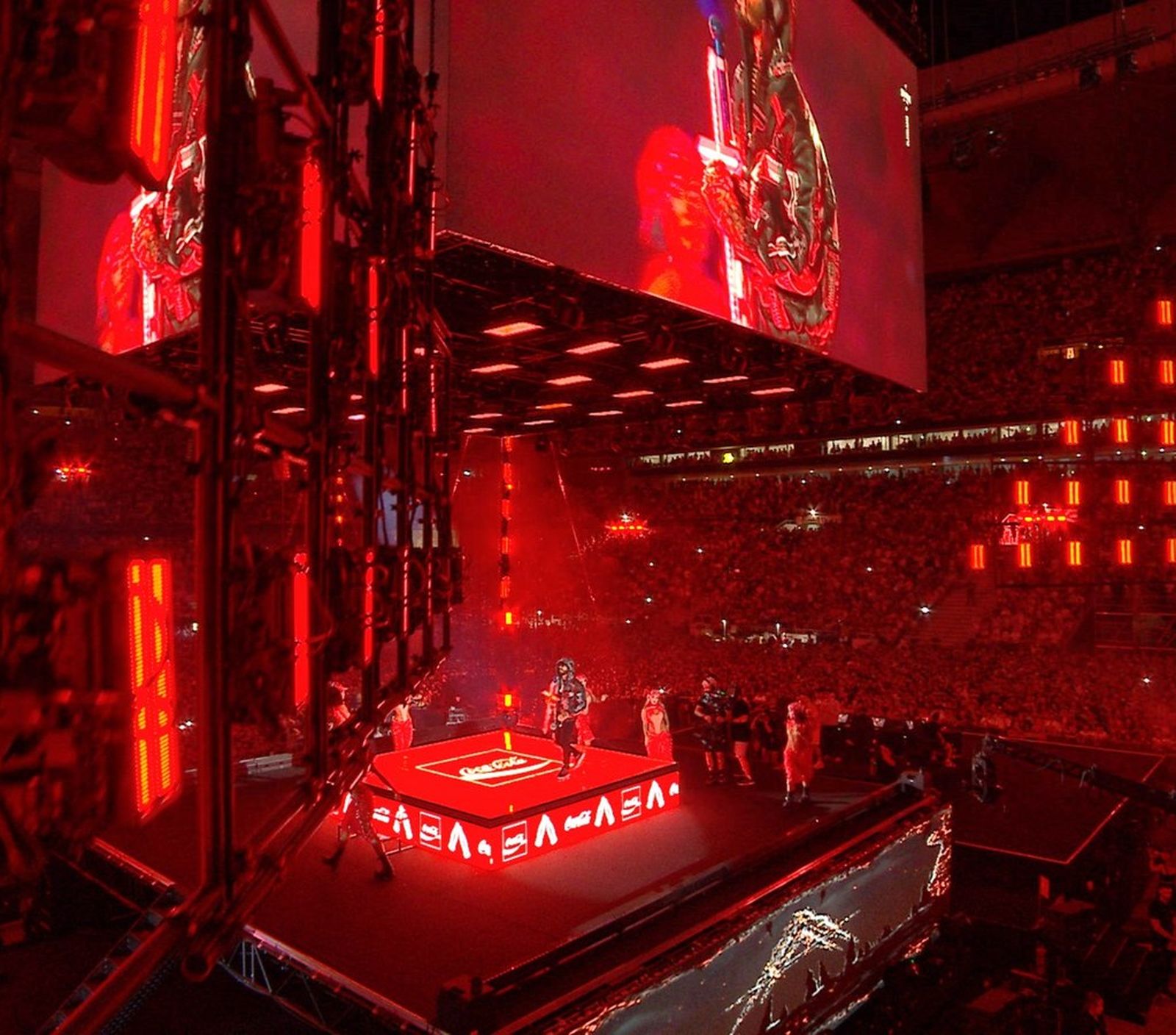
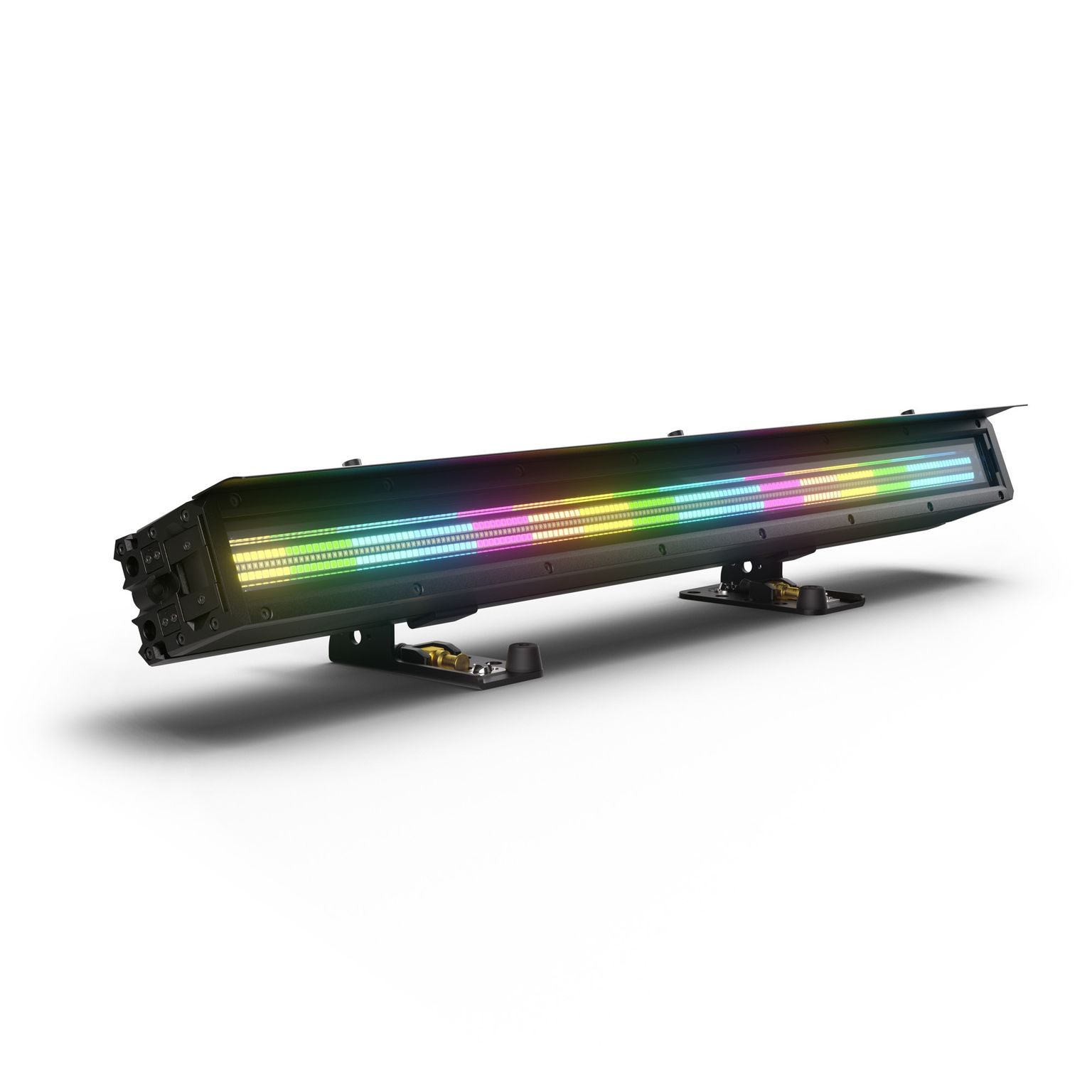
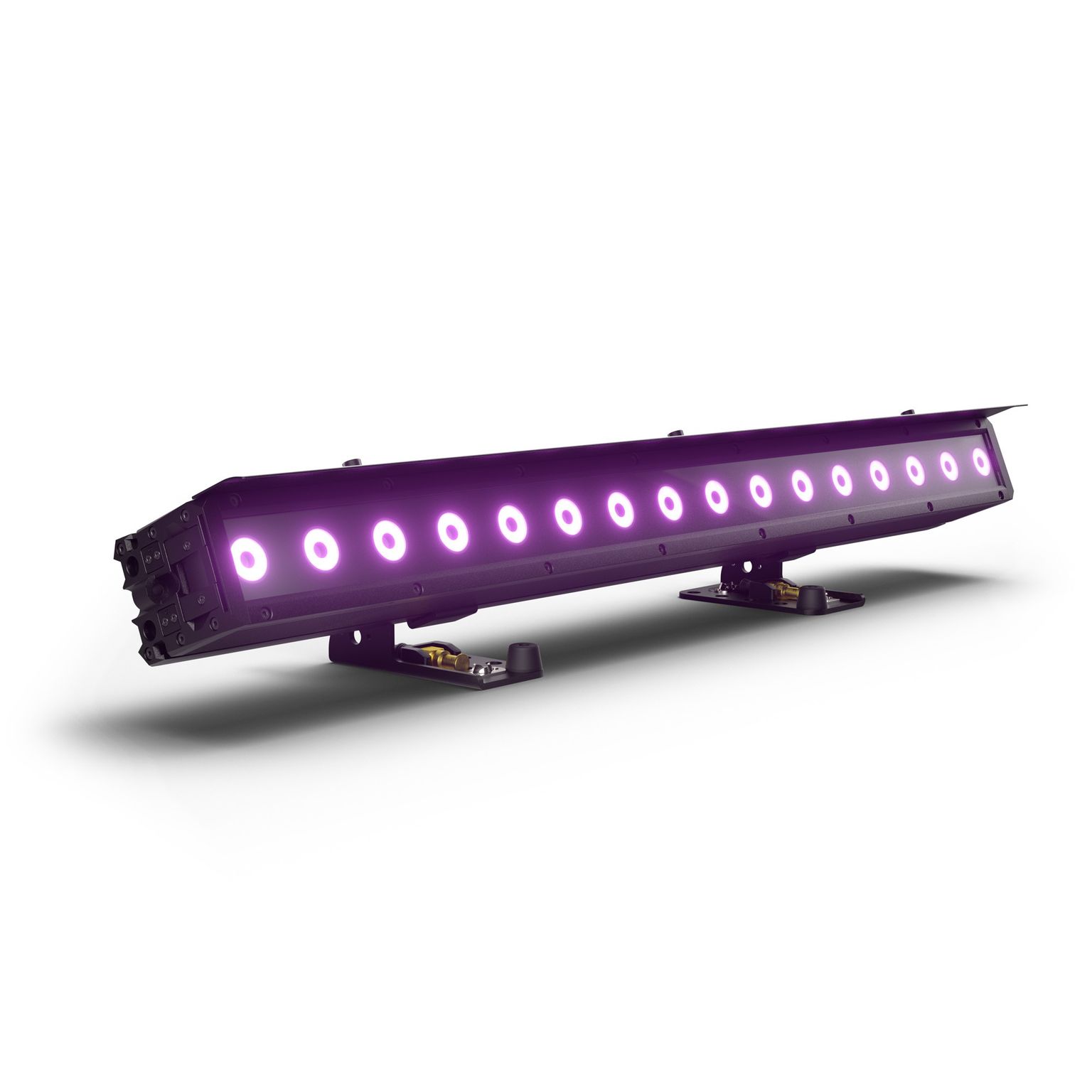
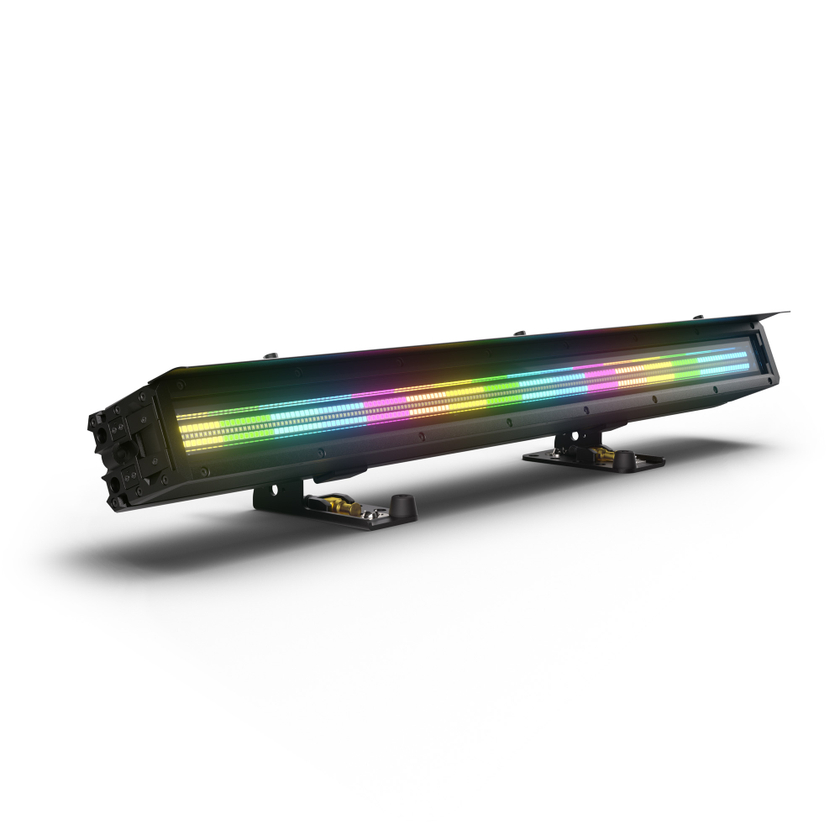
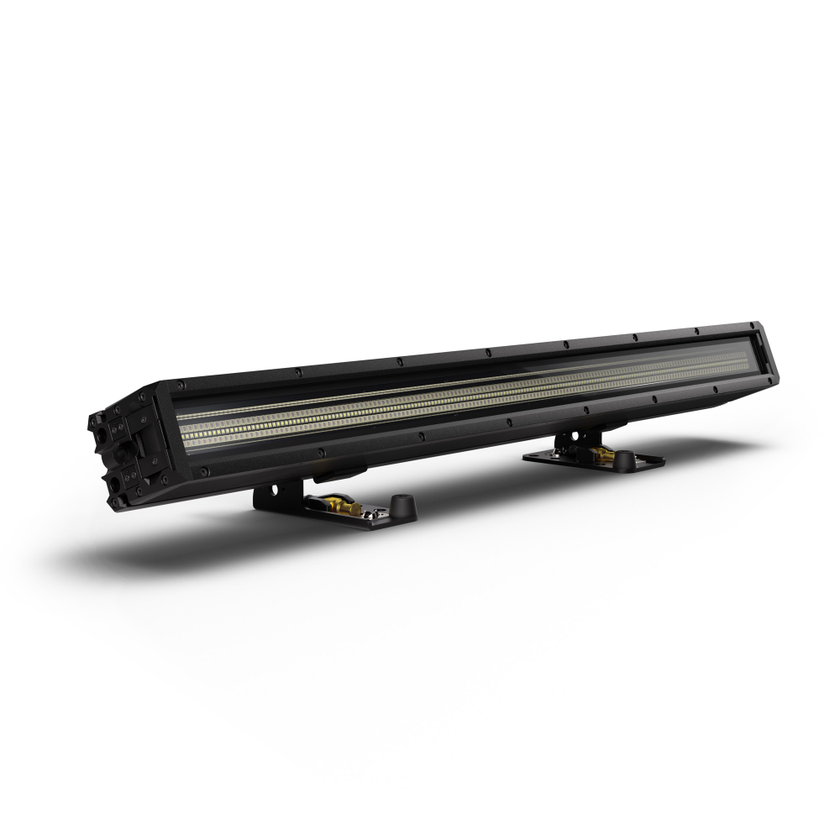
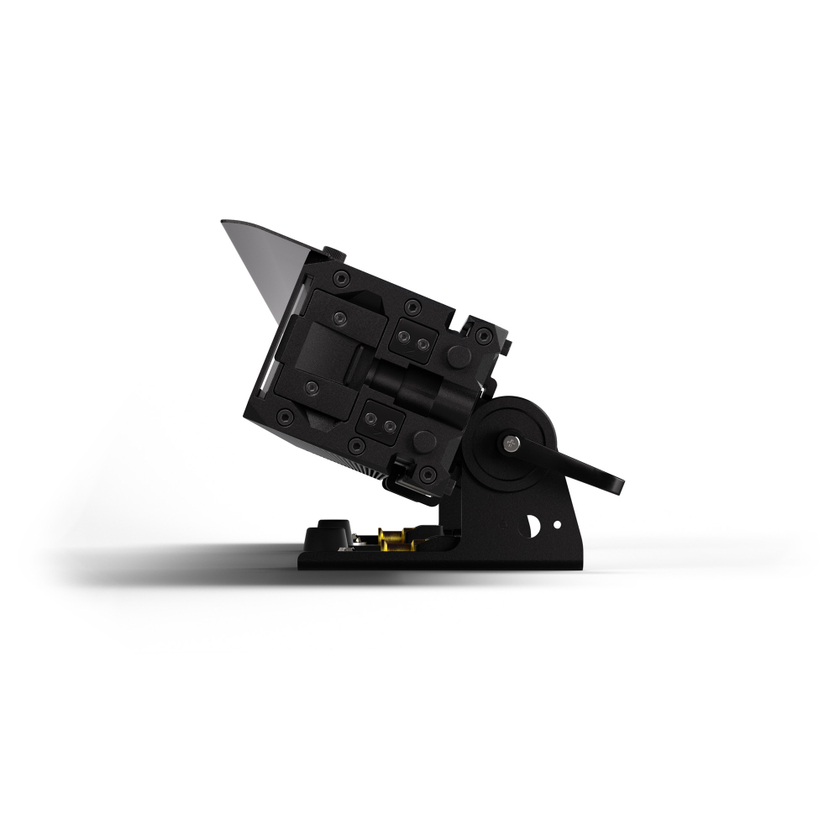
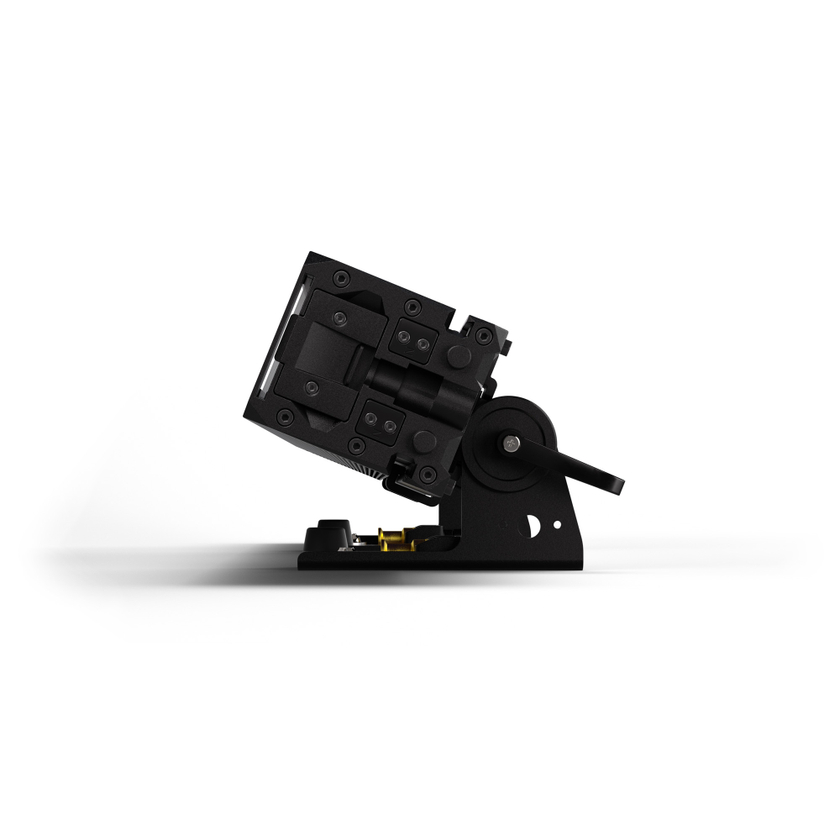
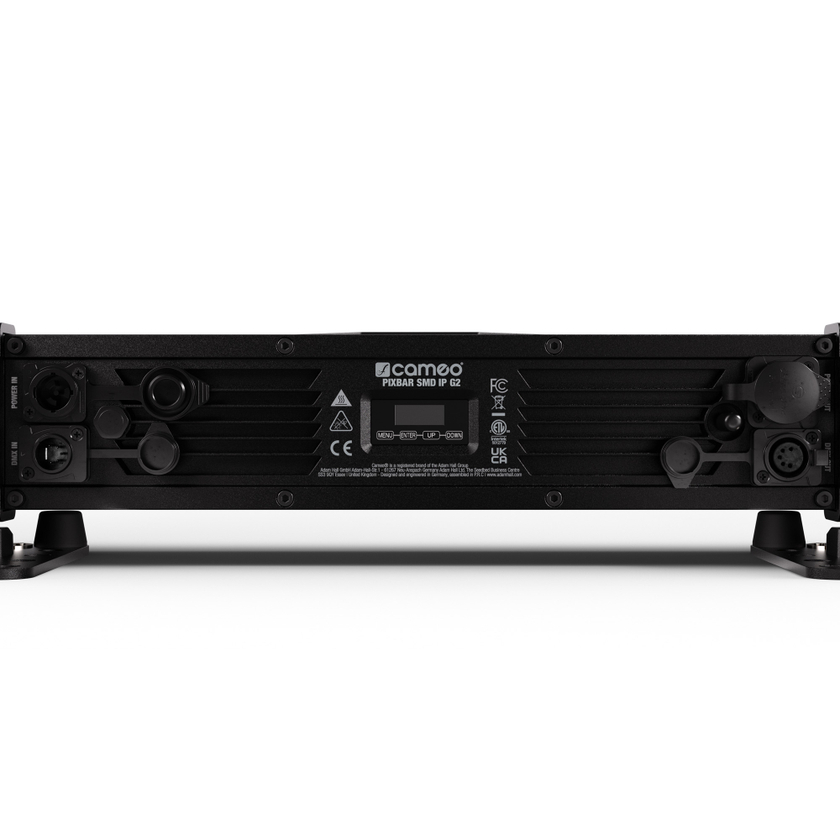
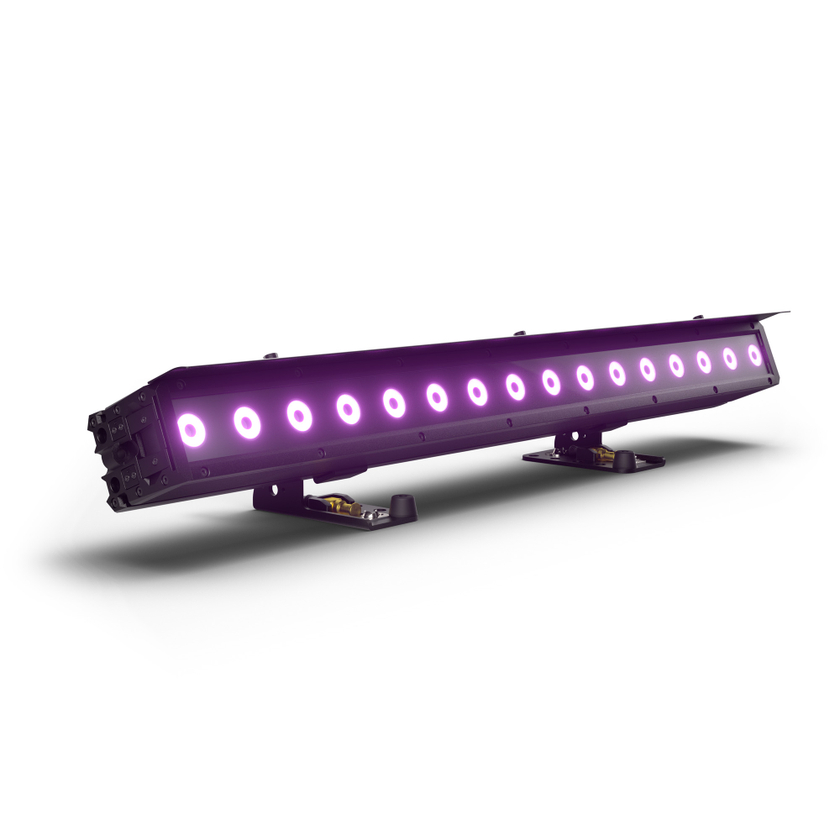
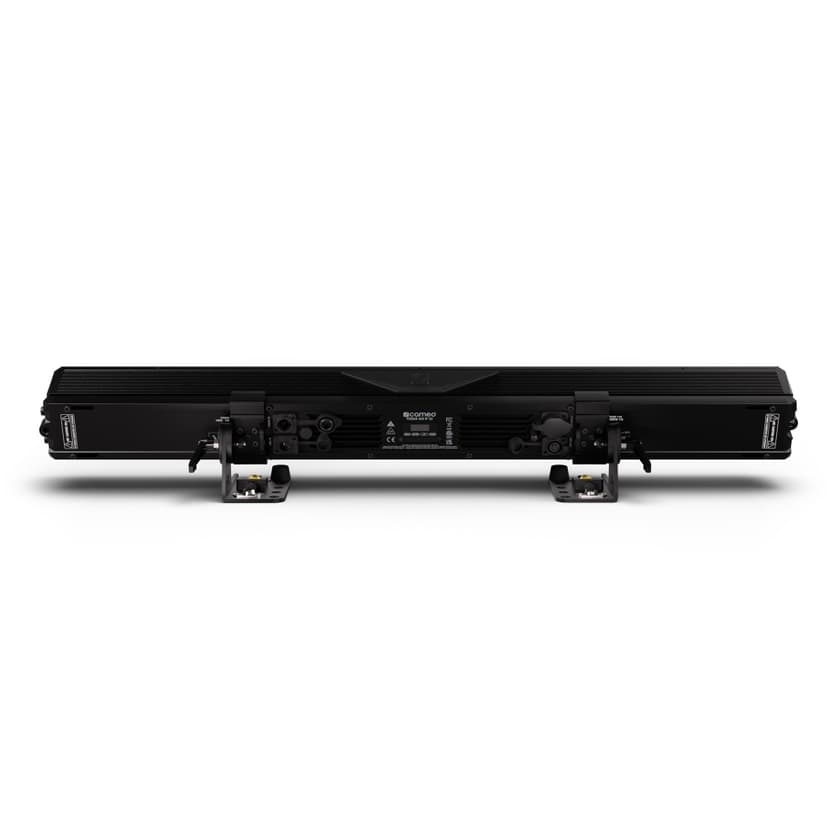
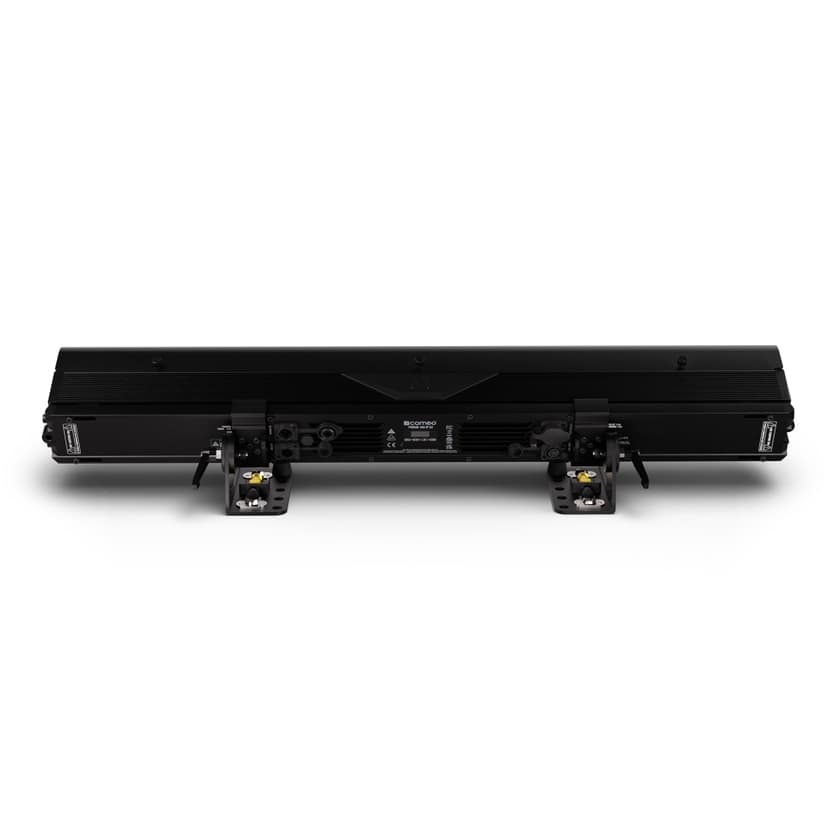
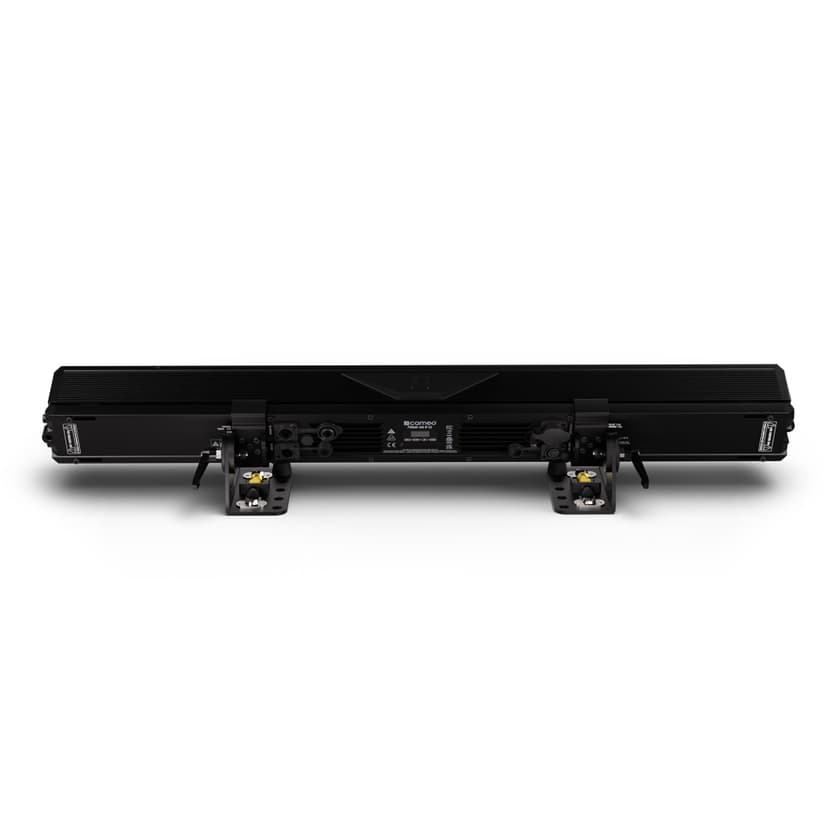
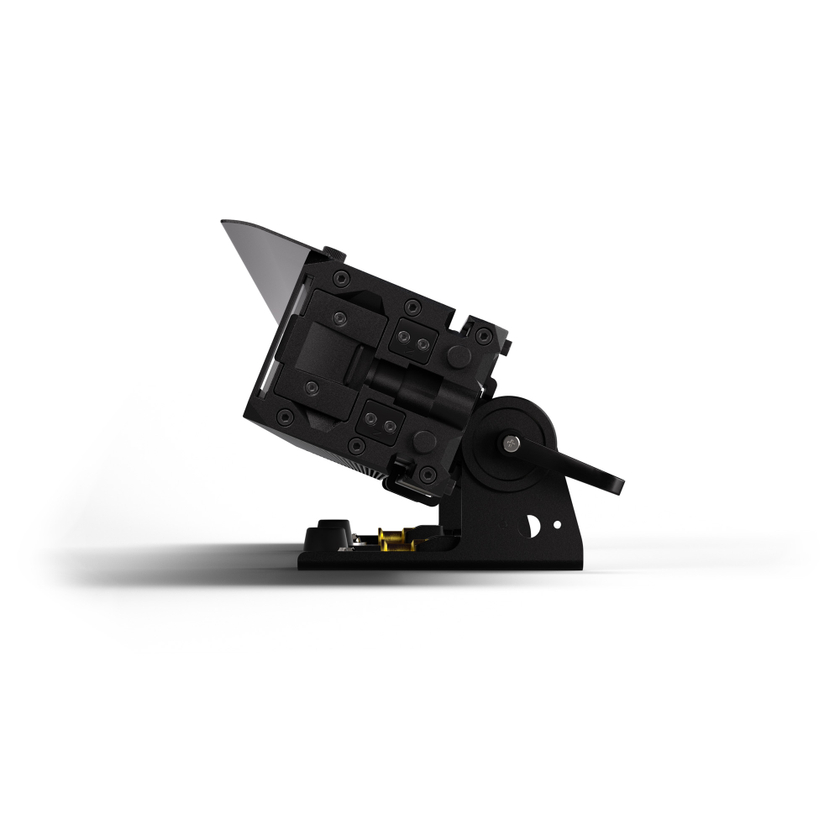
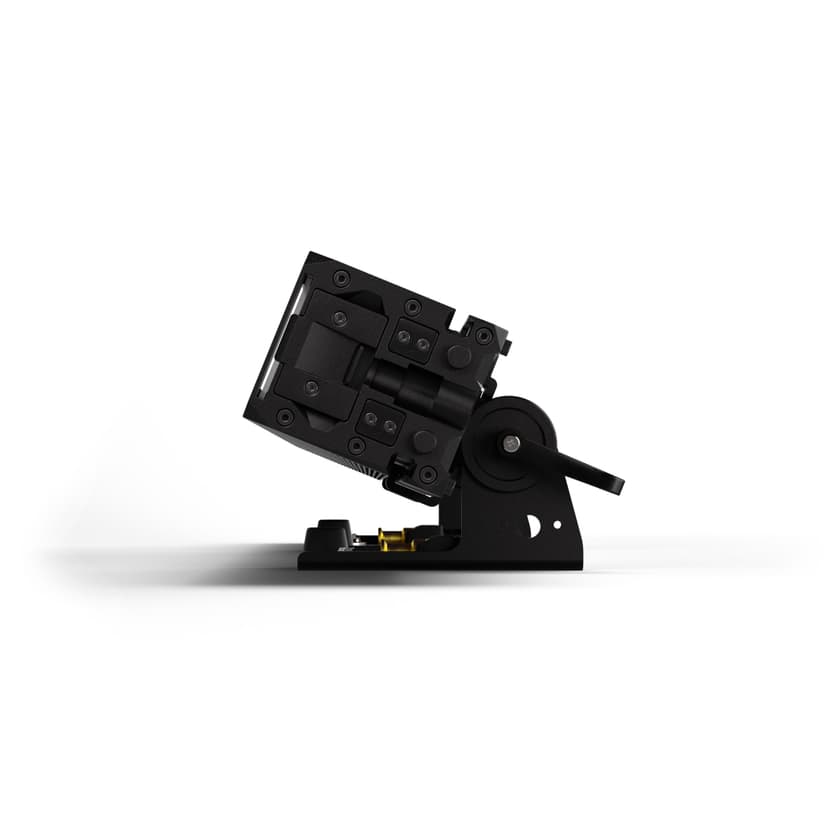
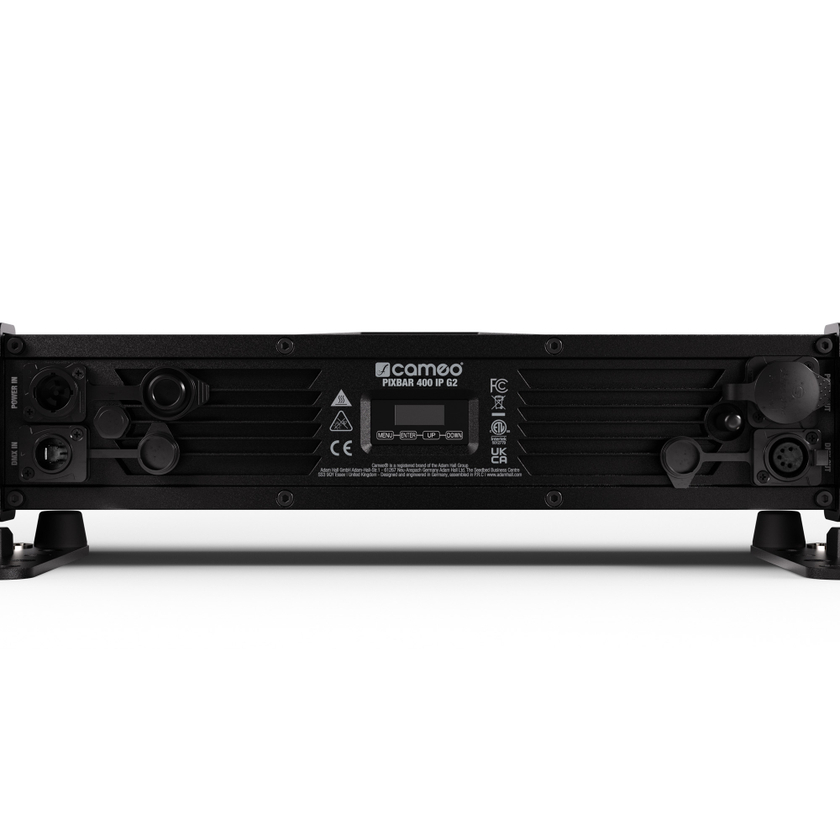
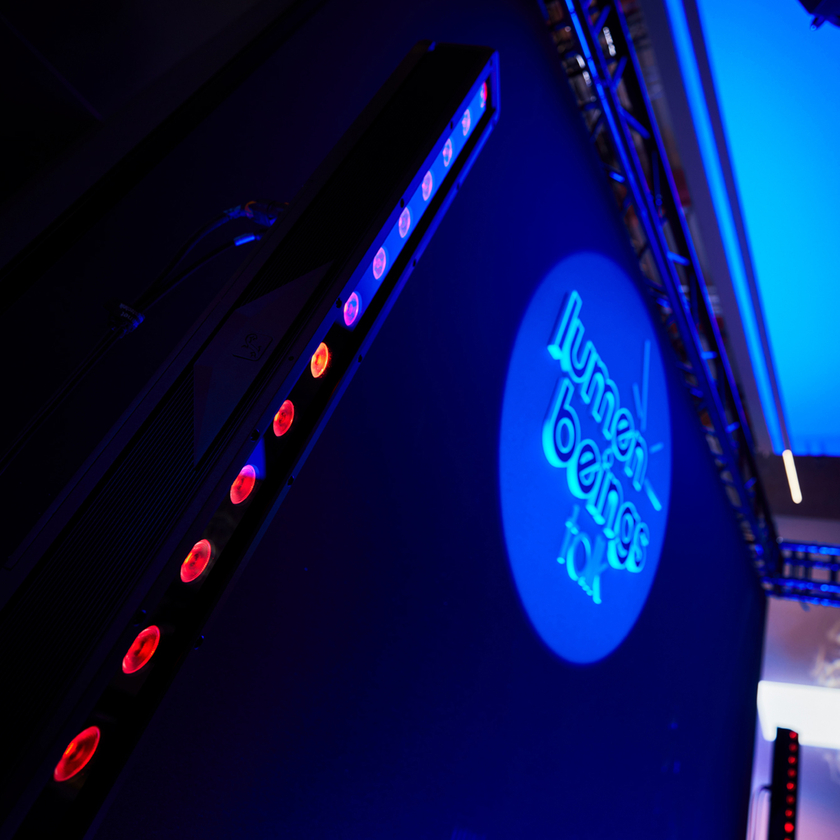
The 28 Cameo PIXBAR 400 IP G2 were used as footlight along the walkway. Since the characters cross the entire walkway and pass right beside the towers, footlight was the only way I had to guarantee quality light on them along the whole path. It keeps the person properly lit from the moment they step out until they reach the stage, no matter where they are on that walkway. The 48 Cameo PIXBAR G2 SMD gave us eye candy again. They were the background for the master shot of the boxer entrances, and also the background for the casters’ shots. Here the SMD absolutely made sense because they’re close to camera, so all that pixel detail actually reads in the shot.
“Knowing that a color reads the same across all fixtures lets me build clean, coherent looks that hold up on screen.”
Toni Llobet, Lighting Director and Designer
Which qualities of the Cameo fixtures were particularly important for you?
Toni Llobet: A couple of things really stood out. The first is color fidelity across the fixtures – having consistent color from unit to unit is essential when you’re running this many of them, because on camera any mismatch between fixtures becomes really obvious. Knowing that a color reads the same across all of them lets me build clean, coherent looks that hold up on screen.
The second is the pixelation. Being able to work at pixel level means I can almost create different fixtures out of the same fixture – by cutting pixels and lighting only certain ones, I can make completely different shapes and forms depending on which pixels are on. And in an eight-hour show it’s always great when a single fixture can do more than one shape or function, because that’s what gives you variety across such a long broadcast. The same unit could be a wash, a bar, a graphic element or eye candy, depending on what each moment and each camera shot needed.

How did you bring boxing, live performances and boxer entrances together within one coherent lighting concept?
Toni Llobet: We created one overall concept for the entire event, and then each format lives within it at a different intensity. During the fights the look is calmer and less spectacular – we can’t distract the boxers, so it’s the most restrained moment. The boxer entrances are where we have the most freedom: that’s where we can be more creative and really push the show. And then there are the musical performances. Some artists bring their own lighting designer, and honestly it’s great to see how our design works together with the shows of other designers and band teams.
For me the key to all of this is the design itself. If the design works, the programming and the operation flow naturally in that direction. A strong underlying design is what holds three very different formats together as one coherent event.
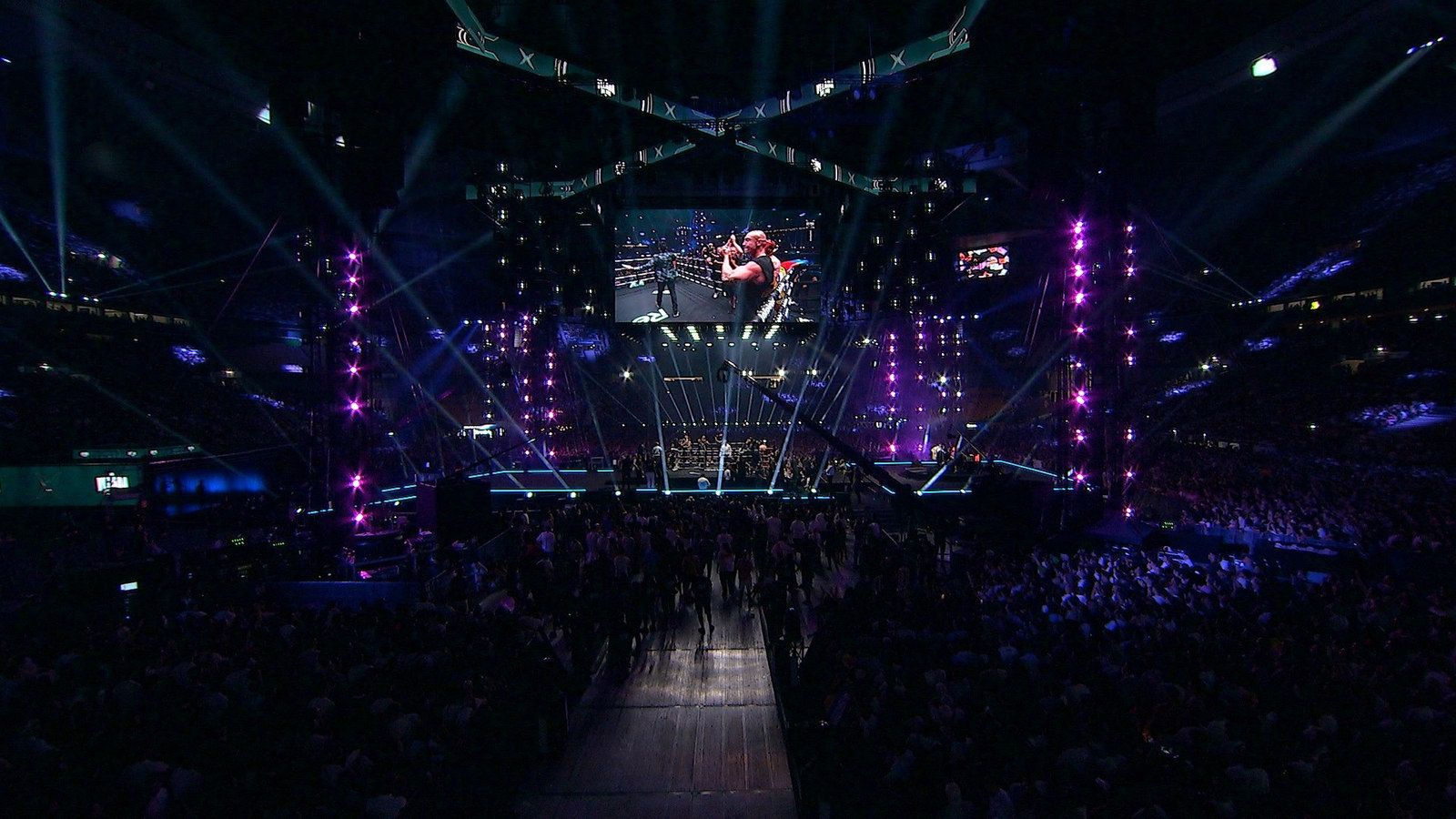
Each Boxer had a two-minute entrance and their own creative requests. How did you give each one a distinct visual identity?
Toni Llobet: Every boxer comes from a completely different world. Some take the entrance even more seriously than the fight itself, and others only care about the fight – depending on what kind of public figure they are, they get more or less involved in their entrance. Some even come with their own creative team and a fully closed storyboard; they know exactly what they want. With others, we build the whole thing from scratch. But the idea is always the same: to make the entrance as epic as possible, and to tie it completely to the music the boxer has chosen to walk into the stadium with. The music is really the backbone of each entrance. The track sets the energy, the pace and the emotion, and I build the light around it so that every walk feels like it belongs to that specific person.
How do you deal with so many last-minute changes in a live production of this scale?
Toni Llobet: The hardest part of this project is being able to put the N and the O together. It’s a live show – we work with public figures who live off spontaneity, off the last minute, off being present and showing themselves exactly as they are, without over-preparing. So it’s important to match their energy and support them through the whole process. But at the same time we have to be very clear about how late we can still make changes, because the closer we get to the show, the more complicated and risky it is to touch the base show. You end up modifying things you might not be able to test until they go out live. And that’s the most difficult part: having the responsibility to judge whether a change we’re being asked for puts the stream at risk or not. That call is on us.
“We all jumped up, shouting and grabbing each other’s hands, as if our favorite team had just scored.”
Toni Llobet, Lighting Director and Designer
Was there a moment when you personally felt that the lighting design had truly worked?
Toni Llobet: For me the key moment is when night falls. During one of the fights the broadcast is on tight close-ups, and that’s when the last daylight drops – but you don’t really notice, because you’re seeing close shots. Then, after a while, the broadcast cuts from those close-ups to the general full shots of the stadium, and suddenly it’s completely night. For the first time you see the whole grandstand lit up, and the beams cutting across camera creating spectacular flares against the darkness. THAT is the moment. We all jumped up, shouting and grabbing each other’s hands, as if our favorite team had just scored. In Catalan we’d say we got “pell de gallina” – literally “chicken skin”, what in English you’d call goosebumps. That’s the instant where you can clearly see whether the design has really worked.
What do you take away from La Velada del Año VI?
Toni Llobet: What I enjoyed most is really everything that comes with a show like this – the scale, the team, the moment where it all comes together. But if I had to pick a learning from this edition, it’s about the crew. This year I brought even more people into the pre-production stage than before, so that once we were on site the whole team was even fresher and more immersed in the project. Getting more of the crew inside the show earlier made a real difference. I won’t pretend it’s easy – it’s an incredibly demanding show, very long hours, a lot of problems to solve, and it’s genuinely exhausting. But the sense of relief when it’s over is incredible. And then barely a week goes by and I already want to throw myself fully into the next edition.
Photo credit: La Velada IV YouTube @ibai // La Marga
Main Programmers - Jofre Majoral, Àlex Alonso @jofremajoral @alex.aloonso
Aux & Guest Artists Programmers - Xavier Batallé, Dani López @xavierbatalle #DaniLopez
Lighting Caller & Producer - Paula Dorado @pauladfdez
DOP Assistant & Making Of - Lupe Belmonte @_lupebelmonte
The following Cameo products were used for La Velada del Año VI:
#Cameo #ForLumenBeings #EventTech #EngineeringFascination
Further Information:
Related products

Outdoor SMD LED Wash Light and Strobe - RGBW Version
- Light output 41000 lm
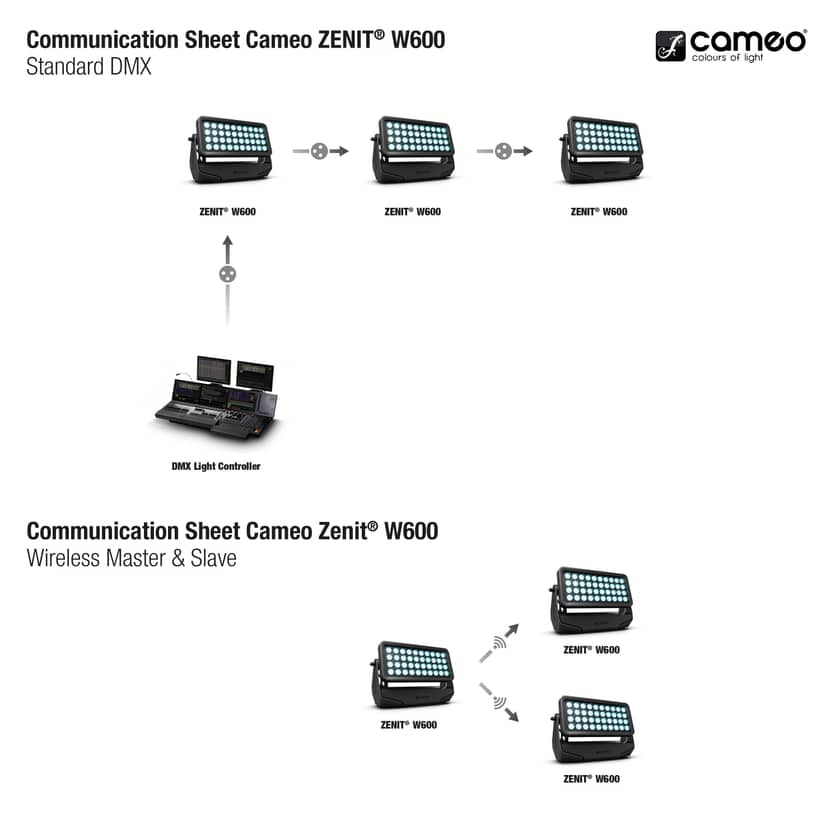
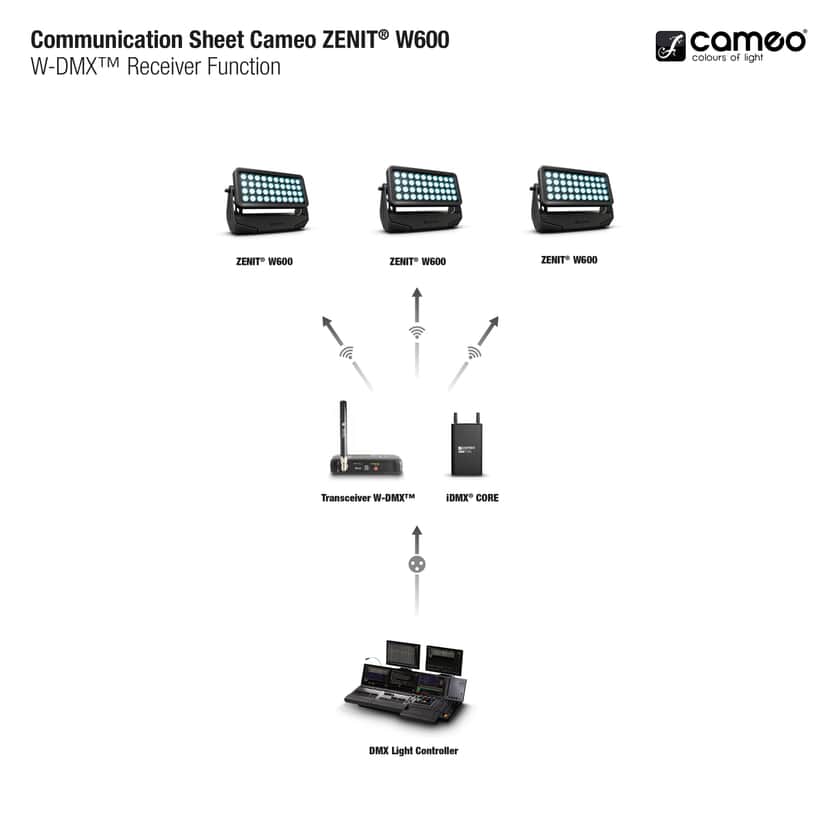
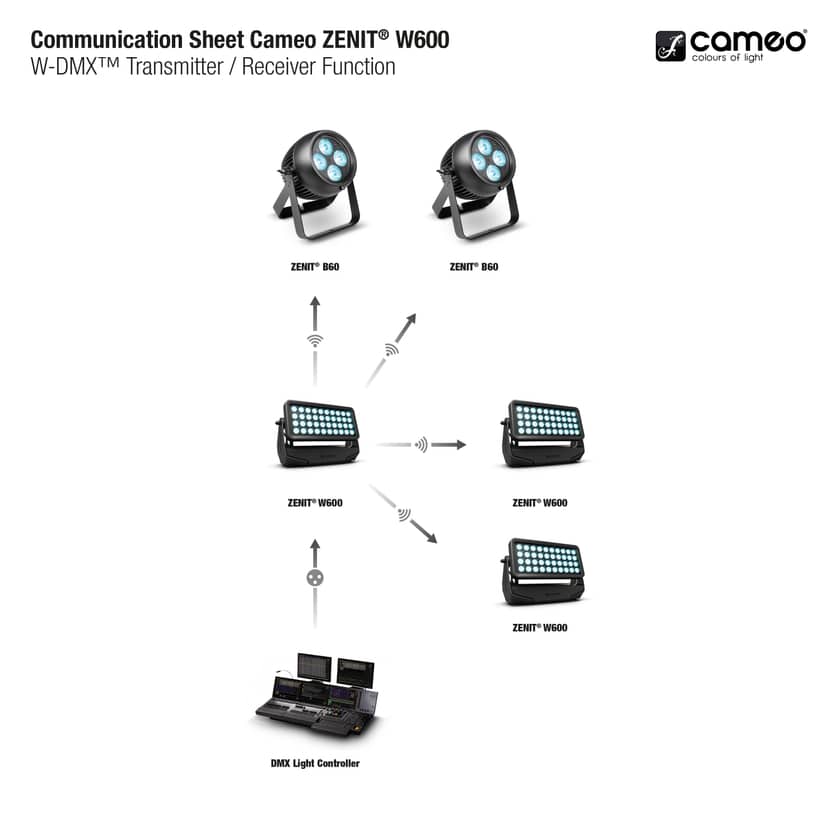
- Control DMX512, RDM, W‑DMX™ (Transceiver)

Outdoor LED Wash Light
- Light source 40 x 15 W RGBW LED
- Light output 21000 lm
- Zoom range Beam: 18° / Field: 35°
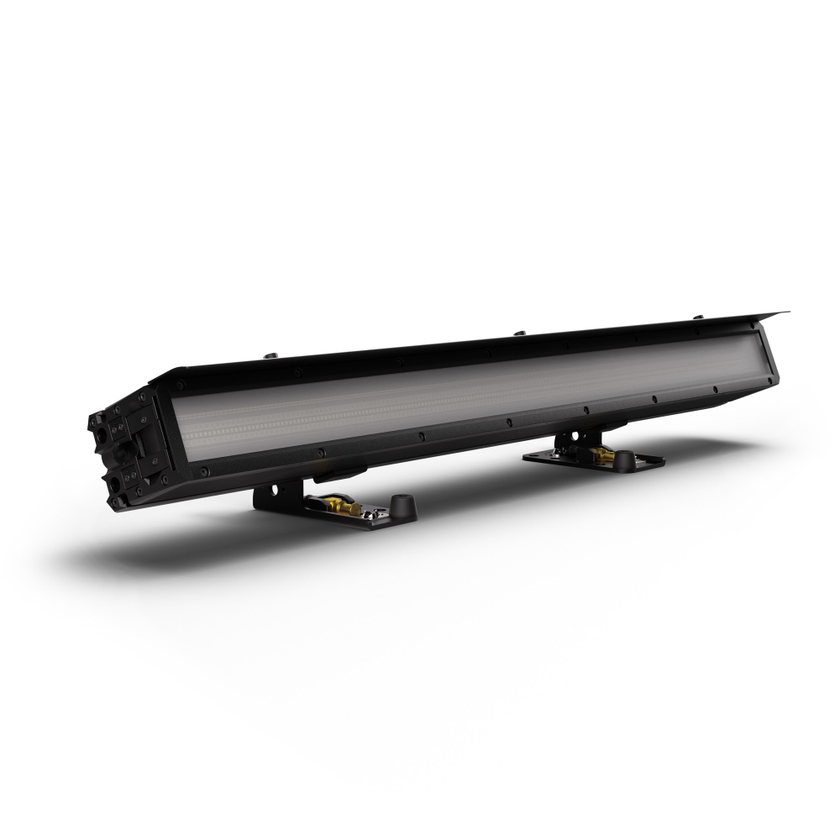
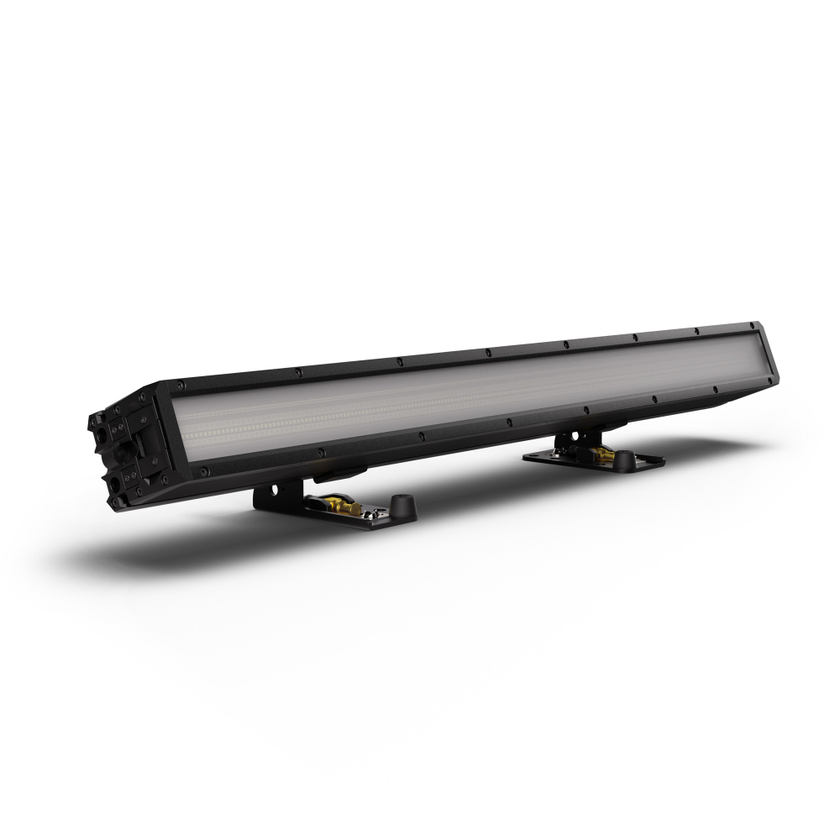
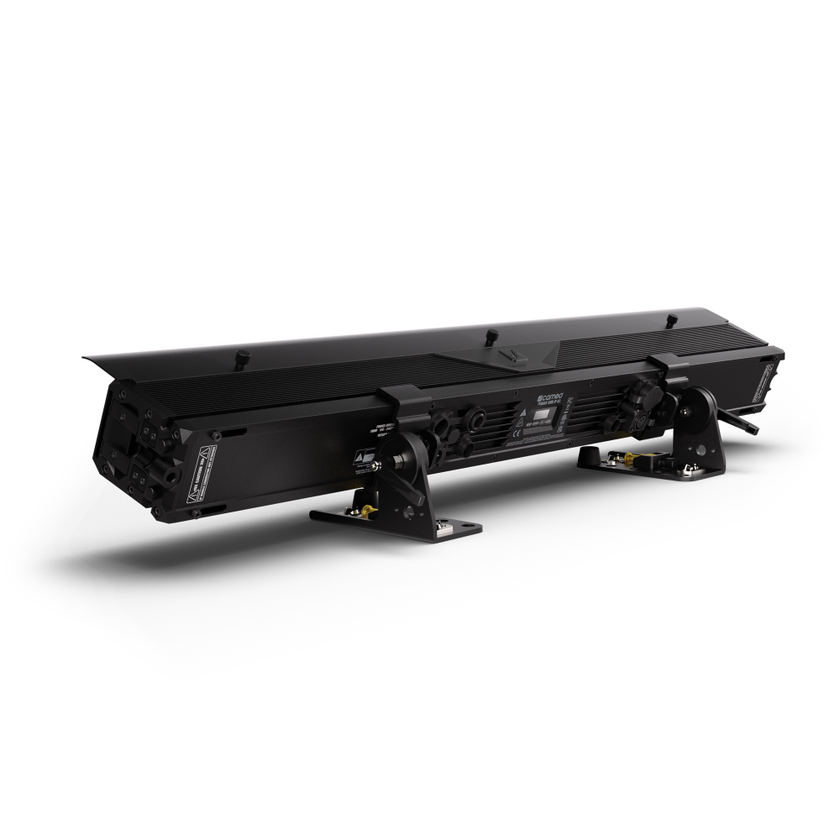
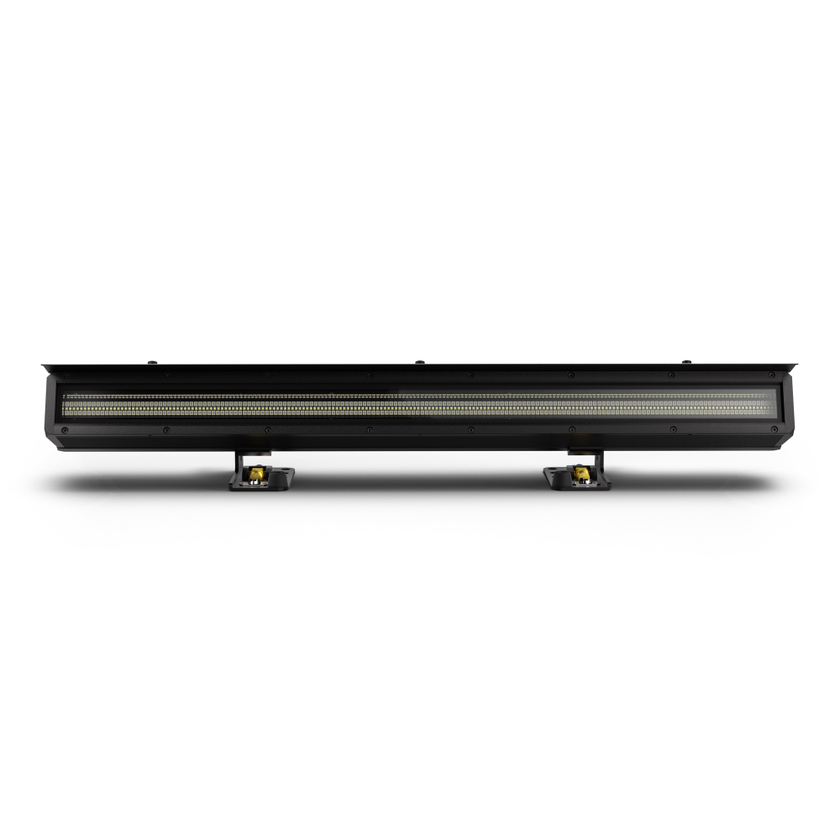
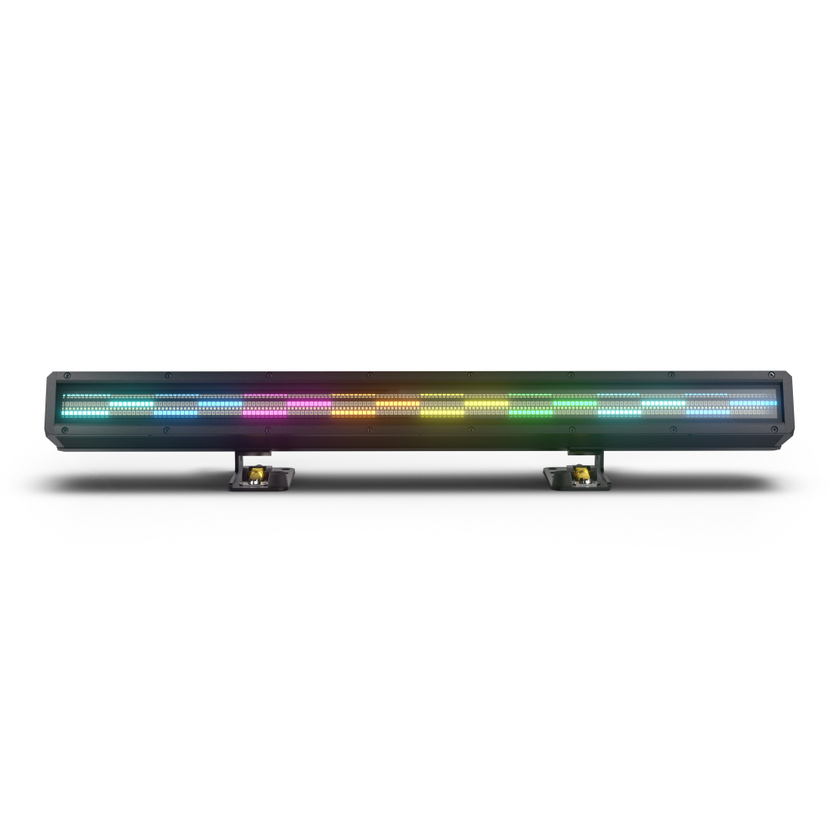
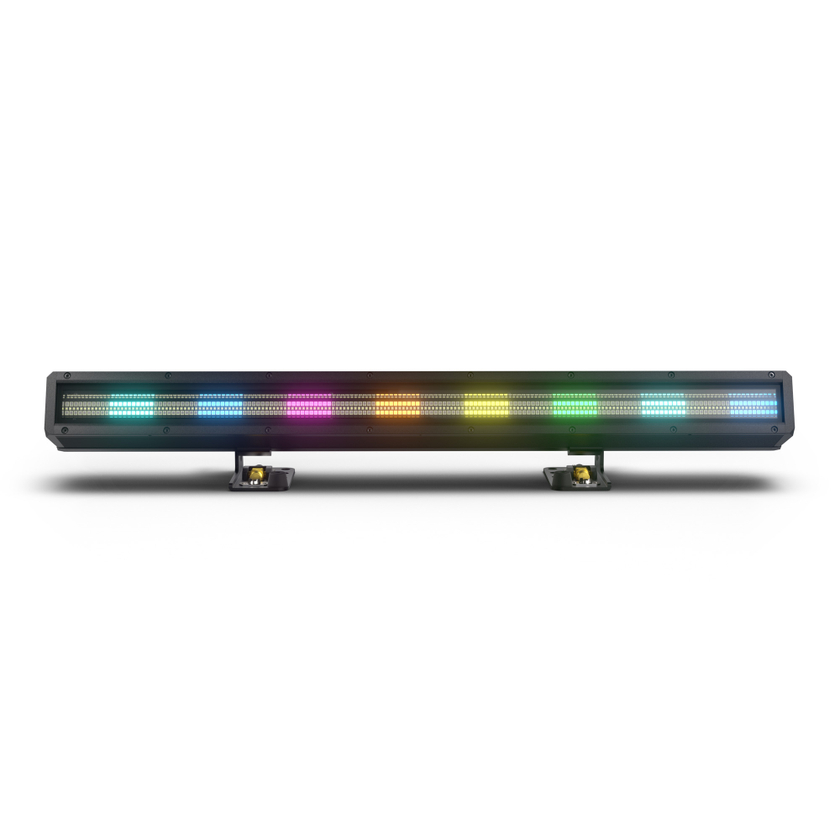
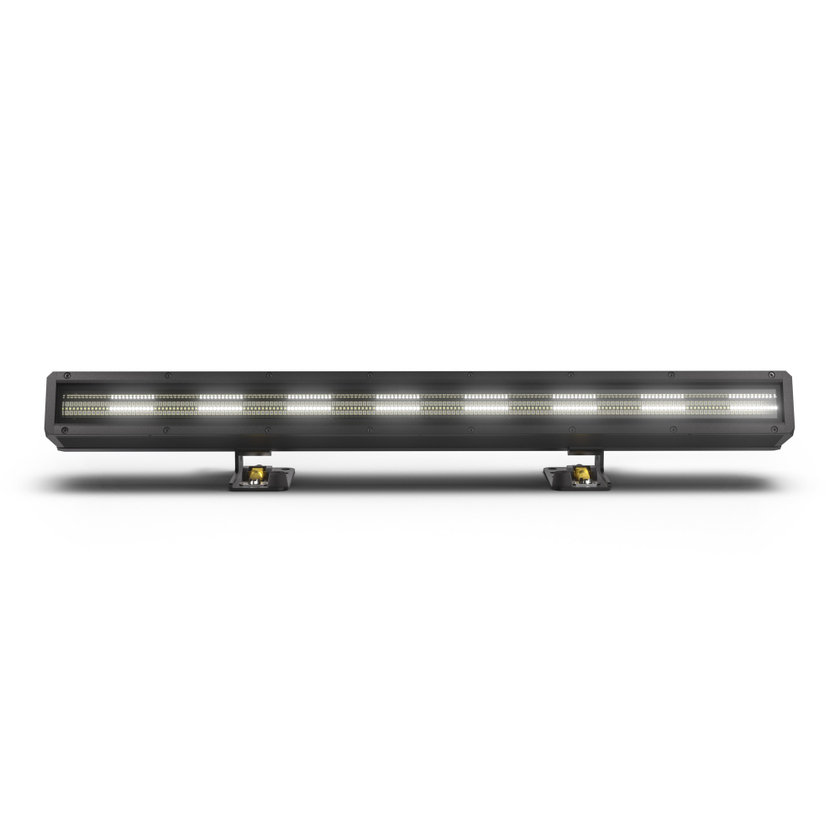
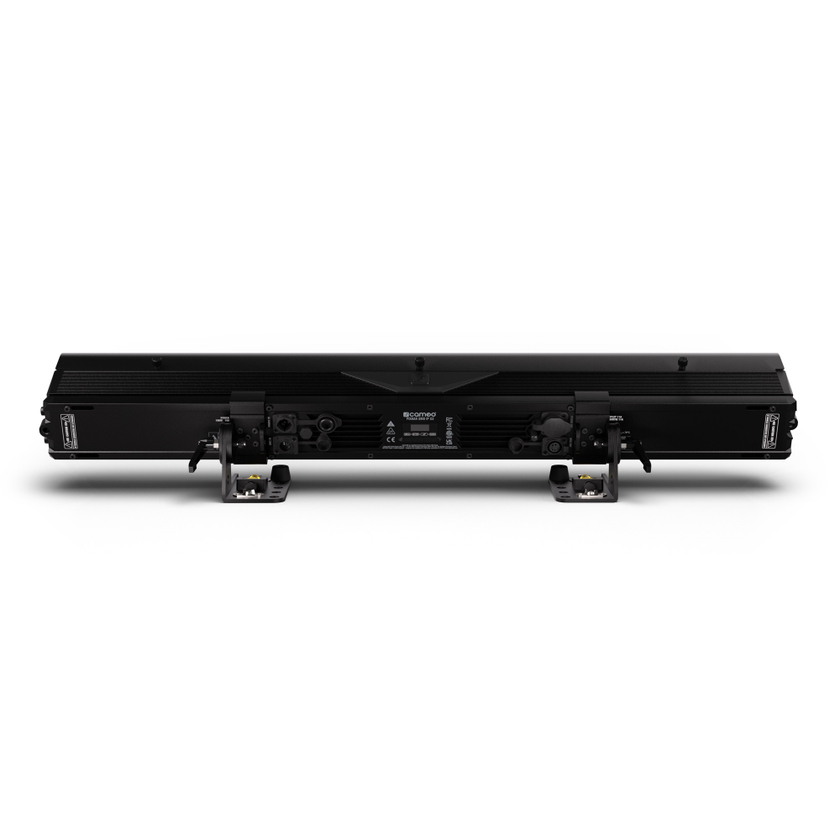
IP65 SMD LED Bar
- Light source 3 W RGB LED
- Light output 8051 lm
- Zoom range Beam: 72° / Field: 94°
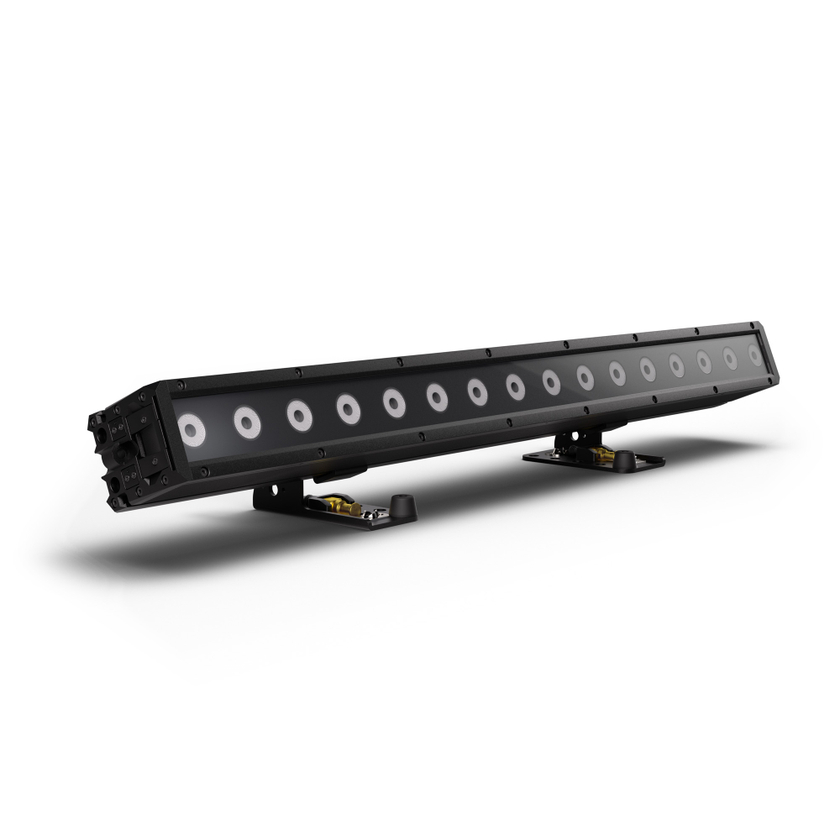
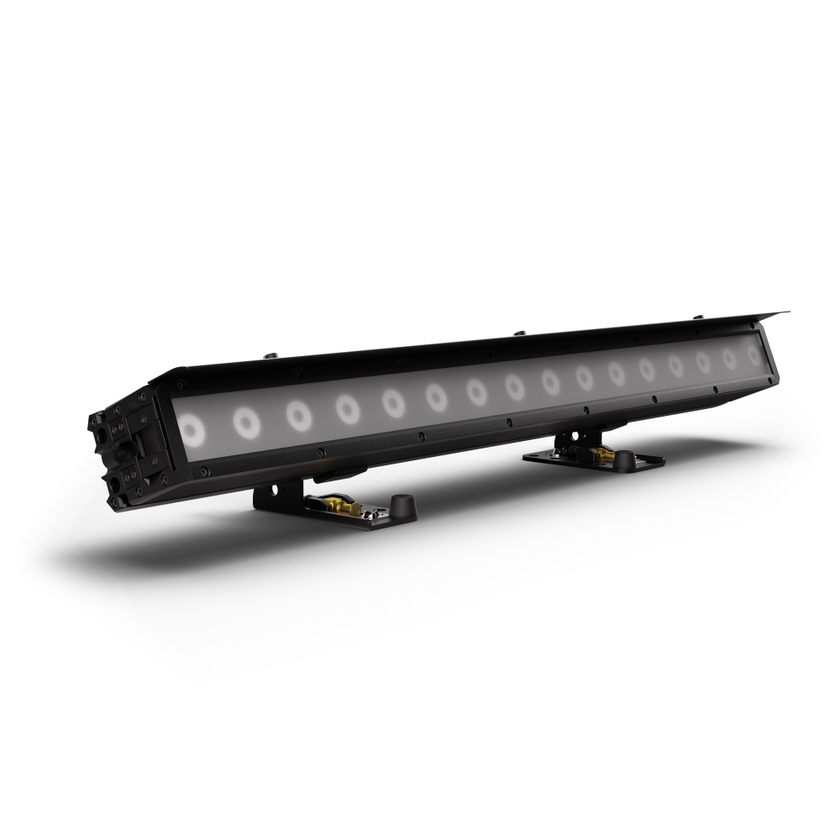
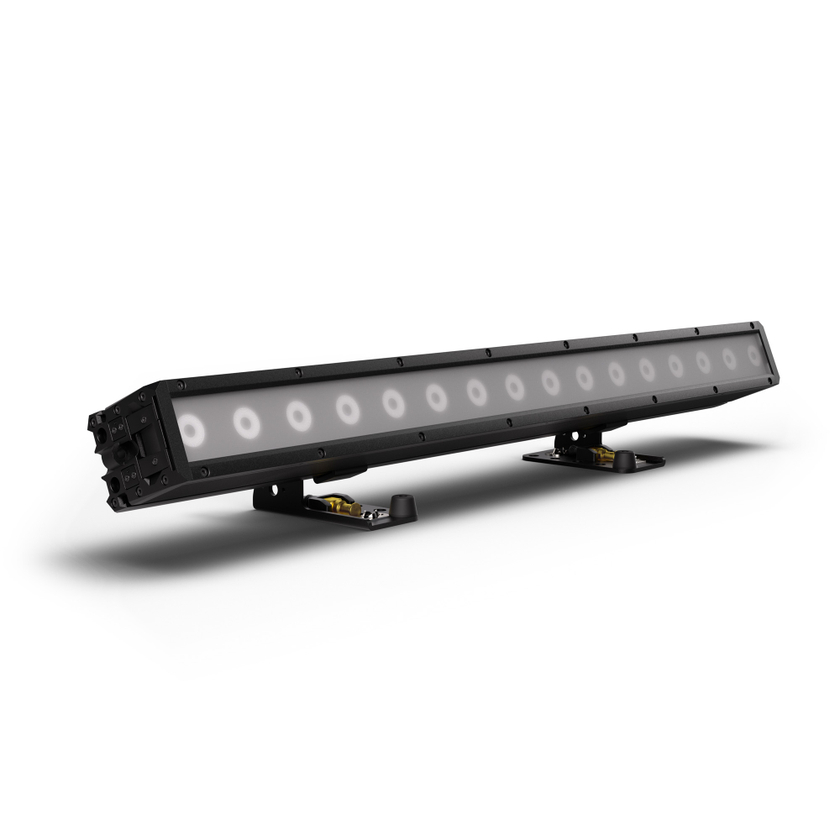
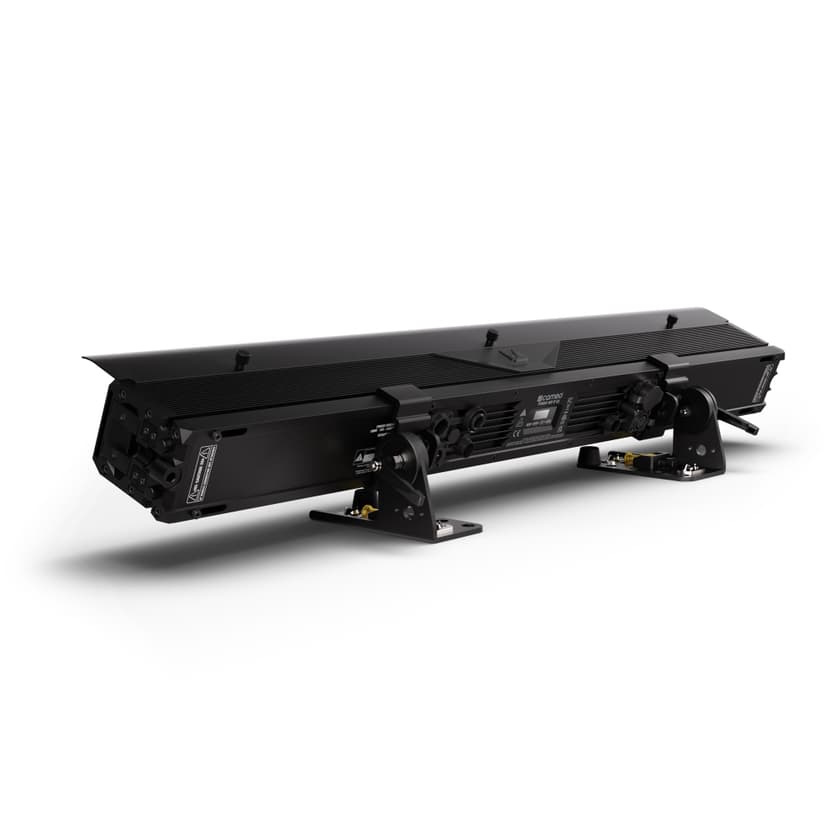
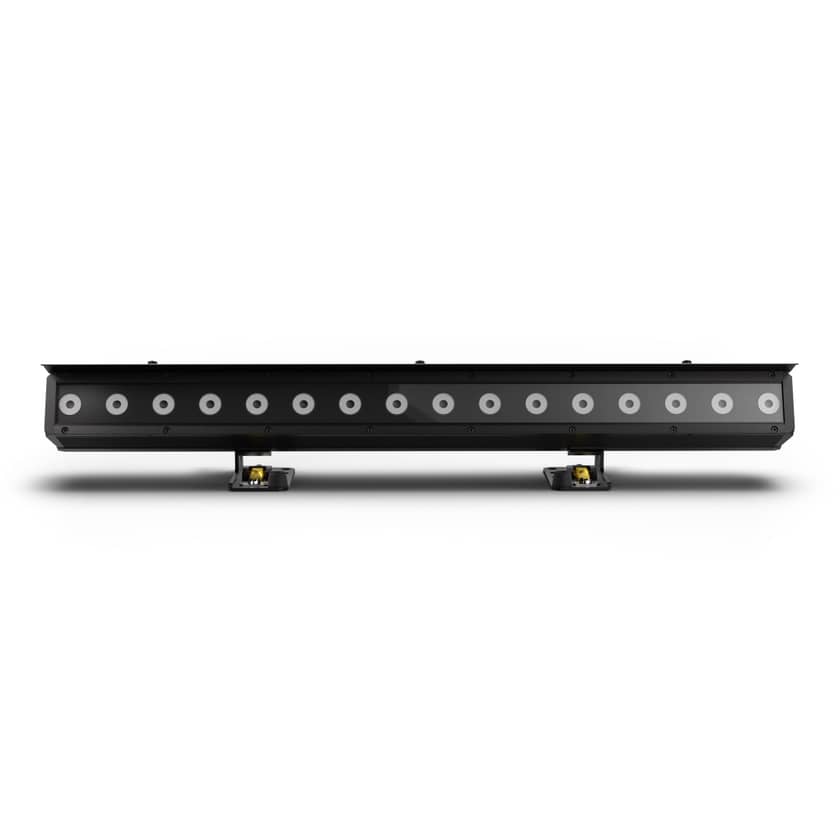
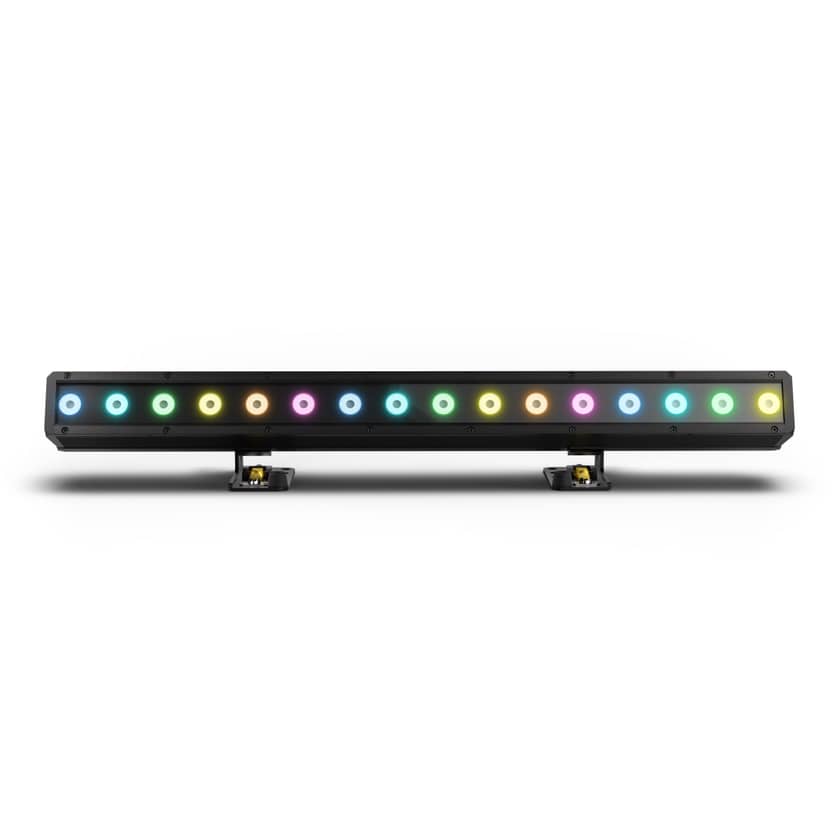
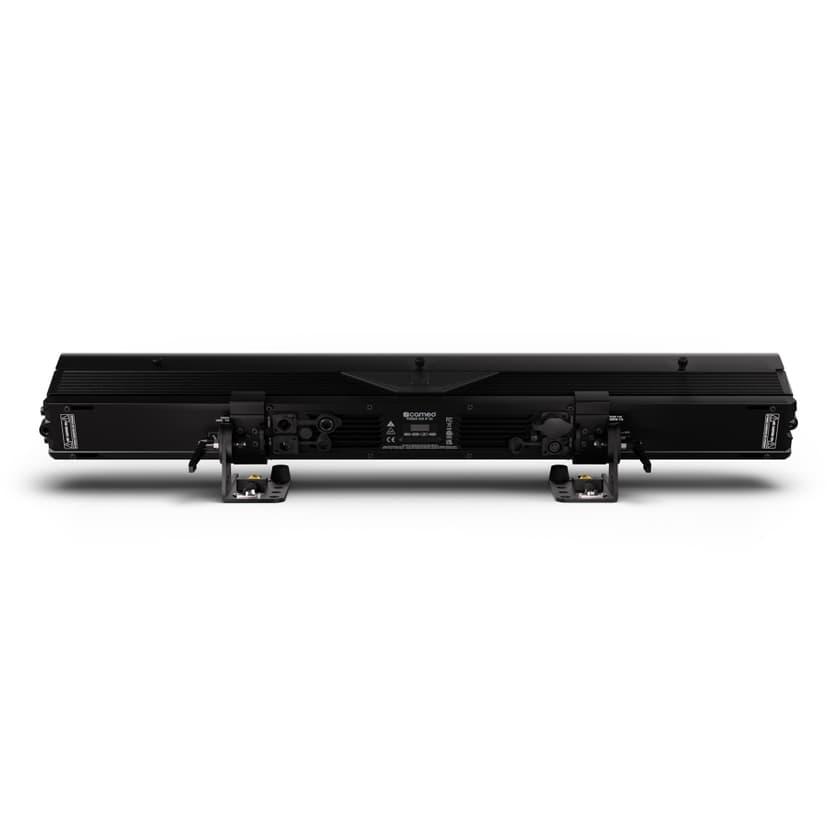
IP65 RGBW LED Bar
- Light source 16 x 10 W RGBW SMD LED
- Light output 6500 lm
- Zoom range Beam: 25° / Field: 42°
MORE TV-FILM STORIES
Cameo expands the ZENIT® G2 series with ZENIT® W1200 G2 and ZENIT®W300 G2 – the right performance class for any outdoor wash application
With the ZENIT W1200 G2 and ZENIT W300 G2, we are expanding our new ZENIT G2 series with two IP65 LED wash lights for different performance and application classes. Together with the ZENIT W600 G2, which we launched in early 2026, the second generation of ZENIT now comprises three models, from compact 300-watt lights to powerful 1,200-watt solutions for large-scale outdoor applications. All three models feature RGBALC LED technology and a design specifically tailored for touring, rental and professional outdoor productions.
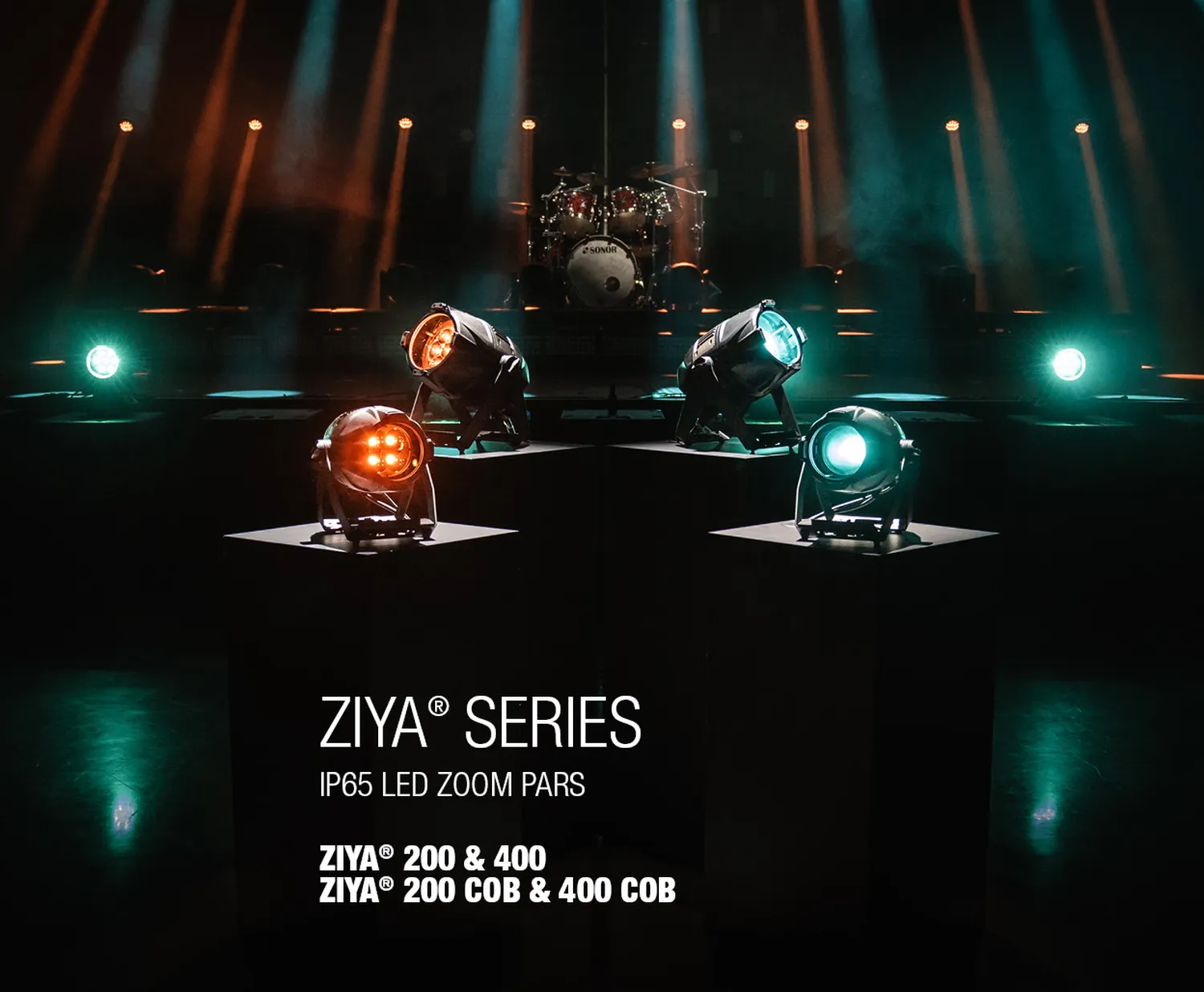
Cameo introduces ZIYA® – a new IP65 LED Zoom PAR series for live performances, touring, theatre and broadcasting
With ZIYA, we present a new series of four IP65-certified LED Zoom PARs for live performances, touring, theatre and event applications. The ZIYA 200, ZIYA 400, ZIYA 200 COB and ZIYA 400 COB models are available in various performance classes as well as with two different LED and optical designs: while the RGBL models, with their wide zoom range and multi-lens optics, are designed for versatile and dynamic lighting design, the COB variants combine RGBALC colour mixing and Fresnel optics for homogeneous, soft illumination and nuanced colour and white light applications.
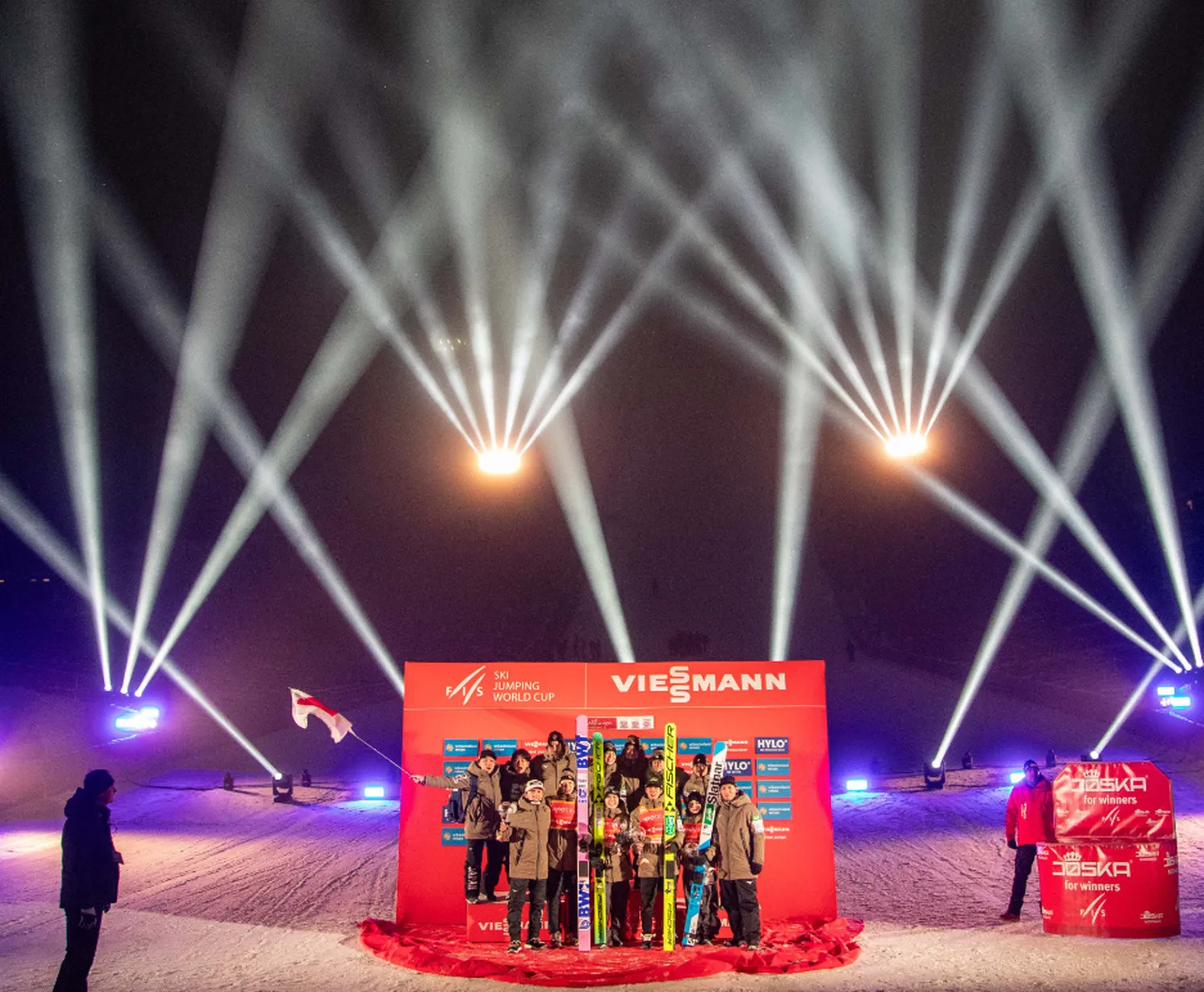
Endurance test on the large ski jumping hill
When the world’s ski jumping elite compete on the Mühlenkopfschanze in Willingen at the beginning of February, top-class sport meets a location that can only be described with superlatives. The world’s largest ski jumping hill has been a fixture of the FIS World Cup calendar for decades and was once again transformed into a winter event arena for thousands of fans and the numerous TV cameras on site this year. To ensure that the atmosphere and staging were just right to complement the jumps, the full-service provider MW-Event from Korbach used a flexible show lighting setup. The Cameo OTOS H5 beam spot wash hybrid moving heads took centre stage, creating striking beam structures and TV-ready images on the ski jump.
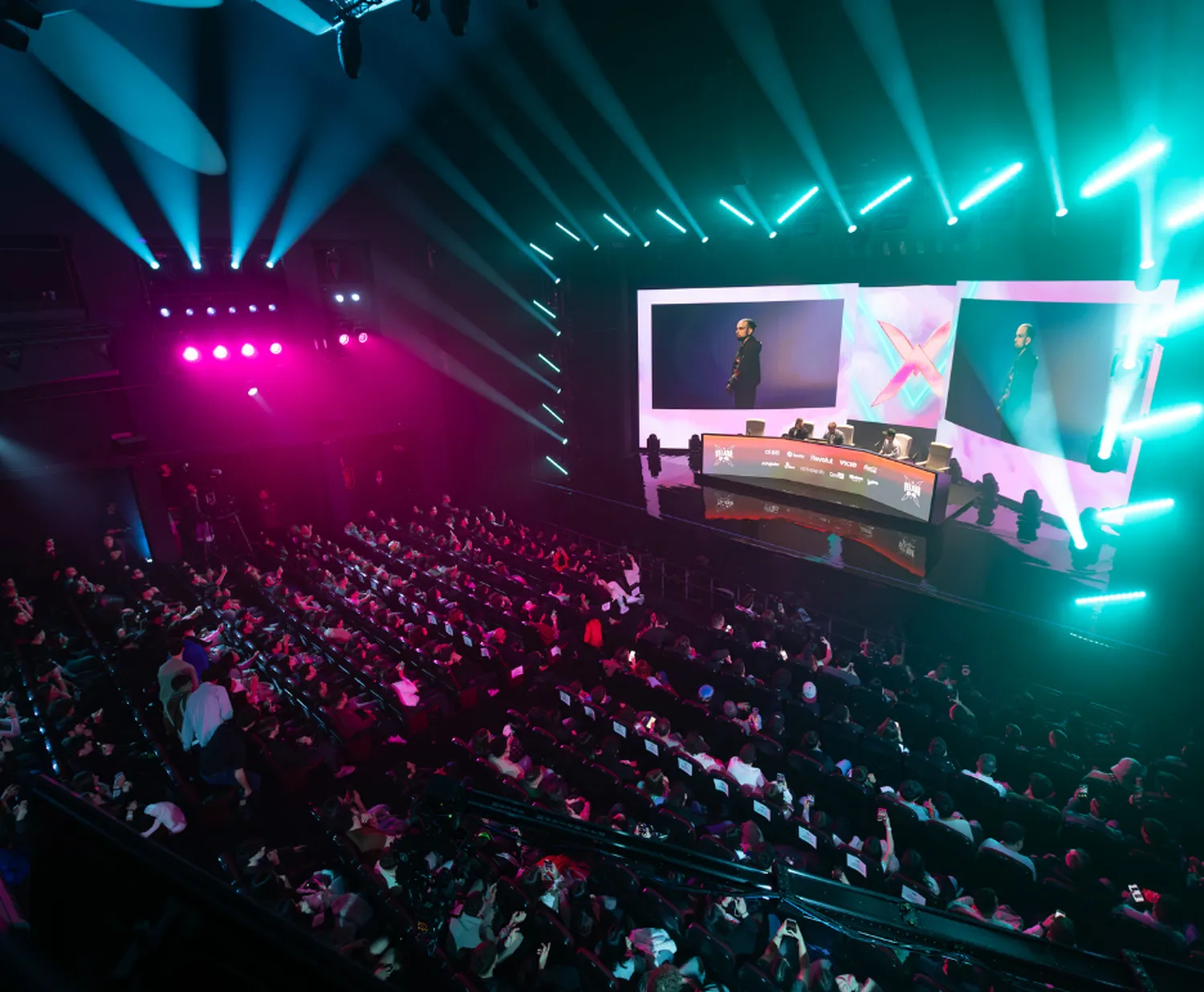
Interview with light designer Toni Llobet
13 million followers on YouTube, 17 million on Twitch - Ibai Llanos is one of Spain's biggest streamers and was named one of the most influential Spaniards in the world by Forbes magazine in 2021. In the same year, the 30-year-old began hosting the event series ‘La Velada del Año’, a highly successful annual amateur boxing event with internet streamers and other celebrities that takes place in the country's largest sports stadiums. Even the announcement of the participants in the historic Teatre Victoria in Barcelona became a major event. We spoke to lighting designer and cinematographer Toni Llobet about the staging and his use of Cameo lights.
Cameo presents the P6 LED profile spot
Cameo presents the P6 LED profile spot. The latest and most powerful model in the P series is a pioneering LED profiler that, with its 600 W RGBACL engine and 16,000 lm luminous flux, serves as a fully fledged energy-saving replacement for conventional halogen profile spots in the 2.5 kW class. The Cameo P6's winning combination of high levels of light output and quality, natural colour reproduction and versatile lighting design tools makes it the perfect choice not only for theatres, musicals and TV studios but also for conferences and event stages in the live performance sector and corporate world.
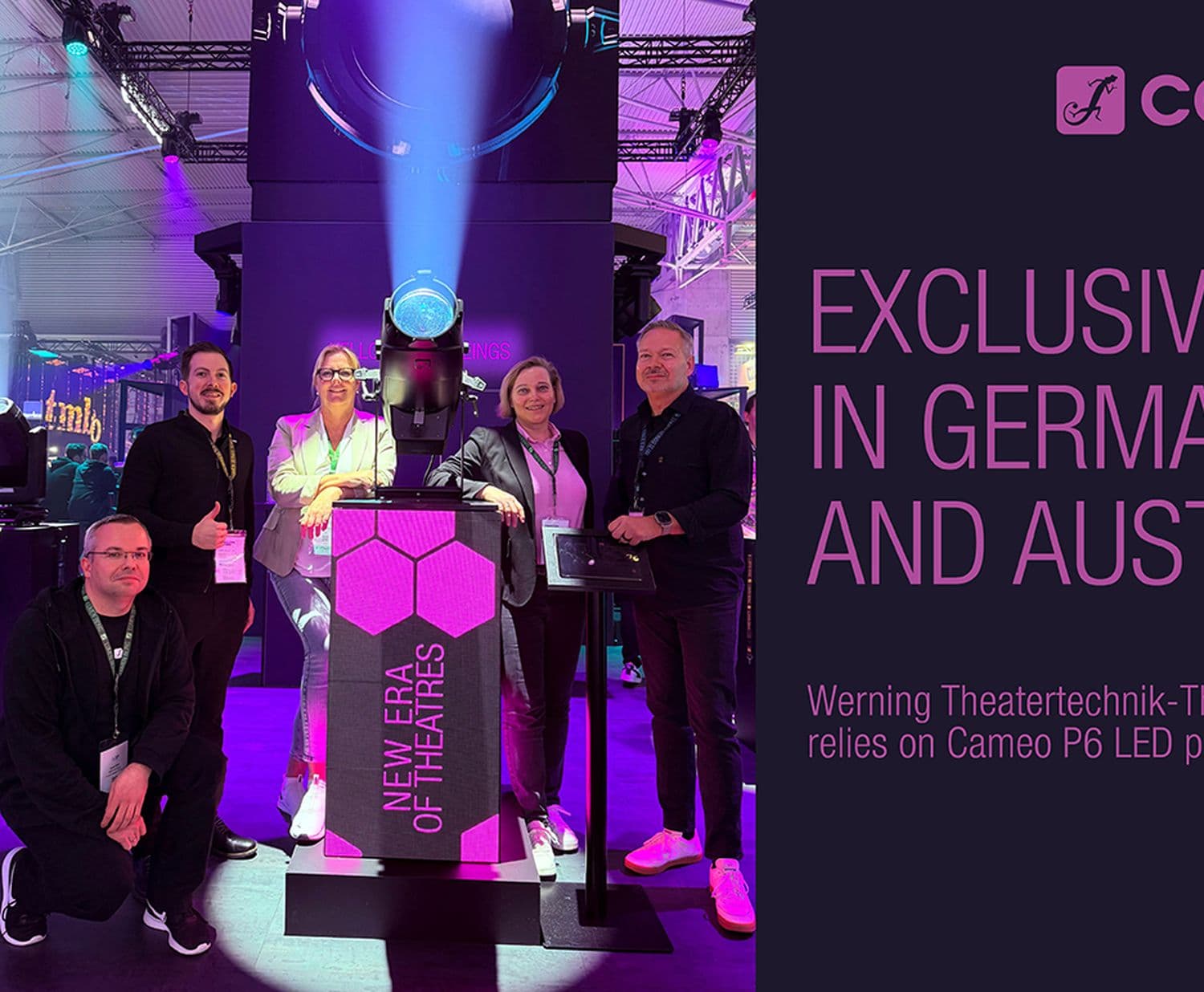
Werning Theatertechnik-Theaterbedarf chooses Cameo P6 LED profile spotlights
As the leading dealer for Germany and Austria, Werning Theatertechnik-Theaterbedarf GmbH chooses the Cameo P6 LED profile spotlight. With the P6, the full-service theatre supplier is expanding its extensive Cameo portfolio, introducing a leading-edge LED profile spotlight with a powerful 600 W RGBACL engine and 18,000 lumens. This energy-efficient model is a replacement for traditional 2.5 kW halogen profile spotlights. Cameo P6 is intended specifically for users in the theatre and TV/broadcast sectors and is available exclusively from Werning to customers in Germany and Austria.
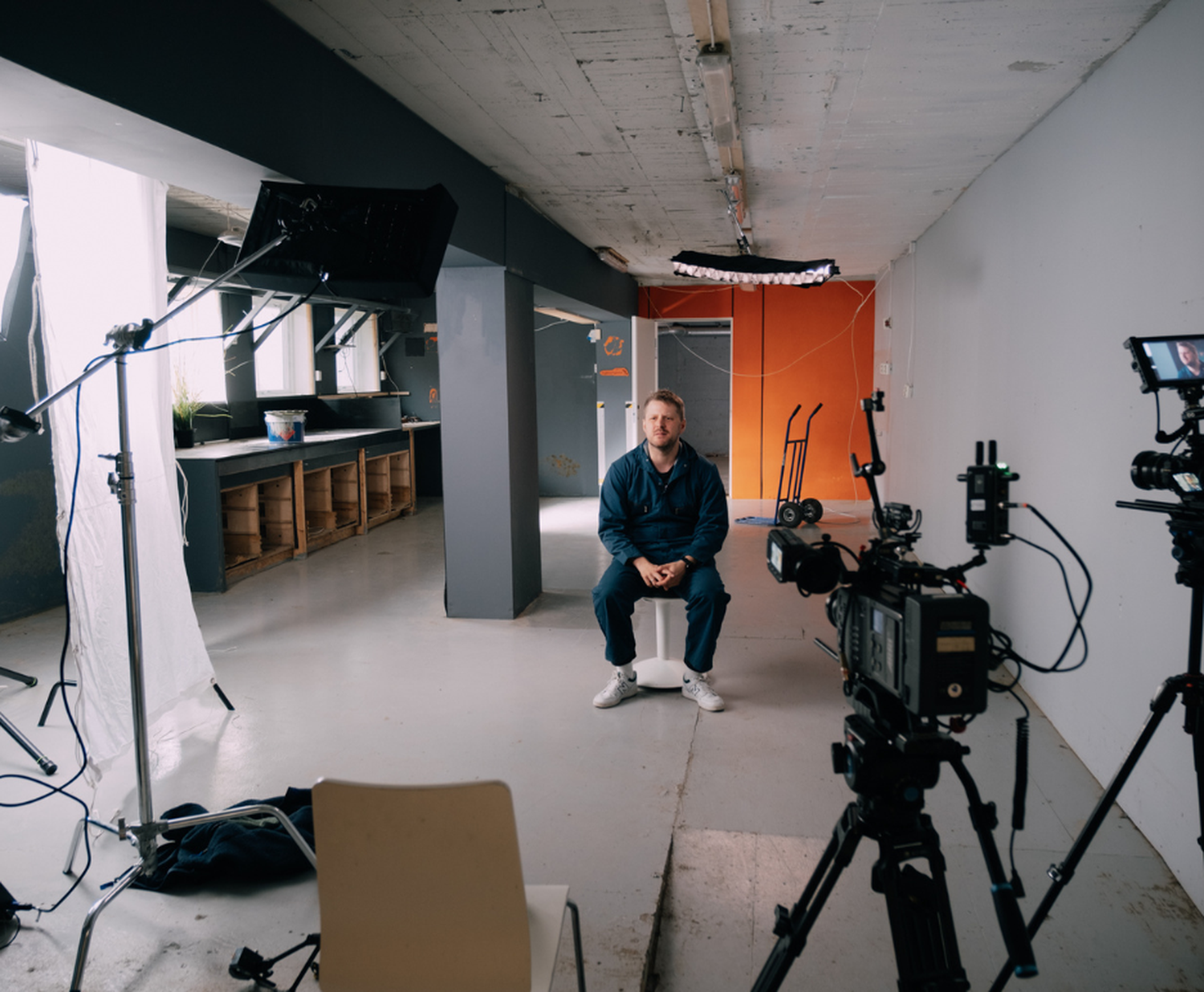
Interview with Eirik from Living Room Gear Demos on the Cameo S4 IP
Anyone searching YouTube for high-quality guitar gear videos will, sooner or later, come across Eirik and his channel, Living Room Gear Demos. Over more than ten years, this self-proclaimed "gear nerd" has produced over 1,000 videos centred on his favourite instrument. Alongside his role as a YouTuber, Eirik has also built a career as a professional cinematographer. With the Cameo S4 IP, he’s recently found an LED softlight that supports him in both fields. We spoke with Eirik about his journey as a YouTuber, the look of his videos, and his work as a cinematographer for external clients.
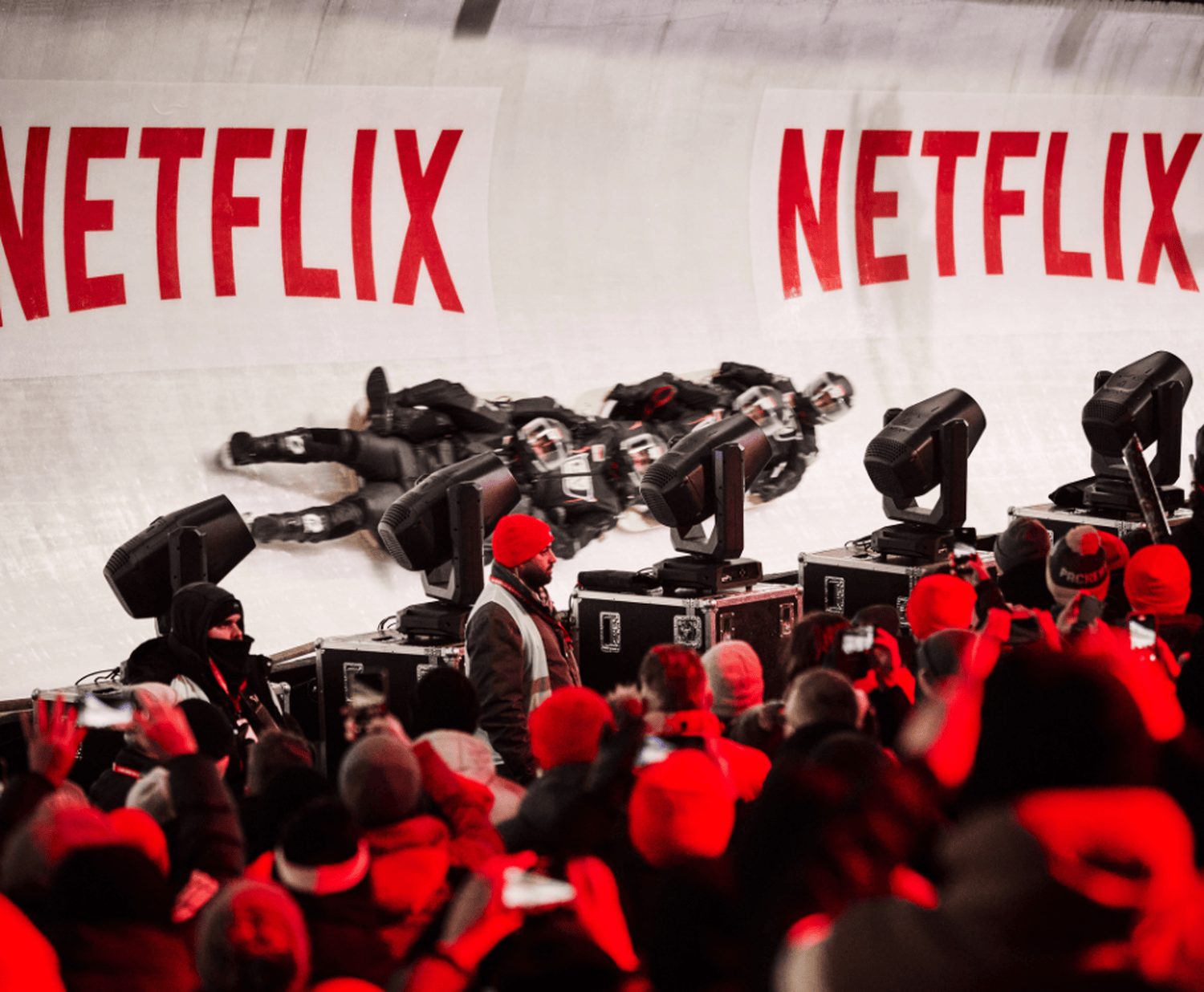
Jerry Appelt stages TV Total WOK WM with Cameo
For more than 20 years, the TV Total WOK WM (WOK World Cup) has been as much a part of winter sports television as the Four Hills Tournament or the Streif downhill race in Kitzbühel. The single and quad woks reach top speeds of up to 115 km/h on the 1.6 km bobsleigh run in Winterberg. Typical for modern sports television, the focus of the production is not only on the competition itself, but also on the surrounding programme with presenters, guests and music acts. For this reason, the lighting team led by Jerry Appelt and the overall technical service provider Cape Cross opted for flexible Cameo fixtures such as the OTOS B5 IP65 Beam Moving Head, the S4 IP LED Softlights and the ZENIT W600 SMD.
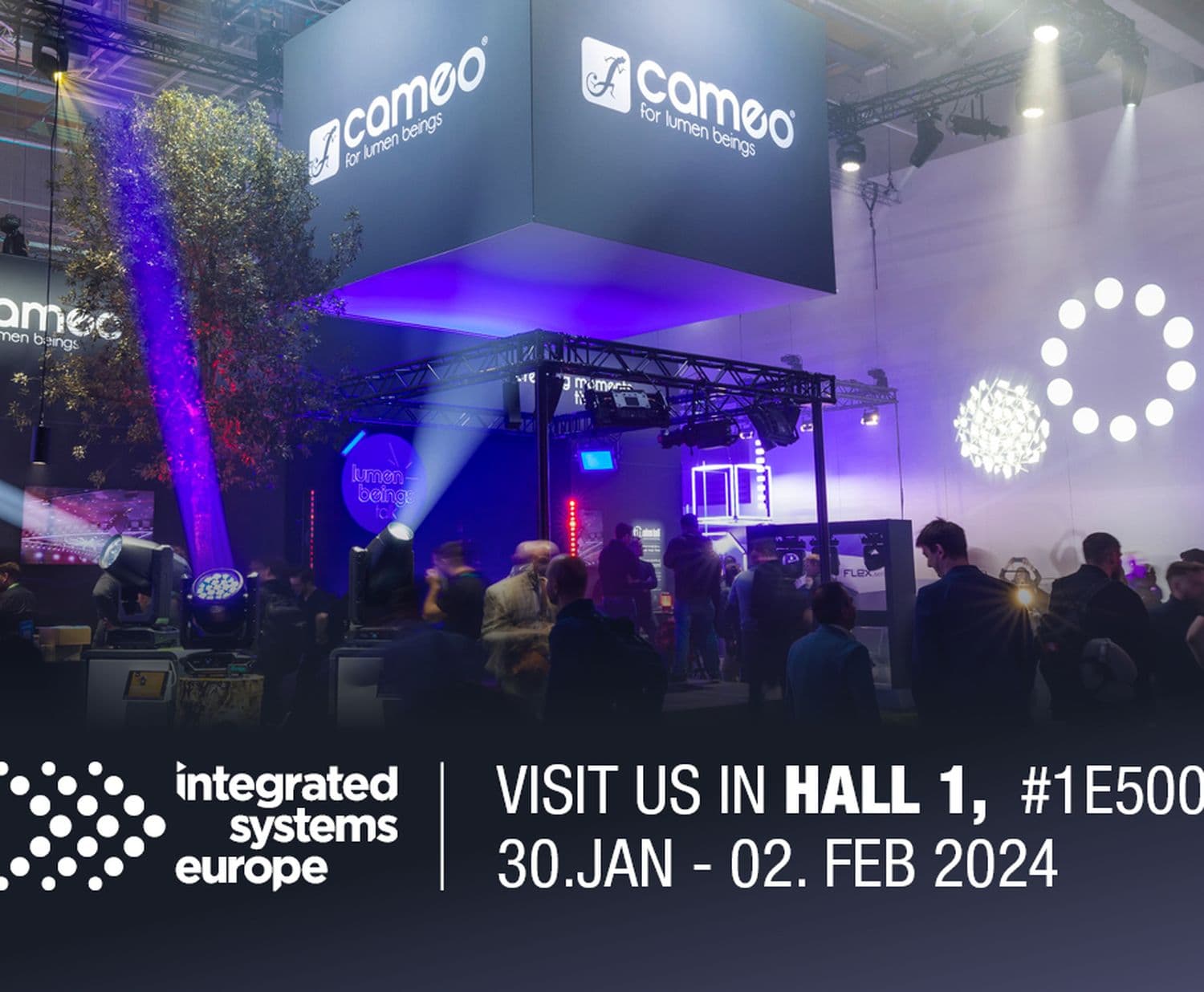
Cameo goes to ISE 2024 with its own booth
From January 30 to February 2, Cameo – the Adam Hall Group’s lighting technology brand – will be presenting its new product highlights at Integrated Systems Europe 2024. The Cameo stand is located at 1E500 in the new Hall 1, “Lighting & Staging”. The focus will be on the AZOR and OTOS moving head series in particular, complemented by a variety of other spotlights for installation, broadcast and theatre applications, including the new ZENIT models and the PIXBAR G2 LED bars. In addition, Cameo will be giving an exclusive preview of two special highlights for 2024: keywords being “Illuminate Beyond Limits” and “The Blueprint of Tomorrow”...
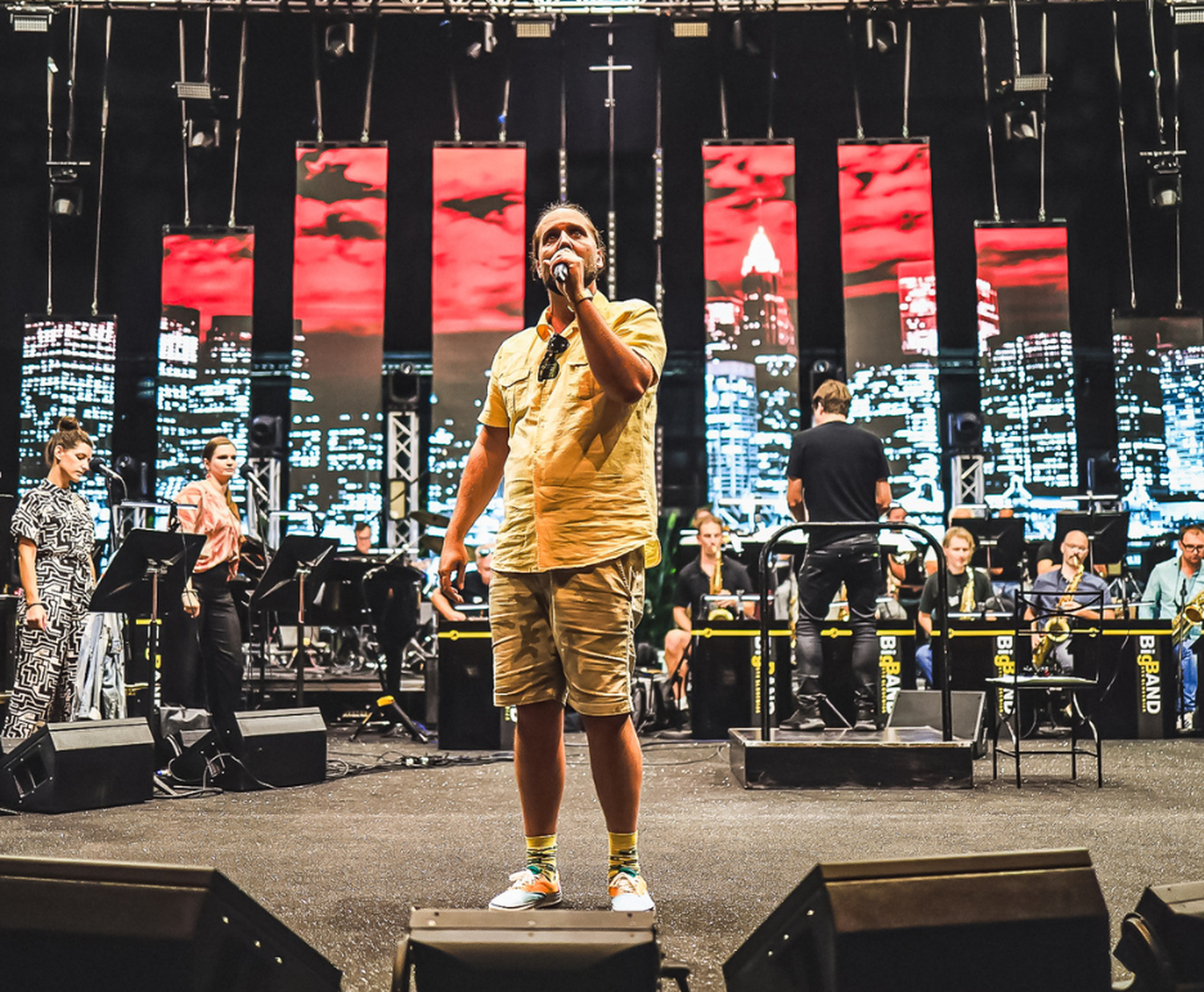
Cameo AZOR S2 at the “Frišno” TV Show
Every year, the Slovenian TV show "Frišno" chooses the song of the year. The production is focused on the artists together with a big band, which accompanies each performance live. To further enhance the live atmosphere, the set design consists entirely of LED surfaces and numerous moving lights, which lighting designer Žan Pernat uses flexibly to suit every artist and every style of music. Since 2023, the AZOR S2 Spot Moving Heads have also been in use as effect lights at Frišno. The compact spotlights with a large zoom range were supplied by rental service provider AP Audio Live Slovenia, which offers the AZOR S2 as a new addition to its product line.
MORE ZENIT STORIES
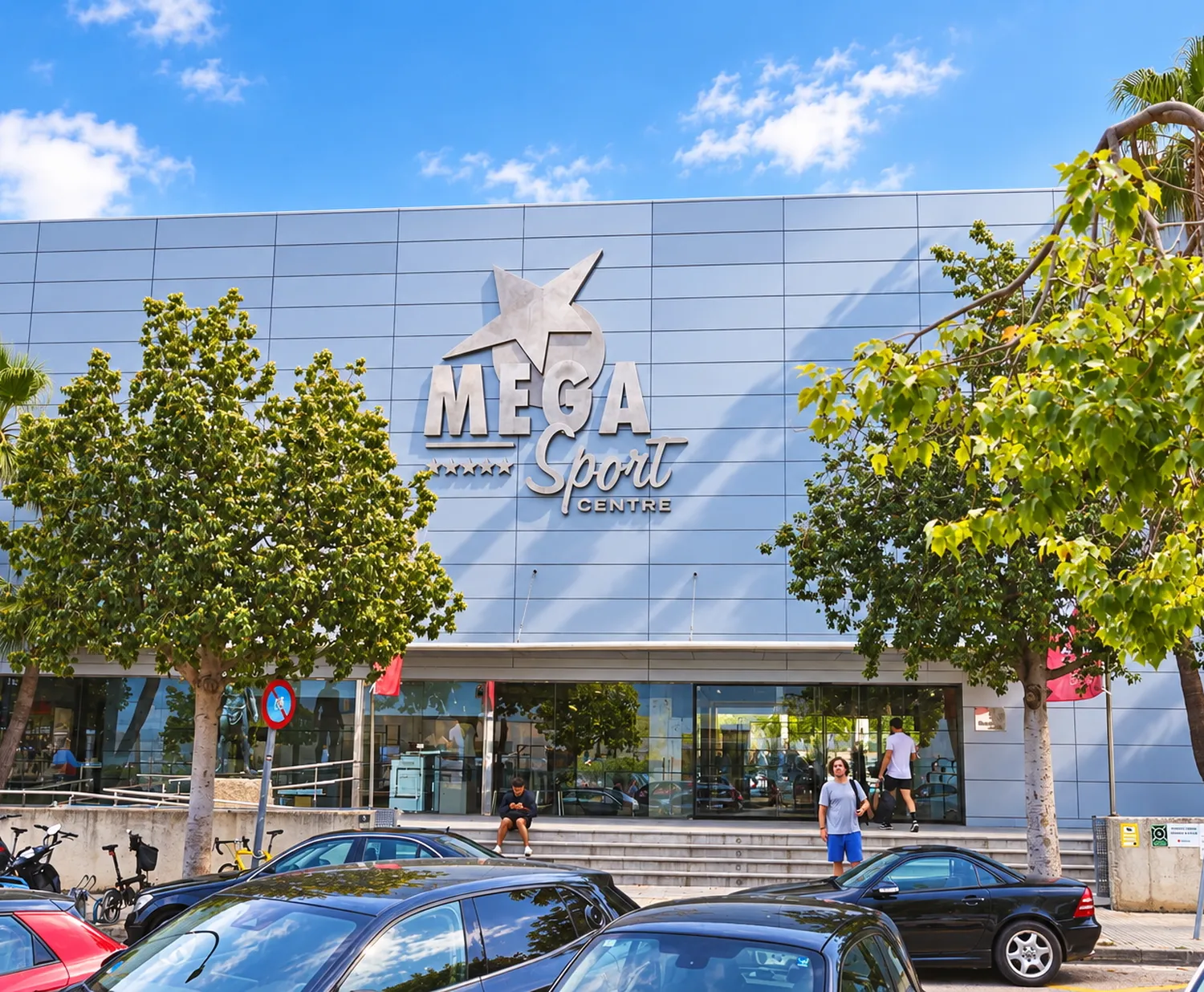
Workout on a whole new level:
With more than 27,000 m² of floor space, 26 training areas and over 700 classes per week, the MegaSport Centre in Palma de Mallorca is one of the largest and most modern fitness centres in Europe. From traditional strength and cardio areas to specialised Pilates zones, a spa and extensive outdoor spaces, the gym offers a wide range of training options. To meet the high standards required in terms of equipment and training quality from a technical perspective, the operator, Grupo Cursach, decided to carry out a comprehensive upgrade of the audio and lighting systems in several areas – opting for installation solutions from LD Systems and Cameo. The new setup was planned and implemented by the in-house technical department, in close collaboration with the Adam Hall Integrated Systems Support Team.
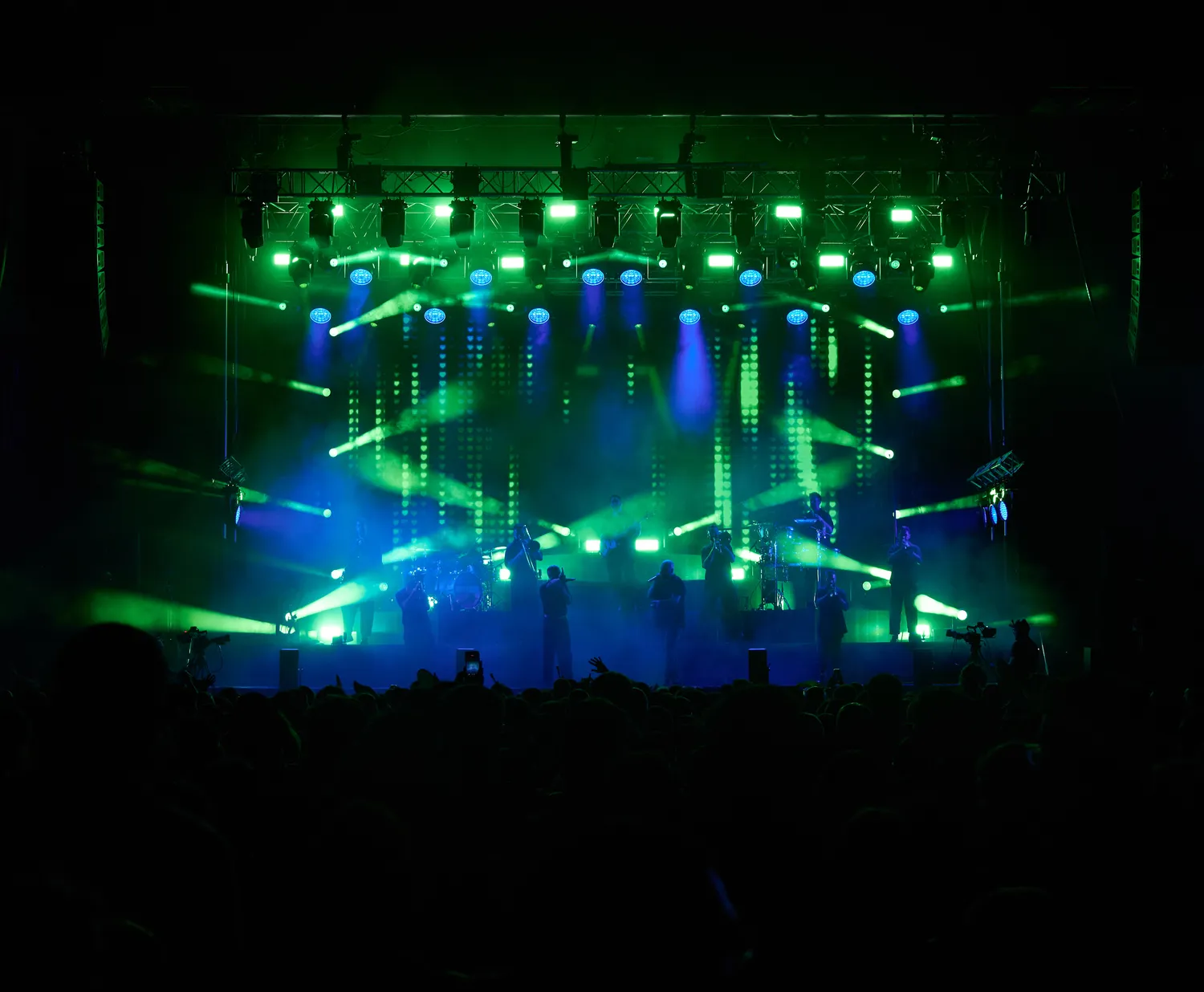
A dazzling send-off – Cameo joins La Fúmiga on their grand farewell tour
La Fúmiga is one of the most popular bands on the Valencian music scene. With its energetic mix of pop, ska, rock, electronic elements and an impressive brass section, the twelve-piece band has been thrilling its audience for many years. However, in 2026, it will all come to an end: La Fúmiga is bidding farewell to its fans with its “L’últim abraç” (The Last Embrace) tour. A special highlight in this context was the free home concert they gave in mid-July in Alzira, Spain, in front of about 15,000 people. The Spanish full-service provider Audio-Net was responsible for the technical implementation of the complex live production, which relied on a wide range of Cameo moving lights for the lighting design.

Unforgettable Moments at the Classic Terminal – Cameo at NATURE ONE 2026
NATURE ONE is one of the highlights of the festival calendar and draws tens of thousands of techno fans to the Hunsrück every year to celebrate techno, trance, house and other electronic music genres on 20 stages. Of the four main floors, the “Classic Terminal” has a very special significance: this is where the “timeless techno classics” are played, as Lucien Wingenbach from the BSS Group describes it. For the event technology provider from Limburg an der Lahn, 2026 marked its fifth year supporting the festival's legendary stage. This year, Lucien Wingenbach developed a completely new visual concept for the Classic Terminal and relied primarily on Cameo fixtures from the OTOS, EVOS and ZENIT series to bring the open-air stage to life.
Cameo expands the ZENIT® G2 series with ZENIT® W1200 G2 and ZENIT®W300 G2 – the right performance class for any outdoor wash application
With the ZENIT W1200 G2 and ZENIT W300 G2, we are expanding our new ZENIT G2 series with two IP65 LED wash lights for different performance and application classes. Together with the ZENIT W600 G2, which we launched in early 2026, the second generation of ZENIT now comprises three models, from compact 300-watt lights to powerful 1,200-watt solutions for large-scale outdoor applications. All three models feature RGBALC LED technology and a design specifically tailored for touring, rental and professional outdoor productions.
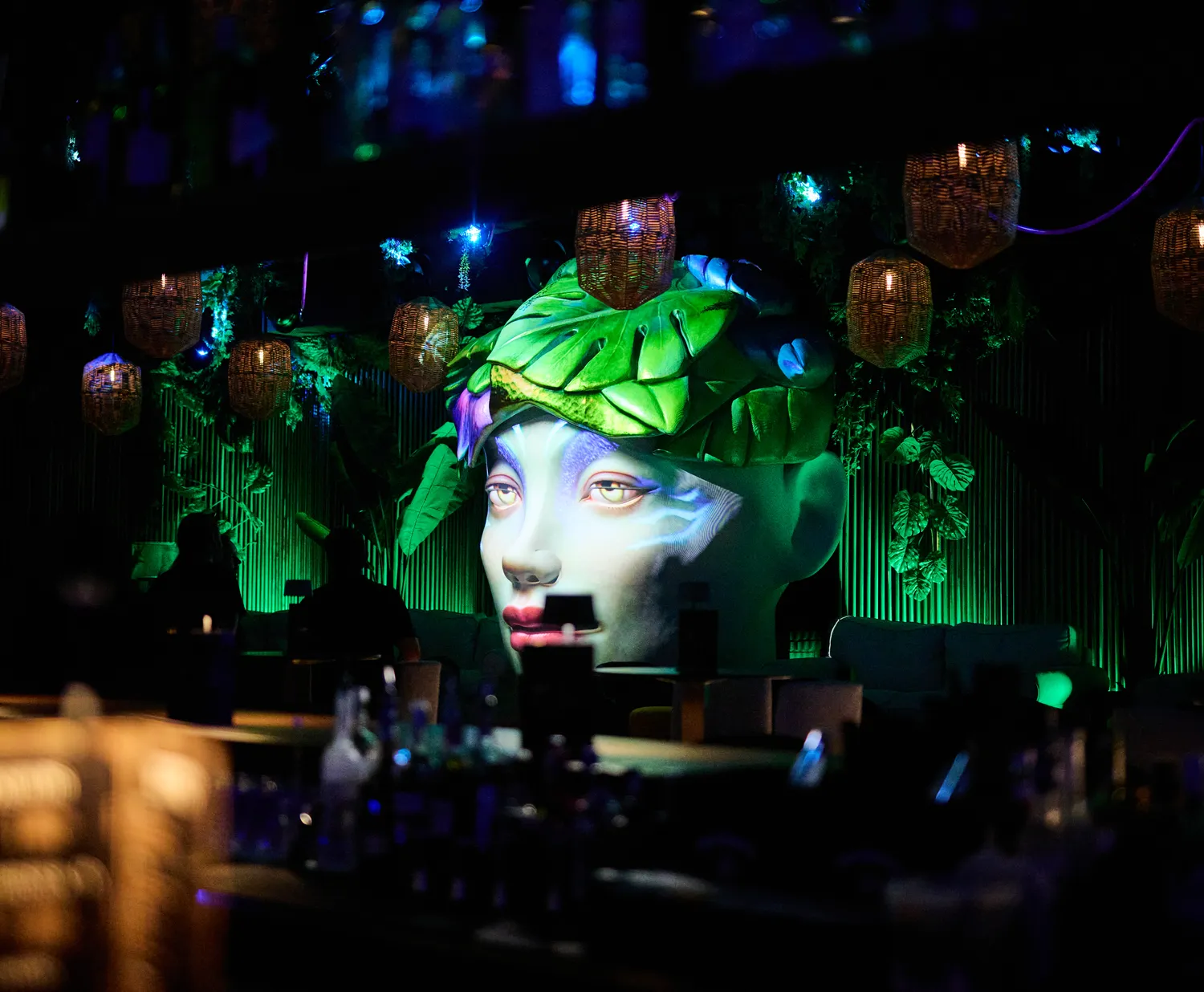
An upgrade with atmosphere – New lighting technology for Megapark Mallorca
Since its opening in 2002, Megapark on the island of Mallorca has become one of Europe’s best-known entertainment complexes. Today, the venue consists of several areas – ranging from the open-air space and the event hall to the more exclusive Q-Lounge with its sea-view terrace – and combines live performances, shows, dining, and hospitality into a large-scale venue concept. As part of the Megapark’s technical and design upgrades – including a new sound system and a 360° video wall – the lighting set-up has also been substantially expanded. Grupo Cursach, the operator of Megapark, opted for a wide array of Cameo lights for the new visual direction and, in particular, the elevated presentation of the VIP areas.
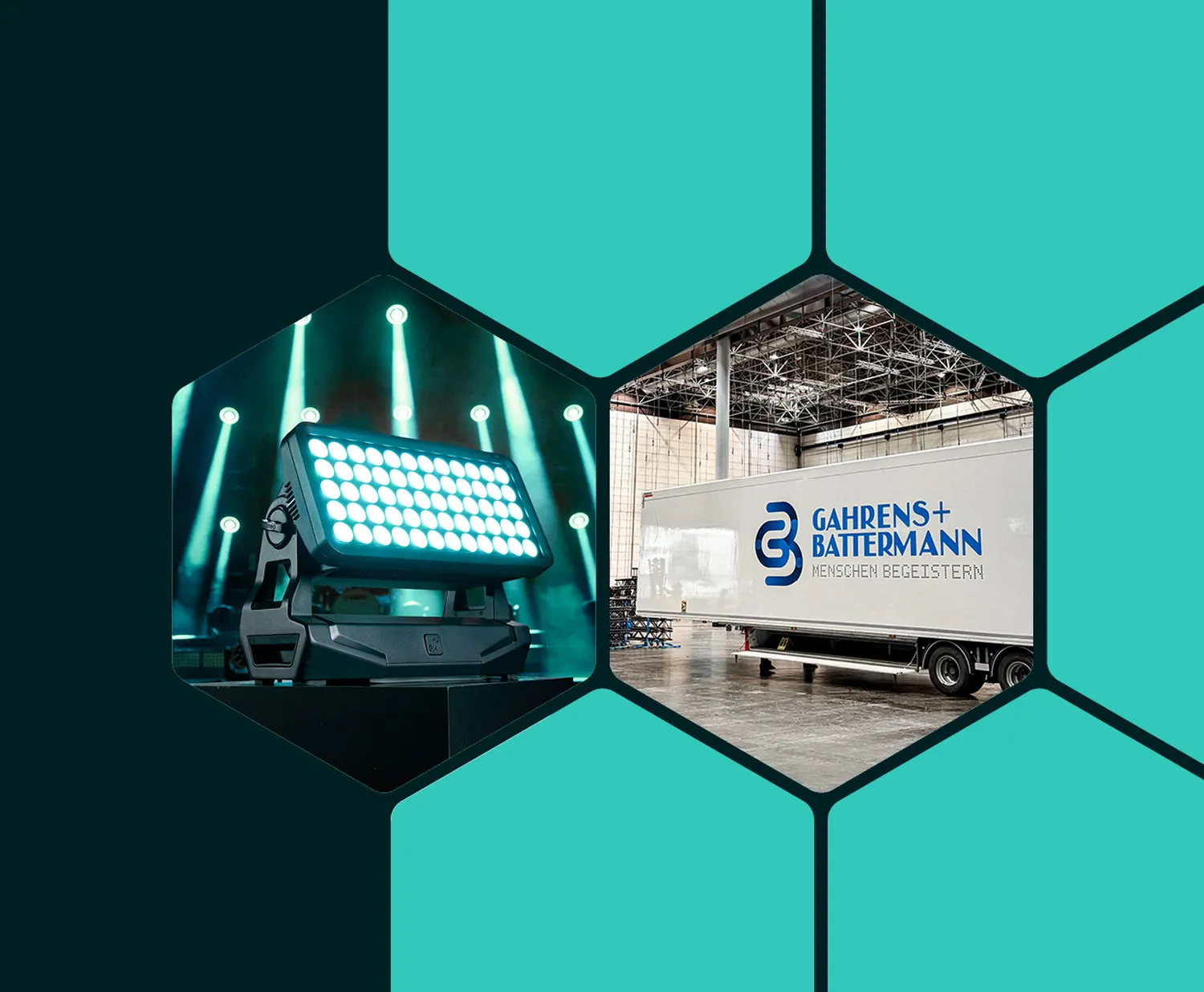
Six sites, one standard: GAHRENS + BATTERMANN relies on the Cameo ZENIT W 600 G2 across Germany
When the doors to the AGM open, there is often only a limited window of time in which to set everything up – with no room for error. It was precisely this reality that led GAHRENS + BATTERMANN to add our ZENIT W 600 G2 IP65 LED Wash Lights to its nationwide rental fleet moving forward.
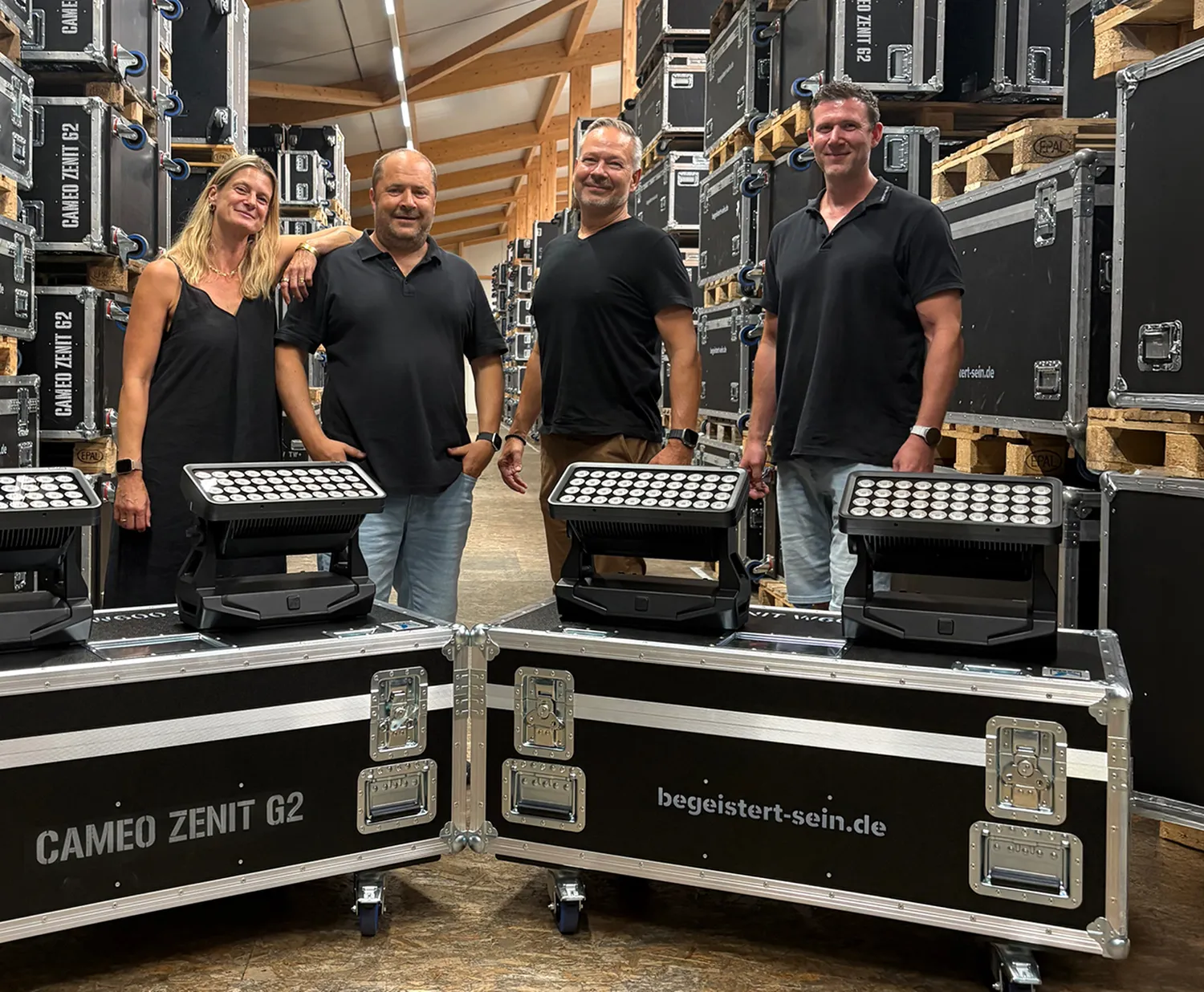
Tailored to customer needs: Kaiser Showtechnik expands its portfolio with the Cameo ZENIT W600 G2
For Kaiser Showtechnik, development means one thing above all: consistently aligning its own portfolio with the needs of its customers and the market. Kaiser Showtechnik GmbH, based in Augsburg, is expanding its lighting technology portfolio with the Cameo ZENIT W600 G2 IP65 LED wash lights, continuing its ongoing success story with Cameo.
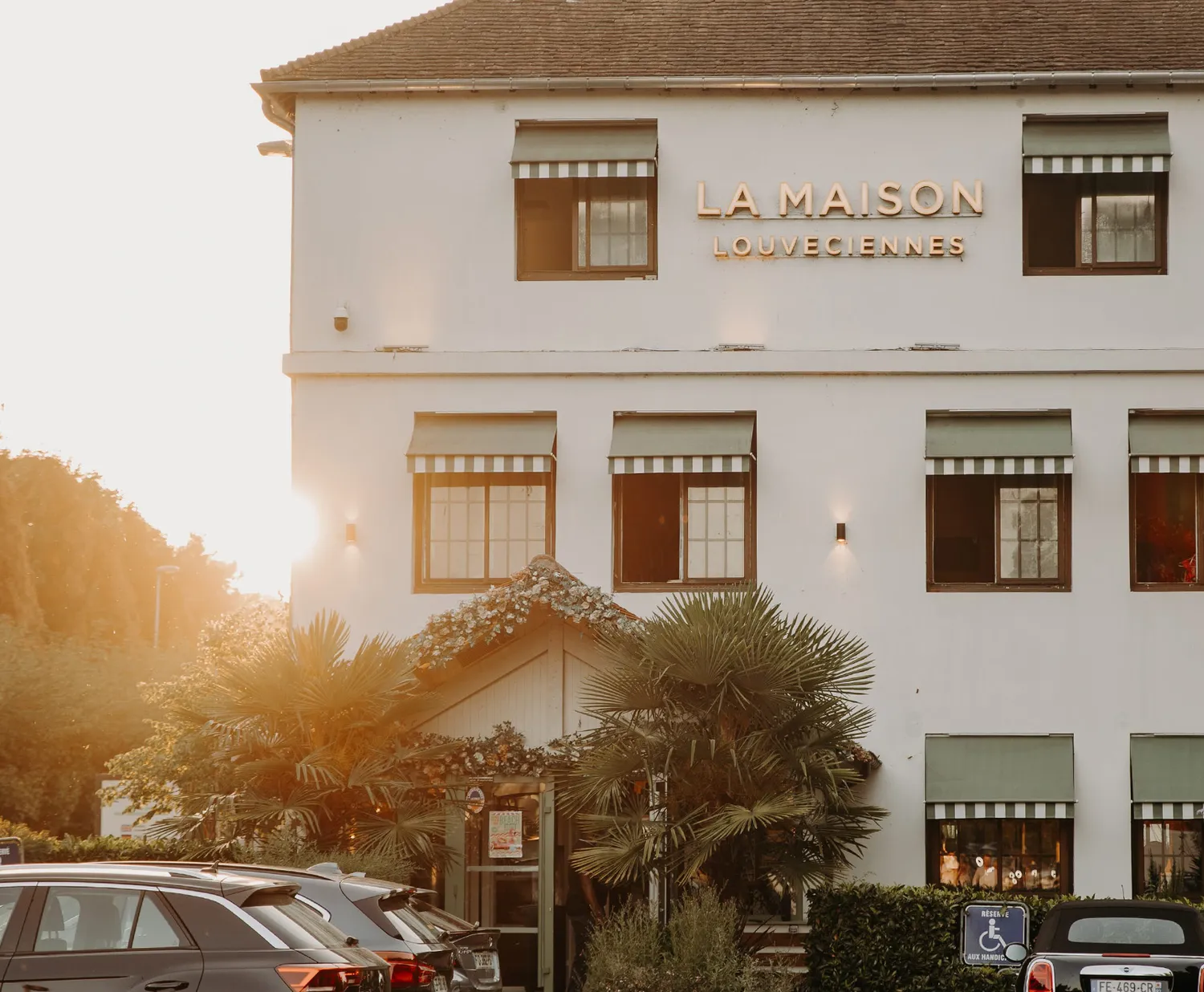
From dinner to the dance floor:
Just 20 minutes from Paris, La Maison Louveciennes unites French gastronomy with a versatile event concept. The restaurant, lounge, and bar combined with a terrace and seasonal beach area not only changes atmosphere throughout the day, but also places different demands on sound and lighting. The French service provider KFL Integration developed a permanent audio and lighting solution for La Maison using products from LD Systems and Cameo as well as QUESTRA as a central control platform. The concept’s flexibility was exhibited at the latest Fête de la Musique: for the live event, which is known nationwide, the permanent installation was enhanced with an additional sound system and show-lighting set-up.
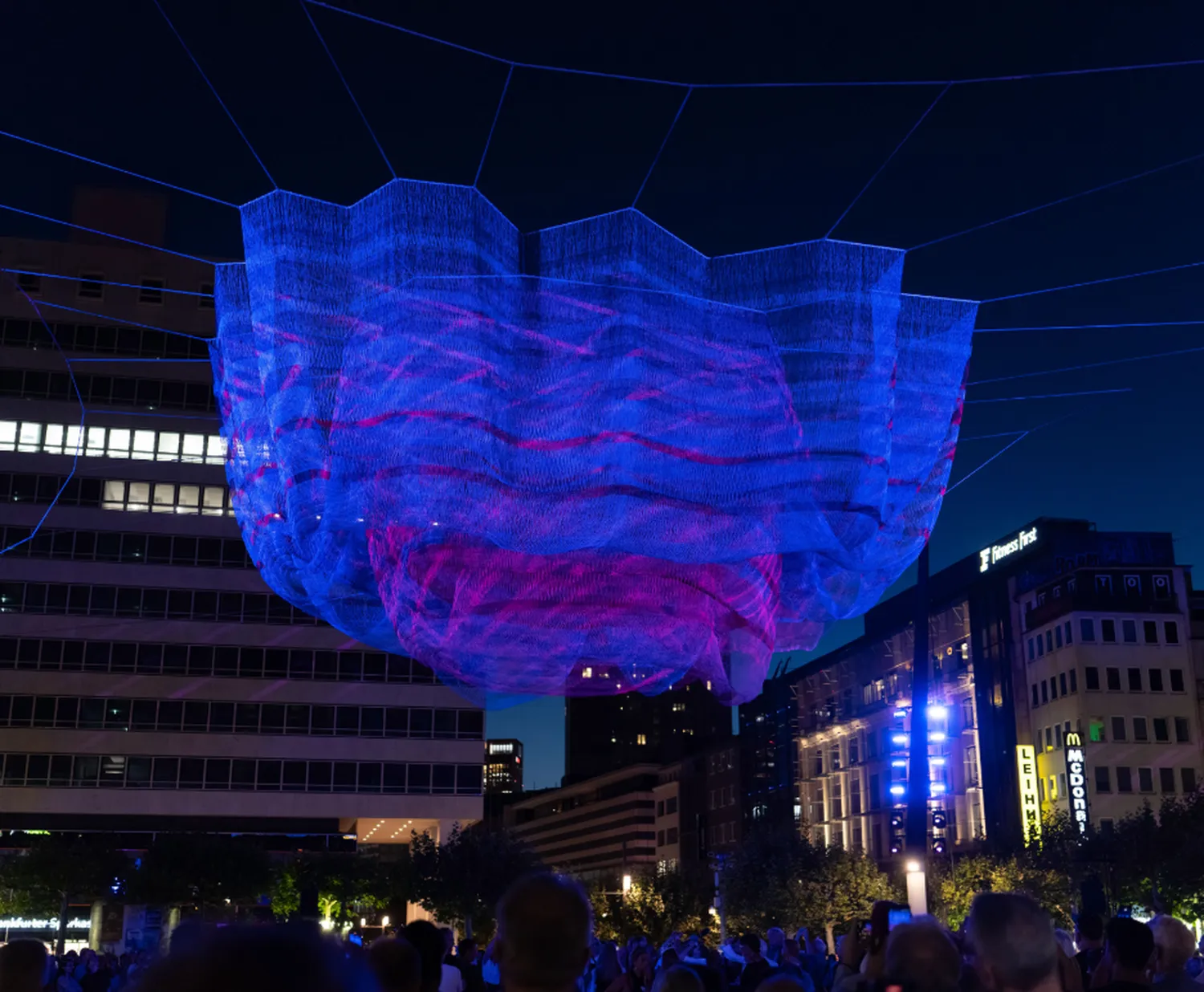
Three partners, one work of art: TLD, Neumann & Mueller and Cameo light up Frankfurt’s “A Sky Full of Hope”
On 11 August 2026 at 8.45 p.m., darkness fell over the Konstablerwache in Frankfurt as a specially curated light and sound show began – and Janet Echelman’s “A Sky Full of Hope – Earthtime 1.78 Frankfurt” sparkled in colour for the very first time. There was far more to this moment than pure illumination: it was the culmination of close collaboration between lighting designers, equipment partners and the manufacturer, and for Cameo it served as confirmation that the ZENIT W600 G2 is more than capable of meeting the demands of the international art scene.
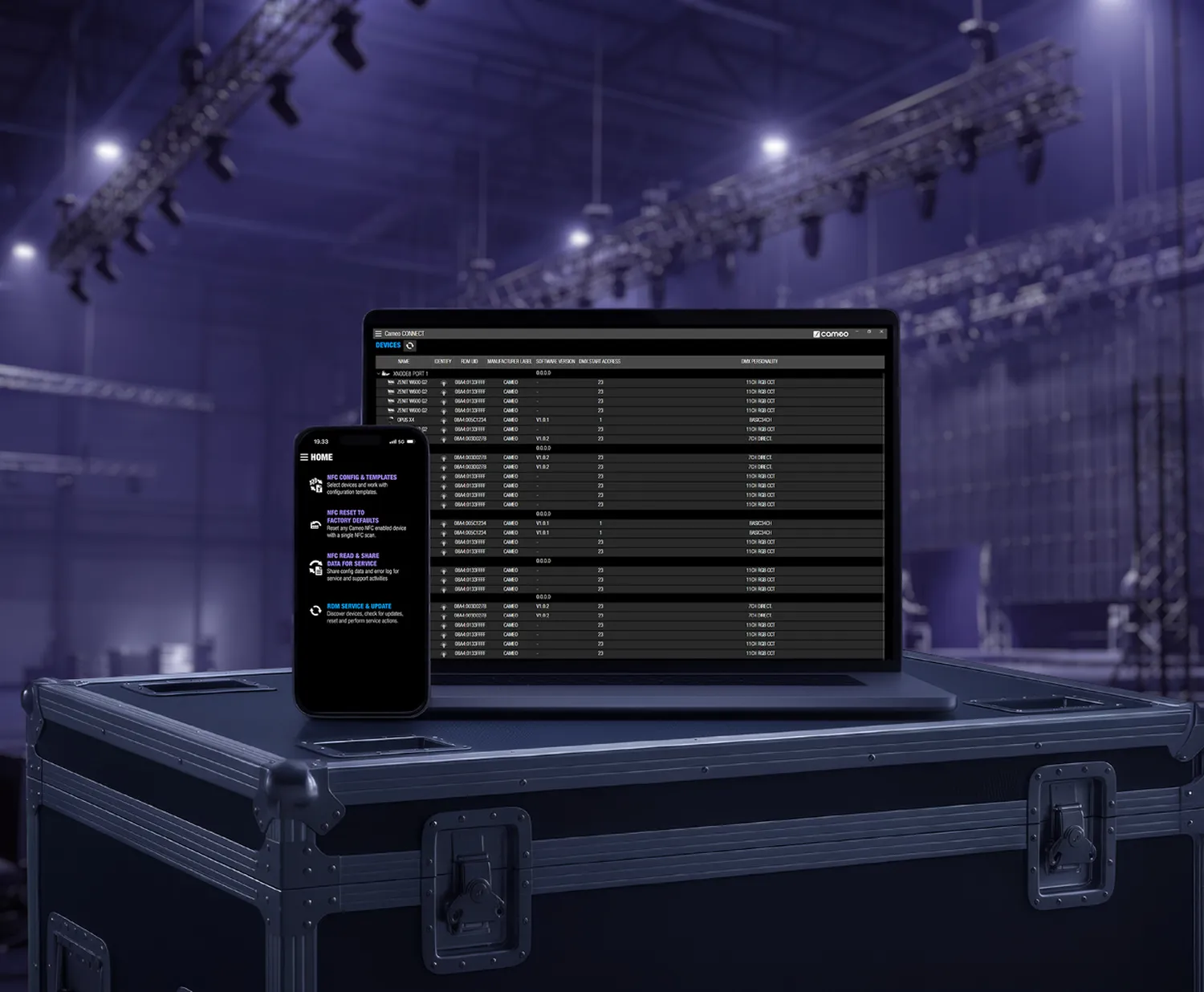
Cameo CONNECT® launches – a digital setup and support solution for Cameo users
With the Cameo CONNECT app and software, we are introducing a new digital workflow solution for supported Cameo fixtures. Our focus is not solely on the software or app as an individual tool, but on creating a comprehensive service experience that supports users throughout the entire lifecycle of a fixture – from preparation and configuration through to setup and servicing, firmware updates, rental return processes and preparation for its next use. In this way, we simplify key workflows before, during and after the use of professional lighting equipment.
Looking to rent?
Browse our global rental network and get the gear you need without buying upfront.
Contact us and request a demo
Request a demo or reach out to discuss your next project – we’ll get back fast.